Notifications (Click to mark read)
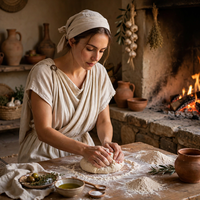 Hestia is the Greek goddess of the hearth: the fire at the centre of the household and, in civic life, the shared flame of the community. Daughter of Cronus and Rhea, she is among the oldest of the Olympians, yet her mythology is notably quiet. Hestia is not celebrated for dramatic adventures or contests for power. Her importance lies in what makes a home and community possible: warmth, continuity, welcome, nourishment and a stable centre around which daily life can gather.
Qualities associated with Hestia:
• A sense of belonging: A theme for reflection and understanding
• Steadiness and continuity: A theme for reflection and understanding
• Hospitality and welcome: A theme for reflection and understanding
• Care expressed through ordinary acts: A theme for reflection and understanding
• Peace and simplicity: A theme for reflection and understanding
• The value of a secure centre: A theme for reflection and understanding
Hestia offers a useful focus for anyone wishing to create a calmer home, establish grounding routines, make space for hospitality, or recognise the value of quiet work that sustains everyday life.
Hestia's Myth and Place on Olympus
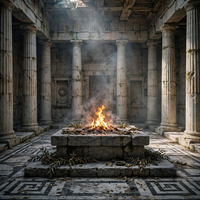
Hestia is usually named as a daughter of Cronus and Rhea. In the familiar account, she is swallowed by Cronus and later released with her siblings. Some traditions tell that Poseidon and Apollo sought to marry her, but she chose to remain unmarried and asked Zeus to preserve her independence. The story presents Hestia as a goddess whose authority is not expressed through conquest or marriage, but through the central place she occupies in divine and human households.
The Sacred Hearth: Home and City
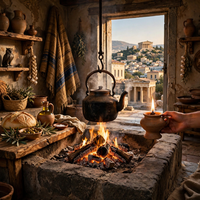
The hearth was not simply a cooking fire. It was a focus of family life, offerings, welcome and continuity. Public buildings in Greek cities could maintain a civic hearth, and the fire of a mother-city could be carried to a new colony. Hestia therefore connected private household life with the identity of the wider community. The hearth offered a place of refuge and hospitality, giving her significance in both domestic and civic settings.
Symbols of Hestia
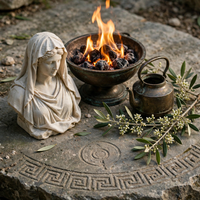
The flame and hearth are her defining symbols. Ancient depictions often show Hestia as a modestly veiled woman; a kettle or flowered branch may also appear. Unlike many Olympians, she is not consistently associated with a large set of animals or elaborate attributes. This simplicity reflects the nature of her role: the steady fire at the centre rather than a dramatic presence at the edge.
Working with Hestia: The Practice of Attention

A Hestia-inspired practice can begin with one ordinary task: preparing food, clearing a table, tending a plant, or making a room welcoming. Give the task your full attention. Notice how small acts of maintenance create comfort and continuity. The aim is not domestic perfection, but recognising the value of care that is often overlooked.
Hestia in Modern Life
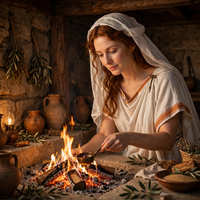
Hestia's relevance extends beyond traditional ideas of family or domestic roles. Home may be a room, a shared space, a community, or the inner steadiness a person builds for themselves. Her mythology invites us to ask what makes a place feel safe and welcoming, and which simple routines help us return to ourselves when life becomes unsettled.
Symbols and Attributes
The hearth and its flame; the household and civic fire; the kettle; the veil; offerings made at the beginning and end of meals or sacrifices. Hestia's symbolism is deliberately centred on the shared fire rather than an elaborate animal iconography.
A Simple Reflective Practice
Choose one small area of your home and make it more welcoming. As you work, notice each action rather than rushing to finish. Afterwards, write down what makes a space feel like somewhere you can rest, and one routine that could help maintain that feeling.
Offerings and Contemporary Observance
In ancient practice Hestia received a portion of offerings and was honoured at the household and civic hearth. A contemporary, non-religious reflection might involve tending a safe candle, preparing a meal thoughtfully, or sharing food. Never leave an open flame unattended.
Explore More Goddess Archetypes →
Select a theme for reflection:
What does this goddess's story bring into focus for you?
Read the myths in their historical and cultural context. Different ancient authors and communities sometimes tell different versions of the same story.