Notifications (Click to mark read)
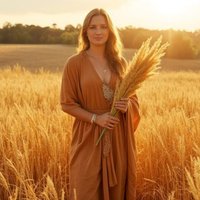 Demeter is the Greek goddess of grain, agriculture, and the fertile earth. She is one of the twelve Olympians and one of the most widely venerated deities in the ancient Greek world — not primarily through dramatic mythological exploits but through her direct relationship with the grain that fed people, the cycle of seasons that governed agricultural life, and the Eleusinian Mysteries, which for over a thousand years were among the most significant religious rites in the ancient Mediterranean.
Her name's etymology is debated, but the most common interpretation connects it with da or de, an archaic form of ge meaning earth, and meter, meaning mother — giving Demeter as Earth Mother or Grain Mother. This etymology fits her mythological identity: she is the divine principle of cultivated earth, of the soil tended by human hands, of the transformation of seed into bread.
Demeter is the mother of Persephone, and it is the myth of their separation and partial reunion that defines her most powerfully — both as a mythological narrative explaining the seasons and as a psychological archetype of maternal love, devastating loss, fierce refusal to accept what cannot be accepted, and the painful negotiations of release that all deep love eventually requires.
Sacred Qualities of Demeter:
• Nourishment: The provision of sustenance, both physical and emotional
• Maternal Love: Fierce, protective, grief-capable love
• Agricultural Wisdom: The knowledge of planting, tending, and harvest
• Seasonal Rhythm: The cycle of growth, abundance, withdrawal, and return
• Sacred Grief: The power and legitimacy of mourning what has been lost
• Mystery Teaching: The Eleusinian tradition of death, descent, and renewal
• Abundance and Withdrawal: The understanding that nourishment can be withheld as well as given
Demeter energy is relevant for those involved in caregiving, motherhood, food, gardening, and seasonal living — and equally for those navigating the particular grief of loving someone who has gone somewhere you cannot follow, or the hard work of releasing what you cannot keep.
The Myth of Demeter and Persephone

The central myth of Demeter is recorded in the Homeric Hymn to Demeter, one of the oldest and most complete pieces of Greek mythological literature. It is a story of abduction, grief, negotiation, and partial return — and it provides the mythological explanation for why the earth has seasons.
The Abduction:
Persephone, daughter of Demeter and Zeus, is gathering flowers in a meadow when the earth opens and Hades, god of the underworld, takes her below. In some accounts she is simply seized; in later traditions there is more ambiguity about her role. Demeter does not witness the abduction but feels her daughter's absence as an immediate, shattering loss.
The Search:
Demeter searches the earth for nine days, carrying torches, neither eating nor washing, asking every being she meets whether they have seen her daughter. She eventually learns the truth from the sun god Helios, who sees everything from his daily passage across the sky. Hades acted with Zeus's permission — a betrayal by the child's own father.
The Withdrawal:
In her grief and rage, Demeter withdraws her gifts from the earth. The grain stops growing. The land becomes barren. Humans begin to starve. The gods receive no offerings. Zeus eventually intervenes — not from compassion for Persephone but from necessity: without human offerings, the gods themselves are diminished.
The Pomegranate:
Before Persephone can return, it is revealed that she has eaten pomegranate seeds in the underworld. The number varies across sources — three, four, or six seeds. Because she has consumed the food of the dead, she cannot leave permanently. A compromise is negotiated: Persephone will spend part of each year with Hades and return to her mother for the remainder.
The Seasons:
When Persephone returns to Demeter, the earth blooms — this is spring and summer. When Persephone descends again, Demeter withdraws and the earth becomes cold and barren — this is autumn and winter. The myth makes the seasons the expression of a mother's grief and joy, giving the agricultural cycle a deeply emotional register.
The Eleusinian Mysteries

The Eleusinian Mysteries were the most important mystery religion of ancient Greece and perhaps of the ancient Mediterranean world. Celebrated at Eleusis, a town near Athens, for approximately two thousand years from around the fifteenth century BCE until the late fourth century CE, they attracted initiates from across the Greek-speaking world and later the Roman world — including emperors, philosophers, and ordinary citizens.
What the Mysteries Were:
The Mysteries were secret initiatory rites centred on the myth of Demeter and Persephone. The initiates — mystai — underwent a ritual experience that was understood to fundamentally change their relationship with death and the afterlife. Ancient sources describe the initiates as coming away from the experience without fear of death and with a sense of having understood something profound about the nature of existence.
The Greater and Lesser Mysteries:
The Mysteries were held in two stages. The Lesser Mysteries were celebrated in spring at Agrae and served as preparation. The Greater Mysteries were celebrated in autumn over nine days, during which initiates processed from Athens to Eleusis along the Sacred Way, underwent ritual purification in the sea, fasted, and participated in ceremonies that culminated in the telesterion — the Hall of Initiation — at Eleusis.
The Secret:
The central experience of the Mysteries was never written down by initiates. What happened in the telesterion remained genuinely secret throughout antiquity. Scholars have speculated about its nature — whether it involved a sacred drama, a vision, or a revelatory object — but the content remains unknown. This secrecy itself is part of Demeter's legacy: some knowledge is transmitted through experience, not words.
The Broader Meaning:
The Eleusinian Mysteries demonstrate that Demeter's significance extended far beyond agricultural fertility. She was the goddess whose mythology provided the framework for understanding death, descent, and return — for understanding what it might mean that something precious disappears into the earth and, under the right conditions, comes back transformed.
Sacred Symbols and Attributes of Demeter
Demeter's symbols are drawn from the agricultural world she governs and from the mythology of her search and grief. They are grounded, seasonal, and connected with the cycles of life that sustain human existence.
Wheat and Grain:
Wheat is Demeter's primary emblem. It represents the civilising gift of agriculture, the transformation of wild earth into human sustenance, and the basic nourishment without which all other human achievement is impossible. A sheaf of wheat held in her hands is the most consistent element of her iconography.
The Sickle:
The sickle or reaping hook represents harvest — the cutting away of what has grown to its fullness, the necessary ending that makes nourishment possible. It is also a reminder that abundance requires decisive action; the harvest must be gathered when it is ready.
The Torch:
Demeter carries torches during her nine-day search for Persephone. The torch represents the mother's determination to find what has been lost, the illumination that persists even in the darkest search, and the refusal to stop looking.
Poppies:
Poppies are associated with Demeter and with Eleusis, growing among the grain fields. They represent the sleep and forgetfulness that pain sometimes requires and the beauty that coexists with grief and toil in agricultural life.
The Cornucopia:
The horn of plenty represents Demeter's capacity for abundance when she is present and generous. It is the symbol of her gift functioning fully — the earth producing more than enough for all.
The Serpent:
Serpents appear in Demeter's iconography and in the Eleusinian context, associated with chthonic power — the wisdom of the earth's depths, the underworld, and the cycle of death and renewal.
Colors and Elements:
• Gold and Amber: Ripe grain, harvest abundance, the fullness of summer
• Earth Brown: Soil, roots, the ground from which all grows
• Harvest Orange: Autumn, the turning season, the warmth before withdrawal
• Deep Green: Growing things, spring's return, the first shoots after winter
• Earth Element: Grounding, fertility, patience, the long cycle of cultivation
Working with Demeter: Practices for Nourishment and Seasonal Living
Connecting with Demeter is most natural through the activities she governs: growing, cooking, eating, tending, and the seasonal awareness that agricultural life demands. Her energy does not require elaborate ritual — it is present in the ordinary acts of nourishment done with attention and gratitude.
Sacred Cooking Practice:
Approach one meal preparation each week as a deliberate act of care rather than a task to be completed quickly. Notice the ingredients — where they came from, what season they belong to, what hands grew them. Let the cooking be the practice.
Seasonal Eating:
Align your diet with what is actually growing locally and seasonally. This is not a dietary prescription but a way of reconnecting with the agricultural cycle that Demeter governs. Eating strawberries in June and root vegetables in January is itself a form of honouring her rhythm.
Garden Connection:
Grow something, however small — herbs on a windowsill, tomatoes in a pot, a single bed of flowers. The act of planting, tending, and harvesting is a direct engagement with Demeter's domain and with the patience that all growing things require.
The Search Practice:
When something precious has been lost — a relationship, a version of yourself, a sense of direction — honour Demeter's searching. Light a candle and name what you are looking for. Do not demand its immediate return. Acknowledge the grief of the search itself.
Harvest Gratitude:
At the autumn equinox or at any moment of completion and fullness, acknowledge what has grown and been gathered. Write a list of what this season has produced — not only materially but in terms of growth, learning, and relationship. Gratitude for the harvest is Demeter's offering.
Demeter for Modern Life: Nourishment, Loss and the Courage to Release

Demeter's mythology speaks with unusual force to several distinctly modern experiences: the grief of mothers whose children have grown and left, the difficulty of releasing what we love into its own becoming, the importance of nourishment in a culture that often treats food as fuel rather than gift, and the validation of fierce, grief-capable love as a legitimate spiritual force.
The Empty Nest:
The Demeter-Persephone myth is one of the most honest mythological treatments of what happens when a child moves beyond the mother's reach. The grief Demeter experiences is not pathologised or dismissed — it is acknowledged as powerful enough to stop the world. For mothers navigating the genuine loss of a child's departure into adult life, Demeter's myth validates the depth of what is felt.
The Art of Release:
The compromise that ends the myth — Persephone returns, but not entirely, and not permanently — is a model for the kind of partial release that real love eventually requires. The child is not fully returned; the seasons alternate. Demeter does not get everything back. She gets what is possible, and she learns to let the seasons turn.
Nourishment as Sacred Act:
In a culture where food is simultaneously over-abundant and treated with anxiety, where cooking is increasingly outsourced and eating is often rushed, Demeter offers a revaluation of nourishment as sacred. Feeding another person well is an act of love with a long history of divine sanction.
Grief as Power:
Demeter's withdrawal of fertility from the earth is not weakness or breakdown — it is the most powerful thing she does in the entire myth. Her grief has consequences. It stops the world. This is a mythological acknowledgement that grief, when it belongs to genuine love, has real weight and real effects.
Agricultural Awareness:
Demeter's domain reminds us that human life depends on the fertility of the earth and on the people who work it. Food justice, sustainable agriculture, and the honouring of those who grow food are natural expressions of Demeter consciousness in the modern world.
Explore More Goddess Archetypes →
Select your intention:
Before a Meal:
"Demeter, I acknowledge the earth that grew this food, the hands that tended it, and the long chain of care that brings nourishment to this table."
For the Search:
"I carry the torch. What I love has gone somewhere I cannot follow. I search without ceasing and trust the seasons to turn."
At Harvest:
"What was planted has grown. What has grown is gathered. I give thanks for the abundance of this season."
What Demeter teaches: