Notifications (Click to mark read)
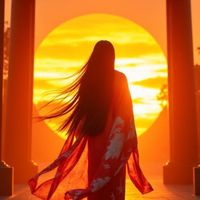 Amaterasu Omikami is the radiant sun goddess of Japanese mythology and one of the most revered kami in Shinto. Her name is often understood as the great divinity who illuminates heaven, and her presence is associated with sunlight, sacred clarity, renewal, right relationship, and the life-giving order that allows the world to flourish.
In the earliest Japanese mythological texts, Amaterasu rules the High Celestial Plain, Takamagahara, and stands at the heart of stories concerning the origin of divine authority, the rhythm of day and night, the restoration of light after darkness, and the sacred mirror that reflects truth. She is also closely connected with Ise Jingu, especially the Inner Shrine, Naiku, where Amaterasu Omikami has been revered for around two thousand years.
Unlike goddesses whose power is expressed through romance, battle, or fertility alone, Amaterasu's wisdom is solar and sovereign. She teaches the importance of presence, dignity, responsibility, purification, self-revelation, and returning to the light after withdrawal. Her mythology acknowledges that even the sun can retreat, but it also shows that light returns through ritual, community, reflection, courage, and joy.
Sacred Qualities of Amaterasu:
• Solar Illumination: Clarity, truth, warmth, and conscious awareness
• Renewal: The return of light after difficulty, grief, or withdrawal
• Sacred Sovereignty: Dignified leadership rooted in responsibility and balance
• Purification: Cleansing, restoration, and beginning again with clearer energy
• Reflection: The mirror as a symbol of self-knowledge and honest seeing
• Harmony: The restoration of order after chaos or emotional disturbance
• Communal Joy: Laughter, ritual, music, and shared presence as healing forces
Amaterasu energy is especially powerful for those seeking to step out of hiding, reclaim confidence, create order after disruption, restore personal energy, or lead with calm authority. She reminds us that light is not aggression. True radiance does not force itself upon the world; it shines steadily, warms what is ready, and reveals what needs to be seen.
The Birth of Amaterasu: Light from Purification
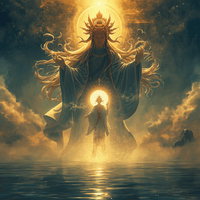
Amaterasu's birth story is deeply connected with purification. In the Kojiki tradition, the creator deity Izanagi returns from the underworld, Yomi, after the failed attempt to retrieve Izanami. Burdened by the impurity of death and the underworld, he performs misogi, a cleansing ritual. From this act of purification, the great celestial children are born.
Born from the Left Eye:
As Izanagi washes his left eye, Amaterasu comes into being. This origin links her not only with the sun, but with restored sight, cleansed perception, and the illumination that follows contact with darkness. Her birth suggests that light is not naive. It can emerge after descent, grief, contamination, and the deliberate act of cleansing what has been carried back.
The Three Precious Children:
Amaterasu is born alongside Tsukuyomi, associated with the moon, and Susanoo, associated with storms and the sea. Together, these divine siblings express a cosmic pattern: sun, moon, and storm; clarity, reflection, and disruption. Amaterasu receives rule over Takamagahara, the High Celestial Plain, establishing her as a figure of heavenly order and luminous authority.
The Jewel Necklace:
In the Kojiki account, Izanagi entrusts Amaterasu with a sacred jewel necklace as he gives her authority over the heavenly realm. Jewels in her mythology point to brightness, worth, continuity, and sacred inheritance. They are not merely decorative; they carry the idea of entrusted value and divine responsibility.
Purification as Renewal:
Amaterasu's birth teaches that renewal is not the denial of darkness. It begins when we recognise what has affected us, cleanse what no longer belongs, and allow clearer perception to return. Her light is born from the movement out of impurity and back into sacred alignment.
Solar Authority:
Amaterasu does not inherit authority through conquest. Her power is bestowed through radiance, order, and sacred trust. This makes her an important archetype for leadership that is calm, steady, visible, and accountable rather than dominating or performative.
The Heavenly Rock Cave: When the Sun Withdraws
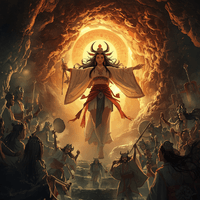
The most famous myth of Amaterasu is the story of the Heavenly Rock Cave, Ama-no-Iwato. After repeated outrages by her storm-god brother Susanoo, Amaterasu withdraws into a cave and seals herself away. Without her presence, heaven and earth fall into darkness, disorder, and fear.
Withdrawal After Violation:
Amaterasu's retreat is not simple weakness. It is a response to violation, chaos, and desecration. The myth recognises a profound truth: when a person's sacred order has been repeatedly disturbed, even their light may disappear behind stone. Withdrawal can be self-protection before it becomes restoration.
The World Without Light:
When Amaterasu hides, the world loses more than daylight. It loses rhythm, confidence, fertility, and orientation. The myth shows that light is not a luxury; it is the organising principle that allows life to continue. Without illumination, confusion spreads quickly.
The Counsel of the Kami:
The other kami gather to decide how to bring her back. This moment matters because Amaterasu's return is not forced by one heroic figure. It is achieved through collective wisdom, ritual preparation, sacred objects, laughter, music, and embodied performance.
Ame-no-Uzume's Dance:
The goddess Ame-no-Uzume performs an ecstatic dance outside the cave, causing the gathered kami to laugh. Amaterasu becomes curious. The myth honours joy as a spiritual medicine. Sometimes light returns not through argument or pressure, but through the sound of life becoming irresistible again.
The Mirror at the Cave:
A sacred mirror is placed outside the cave. When Amaterasu looks out, she sees a brilliant presence and moves closer. The mirror reveals her own radiance back to her. This is one of her most powerful teachings: when we have forgotten our light, we may need a clear reflection before we can believe in it again.
The Return of the Sun:
As Amaterasu emerges, the world is restored to brightness. Her return is not simply a happy ending; it is a pattern of healing. Harm happens, withdrawal follows, community gathers, reflection appears, laughter returns, and the sealed place opens.
Sacred Symbols and Attributes of Amaterasu
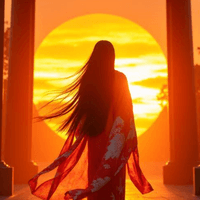
Amaterasu's symbols are connected with light, purity, reflection, sacred authority, and renewal. They are quieter than the symbols of more dramatic goddesses, but deeply powerful for spiritual practice because they invite clarity, dignity, and steady presence.
The Sun:
The sun is Amaterasu's central symbol. It represents illumination, warmth, vitality, time, growth, and the return of visibility. Working with her solar symbolism can support confidence, emotional recovery, purpose, and the ability to be seen without fear.
The Sacred Mirror:
The mirror, Yata no Kagami, is among the most important symbols associated with Amaterasu. It represents truth, self-knowledge, reflection, and the capacity to recognise one's own radiance. In spiritual terms, it asks: what is being reflected clearly, and what is being distorted by fear, shame, or confusion?
Jewels and Magatama:
Curved jewels and sacred beads point to divine value, continuity, blessing, and spiritual inheritance. They are connected with the cave myth and the wider symbolism of the imperial regalia. In personal practice, they can represent the inner worth that remains even when confidence has dimmed.
White Cloth and Purity:
White is strongly associated with Shinto purity, ritual cleanliness, and sacred space. In Amaterasu practice, white cloth, clean water, and uncluttered surroundings can represent the clearing of heaviness before inviting light back in.
Rice and Nourishment:
Amaterasu's mythology and Ise worship are deeply connected with the rhythms of cultivation, offering, food, and renewal. Rice symbolises life sustained by sunlight, human care, and sacred reciprocity. It reminds us that illumination must become nourishment, not just inspiration.
Sakaki Branches:
Sakaki is a sacred evergreen used in Shinto ritual. It symbolises connection between the human and divine realms, freshness, purity, and offering. For modern symbolic practice, evergreen leaves can stand for continuity and living devotion.
Colors and Elements:
• Gold: Solar radiance, divine authority, confidence, sacred brightness
• White: Purity, cleansing, spiritual clarity, ritual renewal
• Red: Vitality, life-force, shrine gates, protection, embodied energy
• Sky Blue: Heavenly openness, calm awareness, restored perspective
• Fire and Light: Illumination, warmth, transformation, visibility
Working with Amaterasu: Practices for Light and Renewal

Connecting with Amaterasu is best approached with respect, simplicity, cleanliness, and gratitude. Because she belongs to a living Shinto tradition, modern spiritual work with her should avoid pretending to own or redefine her. A respectful approach honours her as a Japanese kami while drawing personal inspiration from her themes of light, purification, reflection, and restoration.
Morning Sun Greeting:
Stand by a window or outside in the morning light. Take three slow breaths and say: "Amaterasu Omikami, radiant kami of the sun, may this day begin in clarity. Help me see what is true, warm what has grown cold, and step forward with dignity." Keep the practice simple and sincere.
Mirror Reflection Practice:
Place a clean mirror on a clear surface. Look into it without criticism for one minute. Ask: "What part of my light have I hidden? What truth is ready to be seen?" Write one sentence in your journal. This practice echoes the cave myth without copying formal Shinto ritual.
Purification with Water:
Wash your hands slowly before meditation, prayer, or journaling. Let the water symbolise release: old emotion, confusion, shame, fatigue, and the residue of other people's chaos. Dry your hands with care and begin again.
Restoring Order:
Choose one neglected space and clear it. Open curtains, remove clutter, wipe surfaces, and create a small area of brightness. Amaterasu's light is not only mystical; it is practical. Order can be a spiritual act when it restores calm and visibility.
Return from the Cave Ritual:
When you have withdrawn for too long, light a candle or sit in sunlight. Name the cave honestly: grief, exhaustion, fear, rejection, overwhelm, anger. Then choose one small act of re-entry: answer a message, step outside, wash your hair, cook food, or write one page. The sun returns through real movement.
Amaterasu, Ise Jingu and Living Tradition
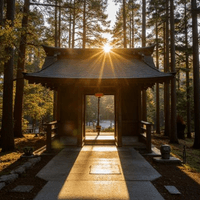
Amaterasu is not only a mythological figure from old stories. She remains central to Shinto reverence in Japan, especially through Ise Jingu in Mie Prefecture. The Inner Shrine, Naiku, is dedicated to Amaterasu Omikami and is regarded as one of Japan's most sacred Shinto sanctuaries.
Naiku, the Inner Shrine:
At Ise Jingu, Amaterasu is revered as the ancestral kami of the Imperial family and as a guardian presence. The shrine's atmosphere is intentionally restrained: simple architecture, sacred forest, ritual cleanliness, and deep continuity. This restraint is part of the teaching. The sacred does not always need ornament; sometimes it is strongest through purity, space, and silence.
The Holy Mirror:
The sacred mirror associated with Amaterasu is enshrined within the main sanctuary. For visitors and practitioners, the mirror is not merely an object from myth; it embodies the principle of reflection, presence, and divine luminosity. The mirror asks humanity to recognise the sacred by seeing clearly.
Shikinen Sengu:
Ise Jingu is famous for the periodic renewal of shrine buildings and sacred objects through Shikinen Sengu, a rebuilding tradition carried out every twenty years. This does not treat renewal as replacement or loss. Instead, it preserves continuity through careful rebuilding, craftsmanship, ritual, and transmission from one generation to the next.
Tradition and Respect:
Because Amaterasu belongs to a living religious context, it is important to approach her with humility. Learning about her myths, shrines, and symbols is valuable, but respectful practice should avoid claiming initiation, priestly authority, or cultural ownership unless one is genuinely part of those traditions.
Modern Spiritual Lesson:
Amaterasu's Ise connection teaches that light is maintained through rhythm. Sacred life is not only found in peak experiences. It is found in cleaning, offering, rebuilding, remembering, returning, and keeping faith with what matters.
Amaterasu for Modern Life: Coming Back into the Light

Amaterasu's mythology speaks directly to modern experiences of burnout, withdrawal, visibility, leadership, emotional recovery, and the need to restore order after disruption. Her story is especially relevant for anyone who has hidden their gifts, lost confidence, or felt their inner light dim after conflict or overwhelm.
Visibility After Withdrawal:
Many people know the cave. It may look like isolation, avoidance, depression, exhaustion, or the quiet refusal to be seen. Amaterasu does not shame withdrawal; her myth understands it. But it also teaches that life eventually asks us to return, not all at once, but enough for light to reach the world again.
Leadership with Dignity:
Amaterasu offers a model of authority that does not depend on loudness. Her sovereignty is solar: steady, central, life-supporting, and clear. She is a helpful archetype for those who need to lead without becoming harsh, visible without becoming performative, and responsible without carrying everything alone.
Restoring Personal Rhythm:
Sunlight regulates daily life. In the same way, Amaterasu practice can help restore rhythm: waking earlier, opening curtains, eating properly, tending space, journaling, and keeping small promises. These simple actions return the self to order.
Reflection Before Reaction:
The mirror reminds us to pause before responding. Is this situation reflecting truth, old hurt, fear, projection, or someone else's disorder? Amaterasu wisdom encourages clarity before action and honest reflection before judgment.
Joy as Medicine:
The cave myth does not bring Amaterasu back through scolding. It brings her back through laughter, dance, sound, and curiosity. In modern terms, joy can reopen a sealed inner door. Music, movement, beauty, sunlight, friends, and creative play can all become part of the return.
Light Without Denial:
Amaterasu is not a goddess of pretending everything is fine. Her light comes after disturbance. She teaches a mature brightness: one that has seen darkness, recognised harm, restored boundaries, and still chooses to shine.
Explore More Goddess Archetypes →
Select your solar intention:
Morning Clarity:
"Radiant Amaterasu, let this day begin in truth. May I see clearly, act with dignity, and carry warmth into the world."
Return from the Cave:
"Sun goddess of renewal, help me open the sealed place within me. I return one step at a time."
Mirror Blessing:
"May this reflection show me what is true, not what fear has taught me to see."
Light Returning:
Good times for Amaterasu-inspired practice:
Practice note: Keep rituals simple, respectful, clean, and grounded in gratitude.