Notifications (Click to mark read)
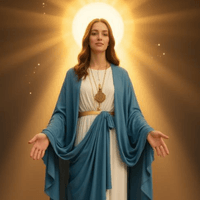 Mary — known as the Virgin Mary, the Blessed Virgin, Our Lady, Theotokos (God-bearer), and by hundreds of other titles across two thousand years of Christian tradition — is the most widely venerated feminine divine figure in human history. More shrines have been built to her than to any other religious figure. More prayers have been addressed to her than to any other intercessor. More apparitions have been reported, more pilgrimages undertaken, more art created in her name than for any other being in the history of religion. The sheer scale of Marian devotion across Catholic, Orthodox, Anglican, and many other Christian traditions — and the cultural presence she has maintained through the de-Christianisation of much of the West — makes her genuinely without parallel.
Mary presents a particular set of challenges for any honest account, precisely because she sits at the intersection of several very different frameworks: strict Catholic theology (in which she is not a goddess but the mother of God, the highest of all created beings but categorically distinct from the divine); popular devotion (in which the practical relationship between believers and Mary often resembles in function if not in theology the relationship between worshippers and a goddess); feminist and goddess spirituality (in which she is often understood as the surviving form of the ancient great goddess within Christianity); and historical criticism (which asks questions about the historical Mary of Nazareth that are largely unanswerable from the available sources).
This page attempts to hold all of these frameworks honestly — to describe the actual content of Marian theology without reducing it to something it is not, to acknowledge the genuine power of popular Marian devotion without misrepresenting its theological status, and to engage with the goddess spirituality reading of Mary with appropriate nuance about where it is illuminating and where it is speculative.
 The theological development of Mary's status within Christianity is one of the most significant and most contested processes in the history of Christian thought. The New Testament itself says relatively little about Mary — she appears at the Annunciation (Luke 1), at the Visitation to Elizabeth, at the birth narratives, at the presentation in the Temple, and briefly in the adult ministry of Jesus (most notably at the wedding at Cana in John 2 and at the crucifixion in John 19). The Gospel accounts are not always consistent, and the historical Mary of Nazareth remains a figure about whom we know very little with certainty.
Theotokos — God-Bearer:
The foundational Marian title is Theotokos — Greek for "God-bearer" or "Mother of God" — which was defined as orthodox doctrine at the Council of Ephesus in 431 CE. The theological argument was not primarily about Mary but about Christ: if Jesus is fully divine (as affirmed at Nicaea in 325 CE), then his mother is the mother of God. The title Theotokos became the anchor of Marian theology and the source from which subsequent Marian doctrines developed. Significantly, Ephesus — the city at which the council was held — had long been the centre of devotion to Artemis of the Ephesians, a great mother goddess. The council's endorsement of Theotokos at Ephesus was not lost on contemporaries.
The Four Marian Dogmas:
Catholic teaching has formally defined four Marian dogmas: the Divine Motherhood (Theotokos, 431 CE), the Perpetual Virginity of Mary (affirmed by various councils from the 4th century), the Immaculate Conception (defined by Pope Pius IX in 1854 — the doctrine that Mary was conceived without original sin), and the Assumption (defined by Pope Pius XII in 1950 — the doctrine that Mary was taken bodily into heaven at the end of her life). The last two dogmas are of relatively recent formal definition, though the beliefs they encode are much older in popular devotion.
Mediatrix and Co-Redemptrix:
Beyond the four defined dogmas, Mary has been given titles in popular and theological devotion that reflect an understanding of her role as active intercessor — Mediatrix (one who mediates between humanity and God), Advocate, and, most controversially, Co-Redemptrix (one who participated in the work of redemption). The last title has been promoted by significant numbers of Catholics but has not been formally defined as dogma, partly because of the theological complications it raises about the unique role of Christ's sacrifice.
Mary in Orthodox Christianity:
In Eastern Orthodox Christianity, Marian devotion is if anything more central to liturgical and devotional life than in Catholicism. The Theotokos is honoured throughout the Orthodox liturgical year, and specific Orthodox Marian feasts — particularly the Dormition (the Orthodox equivalent of the Assumption) — are among the most important celebrations of the Orthodox calendar. The theological language differs slightly from Catholic usage, but the devotional depth is comparable.
 The history of Marian apparitions — reported appearances of Mary to individuals or groups — is one of the most significant and most complex dimensions of popular Marian devotion. The Catholic Church has officially investigated hundreds of reported apparitions and approved a relatively small number as "worthy of belief" (meaning the Church considers them consistent with Catholic faith and not evidently fraudulent, without formally requiring belief in them as matters of faith).
Our Lady of Guadalupe (1531):
The most culturally significant Marian apparition in the Americas. Juan Diego, an indigenous convert to Catholicism, reported appearances of a woman who identified herself as "the ever-virgin Holy Mary, Mother of the True God" on the hill of Tepeyac near Mexico City — a site that had previously been sacred to the Aztec goddess Tonantzin (Our Mother). The image said to have been miraculously imprinted on Juan Diego's tilma (cloak) remains in the Basilica of Our Lady of Guadalupe in Mexico City, which receives more pilgrims annually than almost any other Christian shrine in the world. The theological and cultural significance of Guadalupe in Latin American Catholicism — particularly as an image of the divine that wears indigenous rather than European features — cannot be overstated.
Lourdes (1858):
The apparitions to Bernadette Soubirous in the grotto of Massabielle near Lourdes, France, in 1858 produced the most internationally significant Marian pilgrimage site in the modern world. The figure who appeared to Bernadette identified herself as "the Immaculate Conception" — a title that had been formally defined only four years earlier. Lourdes is visited by approximately six million pilgrims annually, many seeking healing at the spring that emerged during the apparitions. The medical cures claimed at Lourdes have been subjected to more systematic scientific scrutiny than any other claimed miracle site, with a small number judged inexplicable by the Lourdes Medical Bureau.
Fatima (1917):
The apparitions to three children — Lucia dos Santos and her cousins Francisco and Jacinta Marto — at Fatima, Portugal, in 1917 included the "Miracle of the Sun" witnessed by a crowd estimated at 70,000 people, a series of prophetic messages (the "secrets of Fatima"), and a request for the consecration of Russia to the Immaculate Heart of Mary. The Fatima apparitions became heavily entangled with Cold War geopolitics and continue to be significant in traditionalist Catholic circles. Francisco and Jacinta were canonised in 2017.
Medjugorje (1981–present):
The ongoing apparitions reported in Medjugorje, Bosnia-Herzegovina, since 1981 represent the most active and most contested current Marian apparition site. Millions of pilgrims have visited. The Catholic Church's position has evolved from scepticism to a 2024 authorisation of pilgrimage, while stopping short of approving the apparitions themselves as supernatural. The messages reported from Medjugorje — calls to prayer, fasting, peace, and conversion — are consistent with other approved Marian apparition messages.
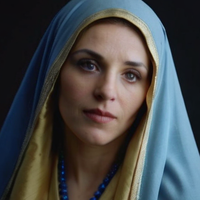 The relationship between Marian devotion and pre-Christian goddess worship is one of the most debated questions in the history of religion. The argument that Mary represents a Christianised form of the great goddess — absorbing devotion that had previously been directed at Isis, Cybele, Artemis, and other mother goddesses — has been made by scholars from the 19th century onward and continues to generate serious academic discussion.
The evidence for genuine continuity is mixed and requires careful assessment. It is historically documented that many Marian shrines in Europe were established at sites previously sacred to pre-Christian goddesses — the association of Mary with wells, springs, and healing waters mirrors the associations of Celtic and Roman water goddesses. It is also documented that early Christian missionaries sometimes explicitly encouraged the transfer of devotion from local goddesses to Mary. The title "Queen of Heaven" — one of Mary's most important titles — is directly shared with Inanna and Ishtar, and was used of the Canaanite goddess Asherah in the Hebrew Bible (where it is used critically, as a form of idolatry). The iconography of Mary nursing the infant Jesus (the Madonna Lactans) has clear visual parallels with images of Isis nursing Horus.
What is less clear is whether these parallels represent genuine theological continuity — a conscious or unconscious preservation of goddess theology within a Christian framework — or structural similarity arising from the universal human experience of maternal love and divine protection. Both can be true simultaneously. The Marian tradition genuinely does something that mainstream Christian theology might otherwise leave undone: it provides a focus for the specifically maternal, compassionate, protective dimension of the divine that the theology of a predominantly male Trinity might not fully accommodate.
The Black Madonnas of Europe — dark-skinned images of Mary found particularly in France, Spain, and Poland — have attracted particular attention from goddess scholars. The darkness of these images has been interpreted as a survival of pre-Christian earth goddess traditions, as a representation of Mary's Semitic heritage, and as a straightforward result of candle smoke and age. All three explanations have merit; the theological significance that devotees have found in the darkness of these images — their connection to mystery, to the earth, to the hidden feminine — is real regardless of the images' actual origin.
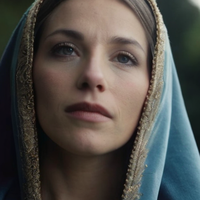 Mary's presence in spiritual practice is available across a very wide range — from strictly orthodox Catholic devotion through ecumenical Christian prayer to secular goddess spirituality. Each of these approaches is legitimate within its own framework, and the approaches are not necessarily mutually exclusive.
Traditional Marian Prayer:
The most widely practised forms of Marian devotion are the Rosary — the meditative prayer cycle in which the mysteries of Christ's life are contemplated while reciting Hail Marys and Our Fathers — and direct prayer to Mary as intercessor. The Hail Mary itself is one of the most widely used prayers in Christianity, combining the angel Gabriel's greeting at the Annunciation with Elizabeth's greeting at the Visitation and a petition for intercession. The Salve Regina, the Memorare, and the Magnificat (Mary's own prayer from Luke 1) are among the other major Marian prayers.
The Magnificat:
Mary's prayer in Luke 1:46-55 — the Magnificat — is one of the most theologically radical texts in the New Testament and one that is often underemphasised in its social content. It praises God for putting down the mighty from their thrones, lifting up the lowly, filling the hungry with good things and sending the rich away empty. Liberation theologians have read this as the foundational statement of Christian social justice; it is also Mary's own voice, her own proclamation. Whatever one's theological framework, the Magnificat is a text worth reading directly.
Marian Pilgrimage:
The pilgrimage sites associated with Marian apparitions — Lourdes, Fatima, Guadalupe, Knock, Czestochowa, Loreto, and many others — draw hundreds of millions of visitors across varied traditions, including many who would not identify as conventionally religious. The pilgrimage experience — the journey, the community of other pilgrims, the encounter with a specific sacred site — has genuine effects that transcend the theological framework in which it is embedded.
Mary in Goddess Spirituality:
For those approaching Mary through a goddess spirituality framework rather than a Christian one, she offers the specific qualities of maternal compassion, protective love, and the willingness to stand at the foot of the cross — to remain present with suffering that cannot be prevented. These qualities are accessible through contemplation of her iconography, her titles, and her mythology without requiring adherence to Catholic doctrine.
Explore More Goddess Archetypes →
Theotokos — God-Bearer, Mother of God (Council of Ephesus, 431 CE)
Queen of Heaven — Regina Caeli
Our Lady — Notre Dame, Madonna
Immaculate Conception — defined 1854
Assumed into Heaven — defined 1950
Mediatrix — intercessor between humanity and God
Star of the Sea — Stella Maris
🇲🇽 Guadalupe — Mexico City, 1531
🇫🇷 Lourdes — France, 1858
🇵🇹 Fatima — Portugal, 1917
🇮🇪 Knock — Ireland, 1879
🇵🇱 Czestochowa — Poland (Black Madonna)
🇧🇦 Medjugorje — Bosnia, 1981–present
Mary's own prayer, Luke 1:46–55. Often overlooked in its social content:
"He has brought down the mighty from their thrones and lifted up the lowly. He has filled the hungry with good things and sent the rich away empty."
Liberation theologians have read this as Christianity's foundational statement of social justice — in Mary's own voice.
Many Marian shrines were built at sites previously sacred to pre-Christian goddesses. The title "Queen of Heaven" was previously held by Inanna and Ishtar. The nursing Madonna has clear parallels with Isis and Horus.
Whether this represents genuine theological continuity or parallel structure arising from universal human experience — or both — is genuinely contested and genuinely interesting.