Notifications (Click to mark read)
 Oracle and divination practices connect us to one of the oldest dimensions of feminine spiritual authority. Across cultures and centuries, women have served as the primary mediators of divine guidance — as oracles, wise women, dream interpreters, and readers of signs in nature and the body. The Oracle at Delphi, the Sibylline prophetesses of Rome, the veleda seers of the Germanic peoples, the sangomas of southern Africa, and the dream-interpreting priestesses of ancient Mesopotamia all represent different expressions of the same essential capacity: the ability to receive, interpret, and transmit guidance from sources beyond ordinary rational thought.
Divine feminine divination emphasises receptivity rather than force. Where masculine approaches to knowledge tend toward analysis, argument, and the active construction of understanding, the oracular tradition works differently — it creates conditions of stillness and openness in which insight can arise on its own terms, in its own language, at its own pace. This is why divination practices are so naturally connected with the feminine principle: they require exactly the qualities that the feminine represents. The willingness to not-know, to wait, to receive rather than demand.
It is worth being clear about what these practices are and are not. Oracle and divination work is best understood as a practice for deepening self-reflection, accessing intuition, and creating a contemplative relationship with the questions and patterns of one's life. The goddess oracle tool on this page offers daily prompts drawn from goddess archetypes. It is a tool for reflection, not a source of supernatural prediction. The value of drawing a goddess card lies not in any mystical mechanism but in the quality of attention it invites and the archetypal frameworks it offers for thinking about one's situation.
With that understanding clearly in place, these practices are genuinely useful. Consistent use of oracle cards, dream journals, and contemplative practices builds a richer inner life, a more developed intuition, and a more conscious relationship with the patterns of one's experience.
Goddess Oracle Cards & Sacred Divination
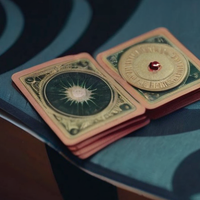
Goddess oracle cards are a modern divination tool that draws on the long tradition of symbolic and archetypal imagery as a framework for reflection. Unlike tarot, which has a standardised structure developed over centuries, oracle decks are created by individual artists and authors and vary considerably in their approach, cultural sources, and depth. Choosing a deck is itself a meaningful act — the imagery you choose to work with shapes the kind of reflection the practice invites.
Choosing Your Deck:
Look for decks whose imagery is drawn from documented mythological traditions rather than invented or composite figures. A deck rooted in specific cultural traditions — Greek, Celtic, Hindu, Egyptian — will offer richer material for reflection than one that blends traditions indiscriminately. If a deck draws on Indigenous or living religious traditions, research whether it was created with cultural consultation and respect.
Daily Practice:
Drawing a single card each morning and sitting with it for five minutes is more valuable than elaborate spreads done occasionally. Ask a simple question — what quality do I need to cultivate today, or what is asking for my attention — and let the card's imagery and meaning become a lens through which you observe the day's events. Record your reflections in a journal and review them monthly.
Maiden-Mother-Crone Spread:
Three cards representing past influences, current situation, and wisdom needed going forward. This spread honours the triple feminine pattern and provides a temporal framework for understanding where you are in a longer arc of development.
Elemental Spread:
Four cards corresponding to earth (what grounds me), water (what I feel), fire (what I need to act on), and air (what I need to think through more clearly). Useful for situations that feel stuck or overwhelming.
Lunar Spread:
Four cards for new moon intention, waxing moon action, full moon acknowledgement, and waning moon release. Used monthly as a framework for working with the lunar cycle consciously.
Scrying & Contemplative Vision Work

Scrying is the practice of gazing into a reflective or ambiguous surface — water, fire, a mirror, a crystal — as an aid to contemplation. The surface does not produce visions through supernatural means; rather, the act of soft-focus gazing on an ambiguous surface quiets the analytical mind and creates conditions in which imagination and intuition can speak more freely. It is a legitimate contemplative technique with a very long history.
Water Scrying:
Fill a dark bowl with water and place it where it catches candlelight or moonlight. Sit comfortably, soften your gaze, and look into the water without actively searching for anything. Breathe slowly. Hold a question lightly in mind. Notice what images, impressions, or thoughts arise. Record them afterwards without immediate interpretation — meaning often becomes clearer with time.
Candle Flame Contemplation:
Light a candle and gaze softly at the flame while holding a question. Brigid, the Celtic goddess of inspiration and sacred fire, has a strong association with this practice. The flame is particularly useful for questions about creativity, purpose, and direction, where the quality of focused-yet-receptive attention that fire-gazing induces is genuinely helpful.
Mirror Work:
Gazing into a mirror — particularly a dark or black mirror — as a contemplative practice has roots in many traditions. This is not primarily a technique for producing supernatural visions but a way of developing honest self-observation. Sitting quietly with your own reflection, without the usual avoidance or self-criticism, can be a powerful and disorienting experience. Many people find it useful in shadow work.
Nature Observation:
Spending time in nature with receptive attention — watching cloud movements, listening to water, observing animals — is one of the oldest forms of divination. It is grounded in the understanding that careful, patient attention to the world reveals patterns and correspondences that hurried, purposive observation misses. Earth goddesses like Demeter, Gaia, and Brigid are associated with this kind of attentive relationship with the natural world.
Dream Work & Goddess Guidance

Dreams have been understood as a medium of guidance and communication across virtually every human culture. The ancient Egyptians practiced dream incubation at temple sanctuaries. The Greeks sought healing dreams from Asclepius at his shrines. The Iroquois considered dreams to be the direct expression of the soul's desires. In the Christian tradition, dreams play a significant role in both Testaments. Whatever one's view of the mechanism, there is strong evidence that attending to dreams — recording them, sitting with them, looking for patterns across time — has genuine psychological value.
Creating Conditions for Dream Recall:
Keep a notebook and pen within arm's reach of your bed. Before sleep, take two minutes to write a simple intention — a question you are sitting with, or simply the intention to remember what arises. Upon waking, before moving or speaking, lie still and replay whatever fragments of dream you have. Write immediately and without editing. Even single images or emotional tones are worth recording.
Goddess Imagery in Dreams:
When goddess figures appear in dreams — as recognisable mythological characters or as powerful feminine presences — it is worth noting which archetype they most resemble. A fierce armed woman may carry Athena or Durga qualities. A compassionate presence in white may echo Quan Yin. A woman at a threshold or crossroads may carry Hecate resonance. These are not necessarily communications from supernatural beings; they are the psyche's use of cultural and archetypal material to process experience and generate insight.
Recurring Themes and Patterns:
The most valuable insight from dream work usually comes not from individual dreams but from patterns observed over weeks and months of consistent recording. Recurring settings, recurring emotional tones, recurring figures or symbols — these patterns reveal something about the consistent concerns and orientations of the unconscious mind that individual dreams may not clearly show.
Dream Incubation:
Setting a clear question before sleep — written down and held in mind — increases the likelihood of relevant dream material. This is a documented technique with ancient roots. The question should be genuine and specific: not what should I do with my life but what is the obstacle between me and the work I want to be doing.
Developing Intuition Through Goddess Practice

Intuition is not a mystical faculty separate from ordinary cognition. It is rapid, pattern-based processing that draws on accumulated experience and emotional intelligence — the kind of knowing that arrives before the reasoning mind has caught up. It can be developed through practices that slow down reactive thought, increase body awareness, and build trust in non-verbal knowing.
Body Awareness Practice:
Much intuitive information arrives through the body before it registers in conscious thought. Developing the habit of checking in with physical sensations when facing decisions — tightness or ease in the chest, tension or relaxation in the belly, the quality of breathing — builds a more direct relationship with this channel of knowing. Goddess figures associated with the body and earth, like Demeter, Gaia, and Brigid, support this kind of embodied attention.
Slowing Down Before Deciding:
Many intuitive errors come from confusing anxiety or habit with genuine intuitive signal. Practising the discipline of sitting with a question for at least twenty-four hours before deciding — writing about it, sleeping on it, observing how the feeling about it shifts over time — helps distinguish genuine intuitive knowing from reactive impulse.
Keeping an Intuition Journal:
Recording intuitive impressions, hunches, and gut feelings — and then recording what actually happened — builds an empirical relationship with your own intuitive accuracy. Over time this reveals which kinds of feelings reliably signal something worth attending to and which tend to be anxiety or projection.
Energetic Grounding:
All contemplative and oracular practices benefit from grounding before and after — time spent in physical awareness, outdoors, or in contact with the body rather than in extended inward attention. This prevents the dissociation and over-identification with inner states that can develop when contemplative practice is not balanced with embodied presence.
Ethics in Practice:
If you use oracle or divination practices with others, the essential ethical principles are consent, honesty about the nature of the practice, focus on empowerment rather than dependence, and the consistent encouragement of the person's own discernment. Oracle work serves the development of intuition, not its replacement.
Explore More Sacred Practices →
Use this as a prompt for reflection, not a prediction. Sit with the goddess and her quality for a few minutes and notice what arises.
🃏 Oracle Cards: Goddess decks for daily reflection
🔮 Crystal Scrying: Crystal balls and black mirrors
🕯️ Fire Gazing: Candle flame contemplation
💧 Water Scrying: Bowl and moon water reflection
🌙 Dream Work: Goddess guidance through dreams
🌿 Nature Observation: Earth-based contemplation