Notifications (Click to mark read)
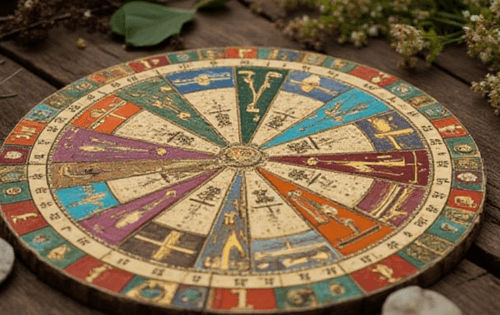 The eight-spoked wheel of the year — marking the solstices, equinoxes, and the four cross-quarter days between them — provides one of the most practically useful frameworks in contemporary goddess spirituality. Its roots are in Celtic agricultural tradition, where the year was divided by the fire festivals of Imbolc, Beltane, Lughnasadh, and Samhain; the solstices and equinoxes were incorporated into what became the modern Pagan calendar, most fully systematised in the Wiccan tradition of the mid-twentieth century.
The value of the wheel of the year is not that it is historically ancient in its current form — it is not — but that it provides a structured way of paying genuine attention to the seasonal cycle, and seasonal awareness is genuinely useful both practically and spiritually. Different times of year have different qualities of light, different energies in the natural world, and different implications for human activity. Aligning spiritual practice with these actual qualities, rather than maintaining identical practice regardless of season, produces a more grounded and more honest engagement with the earth.
The goddess archetypes associated with each season are not arbitrary assignments. They arise from the natural correspondence between the qualities of each season and the qualities that specific goddesses embody. Spring — with its quality of emergence, newness, and potent but not yet determined possibility — naturally corresponds to maiden goddess energy. Summer — with its fullness, abundance, and peak expression of creative power — corresponds to mother goddess energy. Autumn — with its harvest, its honest accounting of what grew and what did not, its preparation for withdrawal — corresponds to the mature wise woman. Winter — with its stripping away, its darkness, its demand for genuine rest and the inner work that only quiet makes possible — corresponds to the crone.
This page covers each season and its associated goddess energies. The northern hemisphere seasonal dates are used throughout; those in the southern hemisphere will reverse the associations — summer solstice falls in December, winter in June.
Spring: Maiden Goddesses and New Beginnings (March–May)

Spring is the season of return and beginning — the moment when what was dormant begins to stir, when the ground becomes workable, when light outlasts dark and continues expanding. The maiden goddess archetype is the natural expression of this quality: present, fresh, full of unrealised potential, not yet committed to a particular form. She is the seed's first shoot, the crescent moon, the morning that has not yet become afternoon.
Spring Equinox — Equal Light and Dark:
The spring equinox (approximately 20–21 March in the northern hemisphere) marks the moment when day and night are of equal length, and the balance tips toward light. The Germanic goddess Ostara or Eostre — for whom the Christian festival of Easter takes its name — is associated with this turning point and with the symbols of dawn, eggs, and hares. Her energy is one of balance that is about to become imbalance in the direction of growth: the moment of equal poise before the leap forward.
Persephone's Return:
In Greek mythology, it is Persephone's return from the underworld that brings spring. This myth — in which the earth's fertility is restored when the daughter returns to the mother — is one of the oldest and most psychologically resonant seasonal stories. Working with Persephone's energy in spring is especially relevant for anyone emerging from a difficult period: depression, illness, grief, or a significant withdrawal from life. Her return is not an undoing of the underworld experience but a re-emergence that carries what was learned there.
Imbolc (1–2 February) — Brigid's Fire:
Imbolc — the Celtic fire festival marking the earliest signs of spring — is Brigid's festival. The snowdrops appear, the ewes come into milk, and the days are measurably if not dramatically longer. Brigid's energy at Imbolc is specifically about the spark of inspiration that precedes full creative expression: the idea before the project, the impulse before the action. Her sacred flame, continuously tended at Kildare, represents exactly this — the small persistent fire that does not yet blaze but will not go out.
Beltane (1 May) — Fertility and Full Flowering:
Beltane marks the full arrival of summer's energy and was traditionally the most important fertility festival in the Celtic calendar — associated with the lighting of bonfires, with the flowering of the hawthorn, and with the sacred marriage between the goddess of the land and the god of the sun. The energy is unambiguously about creative and erotic power at its most exuberant. Freya is a natural archetype for Beltane — her combination of love, beauty, fertility, and fierce independence captures the quality of the season.
Spring Practices:
Spring is the appropriate season for genuine new beginnings — not for projects tentatively begun in January and already faltering, but for the one thing you actually want to grow this year. Plant seeds, literally or metaphorically. Clear space for what is coming. Begin the consistent daily practice that you will build on through summer. Notice what is actually stirring in the natural world around you — what is emerging, what is returning, what colour the light is at different times of day.
Summer: Mother Goddesses and Full Power (June–August)
Summer is the season of fullness — when everything that spring began has reached the height of its expression, when the days are long, when the earth is at maximum generative capacity. The mother goddess archetype is the natural expression of this season: creating and sustaining life, abundant, powerful, at the peak of her capacity to nourish and produce. This is the season for work, for the full expression of what was only potential in spring, for community and celebration and the enjoyment of what is flourishing.
Summer Solstice — Peak Light:
The summer solstice (approximately 20–21 June) is the longest day — the point at which solar energy reaches its maximum. Sun goddesses are the natural archetype for this moment: Amaterasu, the Japanese sun goddess, whose withdrawal into a cave brought darkness to the world and whose return brought light; Sekhmet, the Egyptian lioness-goddess of the fierce solar noon; Sunna, the Norse goddess who drives the sun's chariot across the sky. Their energy is one of peak power, clarity, and the specific quality of midsummer light — bright, warm, unequivocal.
Demeter in Her Abundance:
Demeter's summer aspect is the goddess at the height of her productive power — the fields full of growing grain, the earth providing abundantly for all her children. Working with Demeter in summer means attending to the actual growth of what you planted in spring: doing the consistent work of tending, not just the exciting work of beginning. Summer abundance requires summer labour.
Lammas / Lughnasadh (1 August) — First Harvest:
Lughnasadh — named for the Celtic god Lugh but associated in goddess spirituality with the first harvest and the beginning of the harvest season — marks the point at which summer's growth begins its transition toward autumn's gathering. The bread made from the first grain is sacred. The energy is one of gratitude and acknowledgement: what has actually grown? What is ready to be harvested now, and what needs more time?
Lakshmi and Summer Abundance:
Lakshmi's energy — prosperity, beauty, the enjoyment of what life offers — is well suited to summer. The season invites genuine pleasure in what is flourishing, generous sharing of what is abundant, and the recognition that enjoying the fruits of the earth is not shallow but an expression of gratitude. Lakshmi's lotus blooms in summer; her gold reflects the summer light.
Summer Practices:
Do the work. Summer is not the season for beginning or for withdrawing — it is the season for sustained effort on what has been started. Spend time outdoors in the actual summer light. Celebrate — individually and with community — what is flourishing. Give generously from what you have in abundance. Notice what needs more tending and what is ready to harvest early.
Autumn: Wisdom Goddesses and Grateful Gathering (September–November)
Autumn is the season of harvest and honesty — when the year's actual results become visible, when what grew must be gathered and preserved, and when what did not grow must be acknowledged. The wise woman archetype is the natural expression of this season: clear-eyed, grateful without sentimentality, able to assess what is worth keeping and what must be released before the ground can rest. Autumn is the season when wisdom is most needed and most available.
Autumn Equinox — Balance Tipping Toward Dark:
The autumn equinox (approximately 22–23 September) mirrors the spring equinox in structure but tips in the opposite direction: the balance between light and dark shifts toward darkness for the next six months. This is not a melancholy moment but a necessary one — the shift toward the inward, the reflective, the restorative. Demeter's grief at Persephone's descent begins here; the light that was taken for granted in summer becomes precious as it diminishes.
Hecate at the Crossroads:
Hecate's power intensifies as the year turns toward darkness. As the goddess of the crossroads and the threshold, she is the appropriate archetype for the decisions that autumn brings: what to carry forward into the next year, what to release, which direction to choose when the path divides. Samhain (31 October–1 November) — the Celtic festival of the dead, when the veil between worlds was understood to be at its thinnest — is specifically Hecate's season.
Navaratri and Durga:
The nine-night Hindu festival of Navaratri typically falls in autumn and celebrates Durga's victory over Mahishasura — the triumph of divine feminine power over the forces of ignorance and ego. In autumn's context, this victory is internal: what within you has been defeated by clarity this year? What habits, patterns, or self-deceptions has the year's honest accounting made untenable? Durga's energy supports the difficult honesty that genuine harvest requires.
Autumn Practices:
Conduct an honest assessment of the year. What did you actually grow? What did you intend to grow but did not? What surprised you by flourishing? What needs to be preserved and carried forward; what needs to be composted? Express genuine gratitude for what the year produced — not performed gratitude but the specific, particular gratitude for actual things. Prepare for the inward turn: what will your winter work be?
Winter: Crone Goddesses and Sacred Darkness (December–February)
Winter is the season most at odds with contemporary culture's demands for constant productivity and positivity, and therefore the season that most requires conscious spiritual support. The crone archetype is the natural expression of winter: ancient, uncompromising, stripping away everything unnecessary to reveal what is essential. The Cailleach brings her hammer down on the mountains; Kali dances on what must end; Hecate carries her torch through the darkest night. These are not comfortable goddesses, and winter is not a comfortable season — but it is a necessary one, and the work it calls for is genuinely important.
Winter Solstice — The Return of Light:
The winter solstice (approximately 20–21 December) is the longest night — the extreme point of darkness before light begins its slow return. Every culture in the northern hemisphere has marked this moment with celebration: Yule in the Norse tradition, the birth of the divine child in the Christian calendar, Diwali (the festival of lights) in the Hindu calendar, Hanukkah in the Jewish calendar. The winter solstice celebration is not denial of the darkness but a declaration of faith that light will return — the same faith that Amaterasu's emergence from the cave represents in Japanese mythology.
The Cailleach — Winter's Ancient Power:
The Cailleach Bheur of Scotland and the Cailleach Bhéara of Ireland are among the oldest and most powerful figures in Celtic mythology. She shapes mountains with her hammer, she brings the storms and the frost, she governs the harshest and most demanding season. Her energy in winter practice is one of unsparing clarity: what is she stripping away? What can she see now that the leaves are gone? The bare winter tree reveals the structure that summer's fullness concealed.
Imbolc (1–2 February) — The Turning:
Imbolc — Brigid's festival at the end of winter — marks the first stirring of spring beneath the winter surface. The snowdrops push through frozen ground. The days are measurably if not dramatically longer. The creative spark that has been held in dormancy through the winter months begins to move. Working with Brigid's energy at Imbolc means attending to what has been quietly forming in the darkness of winter — the ideas, the intentions, the renewed clarity that the winter's rest has made possible.
Winter Practices:
Rest. This is not a secondary instruction but the primary one. Contemporary culture does not support genuine rest, and winter is the season that specifically calls for it. Reduce commitments where possible. Sleep more. Spend time in stillness — in meditation, in dream work, in the kind of quiet reflection that the other seasons rarely permit. Do the inner work: the shadow integration, the honest self-examination, the spiritual study that requires sustained concentration. And trust that this rest is not absence of productivity but the condition for spring's genuine beginning.
Return to Divine Feminine Hub →
Select the current season: