Notifications (Click to mark read)
 Parenting is one of the most demanding and significant forms of caregiving, and goddess archetypes offer genuine frameworks for thinking through its different dimensions. This is not because ancient mythological figures had insights into modern child psychology that supersede current research — they did not — but because the qualities associated with goddesses like Demeter, Durga, Quan Yin, and Athena map meaningfully onto recognisable parenting orientations that researchers and practitioners have identified as genuinely supportive of healthy child development.
Demeter's orientation toward patient nourishment and unconditional love corresponds to what developmental psychology calls secure attachment — the consistent, warm, responsive caregiving that gives children a safe base from which to explore the world. Durga's fierce protectiveness balanced with empowerment mirrors the research-supported approach of authoritative parenting: high warmth combined with clear, consistent limits. Quan Yin's compassionate patience reflects the emotional coaching approach that builds emotional intelligence and regulation. Athena's mentorship orientation supports the development of competence, critical thinking, and practical wisdom.
Working with these archetypes does not mean performing rituals over children or imposing a spiritual framework on them. It means using these figures as mirrors for your own parenting — asking which orientations you naturally inhabit, which you find difficult, and what expanding your range might offer both you and your children. Parenting from goddess wisdom is ultimately parenting from greater self-awareness about the kind of parent you are trying to be.
The Four Core Parenting Archetypes:
• Demeter: Nourishment, unconditional love, secure attachment, seasonal rhythms
• Durga: Fierce protection, consistent limits, empowerment, advocacy
• Quan Yin: Compassionate patience, emotional validation, conflict resolution
• Athena: Educational guidance, critical thinking, mentorship, practical skills
Most parents naturally embody one or two of these orientations more readily than others. The work is not to achieve all four perfectly but to understand your own tendencies clearly enough to expand when a situation calls for a different quality than the one that comes most easily to you.
Demeter Parenting: Nurturing Growth and Natural Development

Demeter is the goddess of the grain and the harvest, and her primary mythological quality is unconditional provision — the earth feeding all living things without requiring that they deserve it first. Applied to parenting, this translates into the research-supported understanding that secure attachment — the child's felt sense that their caregiver is reliably available, responsive, and warm — is the single most important foundation for healthy development across virtually every domain, from emotional regulation to academic performance to adult relationship quality.
Secure Attachment as Foundation:
Demeter parenting prioritises the relationship before the behaviour. When a child acts out, the first question is not what consequence is appropriate but what the child needs and whether the relationship is strong enough to hold the difficulty without fracturing. Children who feel securely attached are paradoxically easier to guide and discipline because they trust the relationship enough to accept limits from it.
Trusting Natural Development:
One of Demeter's lessons is that growth happens in its own time. Contemporary parenting culture generates considerable anxiety about developmental milestones, academic readiness, and early achievement. Demeter parenting resists this pressure — not by ignoring genuine developmental concerns, but by maintaining a fundamental trust in the child's own developmental process and seeking professional assessment when something genuinely seems outside the typical range rather than in response to competitive comparison.
Seasonal Rhythms in Family Life:
Demeter presides over the agricultural cycle — planting, growing, harvest, and fallow. Translating this into family life means recognising that children need periods of active stimulation and periods of genuine rest, that family energy shifts with the seasons and the school year, and that attempting to maintain constant high-intensity engagement is neither sustainable nor developmentally appropriate. Rest and unstructured time are not wasted time; they are the fallow field.
Food as Connection:
Demeter's connection with grain and nourishment makes mealtimes a natural domain for her parenting energy. Shared meals — prepared with care, eaten together without screens — are one of the most consistently researched protective factors in family life. They are not about nutrition alone but about the daily ritual of sitting together, the transmission of culture through food, and the simple but powerful experience of being fed.
Unconditional Love and Acceptance:
Children need to experience that they are loved for who they are rather than for what they achieve. This does not mean approving all behaviour — it means separating the child from their behaviour in the parent's response, so that correction is experienced as guidance from love rather than as withdrawal of love. This distinction, though sometimes subtle in practice, has significant effects on the child's developing sense of self.
Durga Parenting: Fierce Protection and Empowerment

Durga is the warrior goddess of Hindu tradition — fierce, multi-armed, riding a lion, capable of defeating what ordinary strength cannot overcome. Her parenting energy is not aggressive but protective and empowering. She represents the quality that is required when the world presents genuine threats to the child and when the child needs to develop their own strength to face the world's challenges.
Fierce Advocacy:
Durga parents are willing to be uncomfortable in advocating for their children. When a school system fails a child with different learning needs, when a medical system dismisses symptoms, when social situations are genuinely harmful — Durga energy is what enables a parent to push back clearly and persistently without losing their ground. This is not aggression; it is clear, sustained advocacy for someone who cannot fully advocate for themselves.
Clear and Consistent Limits:
Durga's warrior quality is disciplined, not chaotic. She does not fight everything — she discerns what needs to be fought and engages with precision and commitment. Applied to parenting, this means setting limits that are genuinely necessary and worth holding, and then holding them consistently. Children experience consistent limits as safety; inconsistent limits as anxiety about who is actually in charge.
Empowering Rather Than Only Protecting:
Durga does not remove all threat from the world — she teaches warriors how to fight. The goal of Durga parenting is not to shelter children from all difficulty but to build their capacity to meet difficulty. This means allowing age-appropriate struggle, resisting the urge to solve problems the child could solve themselves, and progressively extending trust and autonomy as competence develops.
Teaching About Injustice:
Durga's warrior quality is oriented toward justice, not dominance. Durga parenting includes honest, age-appropriate conversations about the existence of unfairness, prejudice, and harm in the world — not to frighten children but to give them the framework and vocabulary to recognise injustice and to know that a caring adult will take it seriously when they name it.
Emotional Courage:
The fiercer emotions — anger, grief, fear expressed as aggression — are often the ones that parents most want to suppress in children. Durga parenting recognises that these emotions have legitimate function and information. Teaching children to express strong emotions appropriately, rather than suppressing them or allowing them to be discharged indiscriminately, is one of the most valuable gifts a parent can offer.
Quan Yin Parenting: Compassionate Patience and Emotional Intelligence
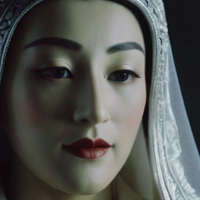
Quan Yin is the Buddhist and Daoist bodhisattva of compassion — she who hears the cries of the world and responds with inexhaustible patience and mercy. In parenting, her energy represents the quality that is most severely tested by children's emotional extremes: the capacity to remain regulated, curious, and warm in the face of a child's dysregulation, opposition, or distress.
Emotional Coaching:
Research by John Gottman and others has identified emotional coaching — naming, validating, and helping children navigate emotions — as one of the most significant parenting approaches for developing emotional intelligence and resilience. Quan Yin parenting naturally practices this: the parent's first response to a child's strong emotion is curiosity and validation rather than correction or dismissal. This does not mean approving the child's behaviour; it means acknowledging the feeling before addressing the action.
Patience as Practice:
Quan Yin's compassion is not passive — it is an active, sustained orientation that requires considerable self-regulation on the parent's part. A parent cannot offer genuine patience if they are themselves chronically dysregulated, exhausted, or unsupported. Quan Yin parenting requires that the parent also attend to their own nervous system, emotional health, and support network. The caregiver's wellbeing is not separate from the child's — it is its foundation.
Conflict Resolution with Siblings:
When children fight, the Quan Yin parenting response is to facilitate understanding rather than simply impose resolution. This means slowing the situation down, helping each child articulate their experience, and guiding them toward solutions that address the underlying need. Over time, children who experience this process begin to apply it themselves.
Forgiveness and Repair:
No parent parents perfectly. Quan Yin parenting includes the willingness to repair — to acknowledge to a child when you have responded in a way that was unfair, harsh, or simply wrong, and to model the kind of accountable apology you want your children to learn. This repair process, far from undermining parental authority, strengthens it, because it demonstrates that relationships can survive difficulty and that honesty is valued over performance.
Athena Parenting: Wisdom, Learning, and Strategic Guidance

Athena is the goddess of wisdom and practical skill — born fully formed and fully armed, she represents the kind of intelligence that is both theoretical and applied. In parenting, her energy supports the educational dimension: helping children develop not just knowledge but the capacity to think, judge, and act wisely in the world.
Teaching How to Think, Not What to Think:
The most enduring educational gift a parent can offer is not a body of knowledge but a set of cognitive habits: how to ask good questions, evaluate evidence, consider multiple perspectives, and arrive at well-reasoned positions. Athena parenting values this kind of thinking over academic performance for its own sake, and models it in the parent's own engagement with ideas and decisions.
Practical Competence:
Athena is a goddess of craft as much as wisdom — she governs weaving, pottery, metalwork, and the practical arts. Athena parenting includes deliberately teaching practical skills: cooking, household management, basic financial literacy, time organisation, how to communicate clearly under pressure. These are not trivial skills; they are the foundation of adult functioning.
Mentorship Rather Than Management:
As children develop, the parenting relationship appropriately shifts from one of primary direction to one of mentorship and consultation. Athena parenting tracks this developmental shift and adjusts accordingly — progressively stepping back from decisions the child can now make competently, offering perspective when asked, and trusting the developing judgment while remaining available for genuine guidance.
Ethics and Justice:
Athena's wisdom is in the service of justice — she is not merely clever but oriented toward what is right. Athena parenting includes explicit conversation about ethical questions: what fairness requires, how to navigate situations where different values are in tension, what it means to take responsibility for harm caused. Children who have practised thinking through ethical questions with adult guidance are better equipped to navigate them independently.
Supporting Unique Gifts:
Athena's strategic intelligence recognises that different children have different capacities and different paths to flourishing. Athena parenting supports the individual child's actual gifts and interests rather than a generic ideal of what a successful child looks like. The parent's role is to help the child understand their own particular intelligence and to find environments where it can develop.
Return to Divine Feminine Hub →
Select your parenting challenge:
Morning:
Set an intention to parent from your most considered self today, not your most reactive one.
Challenges:
Pause and breathe before responding. Ask: which parenting quality does this moment actually need?
Evening:
Reflect on one moment of genuine connection and one moment you would handle differently. Both are useful.