Notifications (Click to mark read)
 The moon's cycle — from new to full and back to dark again in approximately 29.5 days — is one of the most consistently tracked phenomena in human history. Before the development of the solar calendar, the lunar month was the primary unit of human time-keeping, and the goddess traditions that developed around the moon's phases are among the oldest continuous forms of sacred practice in the world. The moon's regular, predictable cycling — its visible movement through darkness to fullness and back — made it the natural symbol for cyclical existence, for the processes of growth and decline, of accumulation and release, that characterise both natural and human life.
Moon goddess rituals are practices that align personal spiritual work with the qualities of each lunar phase, using the moon's cycle as a framework for intention-setting, manifestation, release, and rest. The framework is simple: the new moon is associated with new beginnings and the setting of intentions; the waxing phases with building and taking action; the full moon with peak expression and release; the waning phases with gradual letting go; and the dark moon with rest, deep inner work, and preparation for the next cycle.
This framework has genuine practical value regardless of its spiritual dimensions. People who consciously work with the lunar cycle — who set intentions at the new moon, assess them at the full moon, and honestly evaluate what is ready to be released before the dark moon — typically find that the cycle provides useful structure for the kind of regular self-examination that sustains both spiritual and practical development. The moon becomes a timing system for intentional living.
The goddess figures associated with the moon vary by tradition: Artemis and Diana in the Greek and Roman traditions, Hecate as the dark moon goddess, Chang'e in the Chinese tradition, Coyolxauhqui in the Aztec tradition, Selene as the full moon's light. Each brings a distinct quality of energy to moon practice, and working with different moon goddesses at different phases reflects the moon's own multiplicity.
New Moon Rituals: Intention & New Beginnings

The new moon — the phase in which the moon is not visible in the sky — is the most internally focused point of the lunar cycle. The absence of reflected light corresponds to an absence of external illumination; this is the time to look inward rather than outward, to work with what is hidden and germinal rather than what is already manifest. New moon rituals are generally oriented toward intention-setting: the articulation of what one wants to call into being in the coming cycle.
The practice of setting intentions at the new moon works because the articulation of intention is itself a useful act — it requires clarity about what one actually wants (as opposed to what one thinks one should want), commitment to a direction, and the willingness to name something before it exists. Many people find that writing intentions at the new moon and revisiting them at the full moon produces useful information: some intentions have been worked toward and are developing; others have been forgotten or avoided in ways that reveal something about whether they were genuine intentions or performed ones.
New Moon Goddess Energies:
Artemis — the independent moon huntress who follows her own path — is the natural archetype for new moon intention work. She represents the capacity to choose one's direction without requiring others' approval and to commit to that direction with genuine focus. Hecate — who governs the dark moon specifically and who sees what is hidden — is relevant for the deeper dimension of new moon work: the honest self-examination that precedes clear intention-setting. Isis brings magical power and the quality of bringing things into being from the invisible into the visible.
New Moon Practice:
Create a quiet space with dark or deep blue candles. Spend some time in genuine stillness before writing — the intention that requires no thought is probably one you have been intending for a while; the one that takes time to arrive may be more genuinely new. Write no more than three to five intentions, phrased in the present tense as though they are already in process. Speak them aloud. Place the paper on your altar or bury it in earth. The ritual is complete.
The most important element of new moon work is not the ceremony but the honesty: setting intentions you actually intend to pursue rather than intentions that sound spiritually appropriate. The moon cycle provides an honest record.
Full Moon Rituals: Manifestation & Release
The full moon is the most dramatically visible point of the lunar cycle — the moment when the moon's reflected light is at its maximum, when it rises at sunset and sets at dawn, illuminating the entire night. In the goddess tradition, the full moon corresponds to the Mother archetype: the peak of creative and generative power, the fullness of what has been growing since the new moon.
Full moon rituals serve two complementary purposes: celebration of what has manifested since the new moon, and release of what is ready to be let go. These two are related — genuine release requires first acknowledging what is being released, which requires the same honest assessment that acknowledgement of growth requires. Both depend on the willingness to see clearly what is actually present rather than what one hopes or fears is present.
The full moon's light is associated with illumination — the revealing of what has been hidden or avoided. Many people find that things they have been not quite seeing become visible around the full moon: clarity that arrives, sometimes uncomfortably, about situations or patterns that need addressing. This is not superstition; it may be partly the result of the brighter nights affecting sleep and therefore making certain kinds of cognitive processing more available, or it may simply be the consequence of having a regular practice of honest self-assessment at this point in each month.
Full Moon Goddess Energies:
Diana — Artemis's Roman equivalent, specifically associated with the full moon — represents the huntress at the peak of her power. Selene, the Greek personification of the moon itself, brings the pure quality of lunar light and illumination. Chang'e, the Chinese moon goddess who dwells in the lunar palace, brings grace, beauty, and the poignant quality of something precious held at a distance.
Full Moon Practice:
Set up your altar with silver or white candles and a bowl of water placed where it can receive the moonlight. Begin by revisiting the intentions set at the new moon — what has developed? What has been actively worked toward, and what has been avoided? Celebrate genuinely what has grown. Then write what you are ready to release — old patterns, resentments, habits that no longer serve — and burn the paper safely in a fireproof bowl, releasing it with intention rather than drama. The charged water from the moonlight can be used to anoint yourself or water plants.
Waxing & Waning Moon Practices
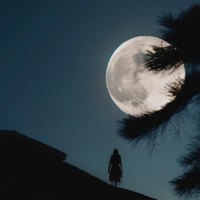
The waxing and waning phases — the two weeks between new moon and full moon and between full moon and new moon — are the working phases of the lunar cycle. The new moon sets direction; the full moon provides assessment and release; but the waxing and waning phases are where the actual work of the cycle is done.
Waxing Moon — Building and Acting:
The waxing fortnight — from new moon to full moon — is characterised by increasing light, increasing momentum, and the quality of building. This is the time to take concrete action on the intentions set at the new moon: to begin, to reach out, to create, to invest energy in what one wants to grow. The waxing energy does not automatically produce results; it provides the biological and psychological conditions most supportive of forward action. The action still has to be taken.
Goddess energies for the waxing phase: Brigid — whose energy is the creative fire of inspiration-moving-into-form — supports the early waxing period when ideas are beginning to take concrete shape. Lakshmi — whose energy is abundance attracting abundance — supports the building of material and relational prosperity. Quan Yin brings the compassionate, sustained attention that complex projects require.
A simple waxing moon practice: at each weekly point after the new moon, light a candle and spend ten minutes reviewing what concrete action you have taken toward each intention and what the next action is. The candle marks the occasion; the review is the practice.
Waning Moon — Releasing and Resting:
The waning fortnight — from full moon to new moon — is characterised by decreasing light and the quality of release. This is not an energetic decline; it is a different kind of energy — the energy of completion, of letting go with genuine willingness rather than resignation, of clearing space before the next cycle begins. People who work consciously with the waning moon often find that it is easier to release things during this phase than at other points in the month — the cycle itself creates a natural opening for letting go.
Goddess energies for the waning phase: Kali — who destroys what must be destroyed with fierce love — supports the releasing of patterns that have been held too long. Hecate governs the dark moon and the threshold between cycles, supporting the preparation for what is coming rather than clinging to what is ending. Yemoja's healing waters wash away what is ready to be released.
A simple waning moon practice: at each weekly point after the full moon, spend ten minutes identifying one thing — a resentment, a habit, a project that has run its course, an expectation that is not being met — that you are willing to release before the next new moon. Write it down and then release the paper by the dark moon.
Learn More About Sacred Cycles →
🌑 New Moon: Write 3–5 honest intentions. Speak them aloud. Place on altar.
🌒 Waxing: Take one concrete action toward each intention per week.
🌕 Full Moon: Review what has developed. Write and burn what is ready to release.
🌘 Waning: Identify one thing to release before the next new moon.
🌑 Dark Moon: Rest. Do not begin new things. Prepare space for the next cycle.
Track across several complete cycles:
Patterns become visible across three to six months of tracking.