Notifications (Click to mark read)
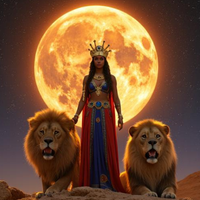 Ishtar is the ancient Akkadian name for the goddess known in the earlier Sumerian tradition as Inanna — the Queen of Heaven and Earth, the goddess of love and war, one of the most important divine figures in the history of the ancient Near East. She was venerated across Mesopotamia for more than 3,000 years, her cult centred at the great temple of Eanna at Uruk, and her worship eventually spread throughout the ancient world. In the Babylonian pantheon she stands among the highest deities, equal in importance to Marduk and Anu, and her name appears in personal names, royal inscriptions, and poetic texts from the earliest records of Sumerian literature through to the late Babylonian period.
What is most distinctive about Ishtar — and what makes her so rich a figure for contemporary goddess spirituality — is the combination she embodies. She is the goddess of erotic love and of war, of sexual desire and of battle, of the soft dawn of Venus on the horizon and of the brutal chaos of conflict. These qualities are not treated as contradictions in her mythology; they are understood as facets of a single comprehensive power. She desires, she creates, she destroys, she mourns, she descends into darkness and returns. She is not partial; she is the full range.
The earliest surviving literature in human history — the Sumerian hymns to Inanna composed by Enheduanna, a high priestess and daughter of Sargon of Akkad, around 2285–2250 BCE — celebrates this goddess with extraordinary intensity and sophistication. Enheduanna is the first named author in recorded history, and her hymns to Inanna are both devotional literature and political theology: they establish Inanna's comprehensive authority over heaven and earth through language of beauty, terror, and overwhelming power.
 The Descent of Ishtar to the Underworld is one of the oldest and most psychologically resonant myths in any tradition — predating the Greek myth of Persephone's descent by more than a thousand years, though the two share striking structural similarities that suggest either common origin or independent development of the same archetypal pattern.
In the myth, Ishtar decides to descend to the Great Below — the realm of the dead, governed by her sister Ereshkigal. Her motivations vary in different versions of the text: she may be seeking to challenge Ereshkigal's power, to understand death, or to recover her dead lover. As she passes through each of the seven gates of the underworld, she is required to surrender one of her divine attributes — her crown, her lapis lazuli necklace, her breastplate, her golden rings, her girdle, her measuring rod and line, and finally her royal garment. At each gate she protests; at each gate she is told "the ways of the underworld are perfect; they may not be questioned." By the time she reaches Ereshkigal, she has been stripped of everything that defined her divine identity.
Ereshkigal strikes Ishtar dead and hangs her body on a hook. The consequence is immediate and cosmic: with the goddess of love and fertility gone from the world, all reproduction ceases. Animals stop mating, plants stop growing, and the gods in heaven begin to panic about the future of creation.
The god Enki — lord of wisdom — devises a plan for Ishtar's rescue, creating small beings from dirt who can slip into the underworld undetected and revive her with the water of life. Ishtar is restored and ascends through the seven gates, recovering her divine attributes at each one. But the rules of the underworld require a substitute — someone must take her place. When she returns to find her husband Tammuz had not mourned her absence but was sitting comfortably on her throne, she points to him and he is taken to the underworld in her place.
This myth encodes several profound psychological and spiritual truths. The descent through the gates — the surrender of identity markers, of status, of protection, of everything that defines the self — is an archetypal initiation pattern. What descends is not destroyed; it is transformed through the experience of complete stripping. The return through the gates, recovering the attributes now invested with a different quality of understanding, is the completion of the cycle. The requirement for a substitute speaks to the underworld's demand for genuine sacrifice rather than escape. And Ishtar's choice of substitute — her ungrieving husband rather than those who had mourned her loss — demonstrates that her justice is precise.
 Ishtar's iconography is among the most recognisable in ancient Near Eastern art, and her symbols encode specific theological meanings about the nature of her power.
The Eight-Pointed Star:
The eight-pointed star (or star-disc) is Ishtar's most characteristic symbol, representing her identification with the planet Venus — which appears as both the morning and evening star. The eight points may correspond to the eight-year synodic cycle of Venus, which traces a near-perfect pentagram against the backdrop of the fixed stars over this period. This celestial identification connects Ishtar to the cycles of the heavens and to the dual nature of Venus as both morning and evening presence.
The Lion:
Ishtar stands on a lion in many of her representations, or is accompanied by lions — she is sometimes described as the lion of the great gods. The lion represents royal power, courage, and the capacity to destroy as well as to protect. Her association with the lion speaks to the fierce quality of her power, which is not the gentle, accommodating power of the nurturer but the sovereign power of the ruler.
The Dove:
The dove is Ishtar's animal in her aspect as goddess of love, and this association passed into later Mediterranean traditions — the dove became associated with Aphrodite and then with Venus in the Roman tradition, and eventually with the Holy Spirit in Christian iconography. The dove represents both sexual love and the quality of tenderness that coexists with Ishtar's fiercer aspects.
The Rod and Ring:
In Mesopotamian iconography, the rod and ring are the symbols of divine authority — they appear in the hands of gods and goddesses offering these symbols of just rule to kings. Ishtar holds these symbols as the goddess of divine sovereignty and justice, not only of personal love and warfare.
Lapis Lazuli:
Lapis lazuli — the deep blue stone imported from Afghanistan that was among the most precious materials in the ancient Near East — appears repeatedly in Ishtar's mythology and in the hymns to Inanna. Her descent through the seven gates involves the surrender of a lapis lazuli necklace; the measuring rod in her hand is said to be made of lapis lazuli. This stone, the colour of the night sky and flecked with gold like stars, represented divine wisdom and cosmic authority.
The Planet Venus:
Ishtar's celestial counterpart is the planet Venus, visible as the brightest object in the sky after the sun and moon. Venus's dual appearance as morning star (when it precedes the sun) and evening star (when it follows) was understood as a manifestation of Ishtar's dual nature — her tender and fierce aspects, her roles as goddess of love and of war.
The relationship between Ishtar and Inanna deserves a brief clarification, as the two names are frequently used interchangeably in contemporary goddess spirituality while representing a specific historical relationship. Inanna is the Sumerian name and the earlier tradition; Ishtar is the Akkadian name for what became the same goddess as Akkadian became the dominant language of Mesopotamia from around 2350 BCE onward.
The Sumerian Inanna and the Akkadian Ishtar share most of their mythology — including the Descent — but they also carry distinct qualities from their respective cultural contexts. Inanna's mythology in the Sumerian texts places more emphasis on her role as Queen of Heaven and Earth in a political and cosmic sense — she acquires the me (the divine laws and attributes of civilisation) from the god Enki, she establishes her authority over heaven and earth through a series of mythological contests. Ishtar in the Akkadian and Babylonian traditions is more explicitly identified with the planet Venus and with the specific combination of love and war that became her defining characteristic in the wider ancient world.
For practical purposes in contemporary goddess spirituality, Ishtar and Inanna can be treated as aspects of the same divine figure — the great goddess of the ancient Near East who embodies the full range of feminine divine power.
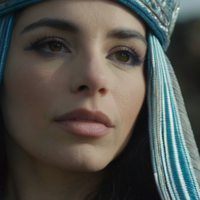 Ishtar is most relevant as an archetype in situations that call for the integration of qualities that contemporary culture tends to keep separate: love and power, tenderness and fierceness, the capacity for deep vulnerability and the capacity for decisive authority. The false choice between being loving and being strong — between being cared for and being respected — is precisely what Ishtar's mythology refuses. She is sovereign and she is a lover; she descends and she returns; she grieves and she judges.
The Descent as Practice:
The myth of Ishtar's descent offers a framework for engaging with the experience of being stripped of what defines you — through loss, failure, illness, grief, or the kind of life transition that removes the markers of identity and status you had relied upon. The myth does not promise that this stripping is without cost or pain; it suggests that moving through it fully — not escaping, not bypassing, but descending through each gate and surrendering what is required — is the path to a different quality of return. What comes back through the gates on the ascent carries something that was not there before.
Sacred Sexuality:
Ishtar's identification of sexual energy as divine — as a genuine dimension of the sacred rather than something in tension with it — is one of her most important contributions to contemporary goddess spirituality. The Sumerian hymns to Inanna celebrate erotic love with explicit and unashamed reverence. Working with Ishtar's energy in this dimension means developing an honest, non-shaming relationship with sexual desire as a natural expression of the life force.
Sovereignty Practices:
Ishtar is a sovereign goddess — she does not ask permission to rule, and her authority does not depend on others' approval. Working with her archetype in the context of leadership, authority, and the refusal to diminish oneself involves developing the internal experience of legitimate authority: the sense that one's power is not borrowed, not contingent on performance, not dependent on others' recognition.
Offerings and Altar Work:
Traditional offerings to Ishtar included beer, bread, and incense. Contemporary offerings appropriate to her energy: gold candles, lapis lazuli or carnelian stones, roses, and cedar or frankincense incense. The eight-pointed star as an altar symbol focuses her energy specifically.
Explore More Goddess Archetypes →
Each gate of Ishtar's descent represents the surrender of an identity marker — crown, necklace, breastplate, rings, girdle, measuring rod, garment.
The myth asks: what do you cling to as the definition of yourself? What would remain if all of it were surrendered?
What returns through the gates carries something the descent alone could teach.