Notifications (Click to mark read)
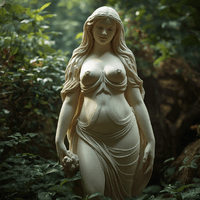 The divine feminine is a name for the sacred, creative, intuitive dimension of consciousness that has been recognised and honoured across cultures and centuries — not as the exclusive property of women, but as a quality of awareness and being available to anyone. It encompasses the cyclical, the receptive, the relational, the embodied, and the emotionally intelligent dimensions of human experience that many traditions have associated with the feminine principle.
The concept appears in Hindu philosophy as Shakti — the primordial creative energy underlying all existence — and in the goddess traditions of ancient Egypt, Greece, Rome, and the Celtic world. It appears in the Chinese tradition through the yin principle of Daoist philosophy, in the Yoruba tradition through the Orisha like Oshun and Yemoja, in the Buddhist tradition through the bodhisattvas of compassion, and in the contemplative streams of Christianity through Wisdom (Sophia) and the veneration of Mary. The forms vary considerably across traditions; what they share is the recognition that the sacred expresses itself through qualities that are characteristically associated with the feminine.
In contemporary spiritual practice, the divine feminine offers a counter-principle to the dominant cultural values of speed, productivity, and external achievement. It legitimises rest, emotional depth, cyclical rather than linear progress, and the understanding that care — of the self, of others, of the earth — is a form of power rather than its absence. This is not a rejection of masculine qualities but a recognition that both are necessary for wholeness, and that the feminine has been significantly undervalued in the cultural mainstream.
Core Principles:
• Cyclical Living: Honouring natural rhythms and seasonal changes rather than forcing linear progress
• Intuitive Wisdom: Trusting inner knowing and emotional intelligence alongside rational analysis
• Sacred Embodiment: Treating the body as a site of wisdom rather than a vehicle for the mind
• Creative Expression: Recognising making, tending, and creating as spiritual acts
• Healing Arts: Working with the cyclical, relational dimensions of healing and restoration
This page serves as an introduction to divine feminine wisdom and a gateway to the more detailed resources on this site. Whether you are drawn to specific goddess energies, the wisdom of lunar and seasonal cycles, healing practices, or the study of goddess traditions across cultures, the links below will take you further.
Goddess Archetypes & Divine Energies
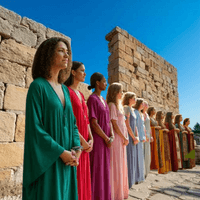
Goddess archetypes are recurring patterns of feminine consciousness that appear across cultures in different mythological forms. The Mother, the Maiden, the Crone, the Lover, the Warrior, the Healer — these patterns are recognisable across Greek, Celtic, Hindu, Egyptian, and many other traditions because they reflect dimensions of experience that transcend any single culture. Working with them in spiritual practice means using archetypal imagery as a framework for developing specific qualities: the patience and unconditional love of the Mother, the fierce independence of the Huntress, the clear-eyed wisdom of the Crone.
It is worth being clear about what goddess archetypes are and are not. They are not supernatural beings who intervene in human affairs in the literal sense — though believers in living goddess traditions experience them as genuinely present forces. For those approaching them from a more psychological or humanistic angle, they function as concentrated symbols of human qualities in their most fully developed form: Quan Yin as the archetype of inexhaustible compassion, Athena as the archetype of strategic wisdom in service of justice, Kali as the archetype of the transformation that comes through honest confrontation with what must end.
The Major Archetypes:
• The Maiden: New beginnings, independence, potential — Artemis, Diana, Persephone
• The Mother: Creation, nurturing, abundance — Isis, Demeter, Quan Yin
• The Crone: Wisdom, transformation, endings and rebirth — Hecate, the Cailleach
• The Lover: Beauty, attraction, creative life force — Aphrodite, Oshun, Freya
• The Warrior: Protection, fierce love, clear limits — Durga, Sekhmet, Artemis
• The Healer: Restoration, sacred medicine — Brigid, Isis, Inanna
Explore Goddess Archetypes →
Sacred Cycles & Natural Rhythms

One of the most practically useful dimensions of divine feminine wisdom is its orientation toward cyclical rather than linear time. The masculine principle tends toward the line — progress, accumulation, forward movement. The feminine principle tends toward the circle — phases, return, renewal. Both are real features of time; both are necessary for a complete relationship with experience. But contemporary culture is so thoroughly dominated by linear thinking that the cyclical perspective offers genuine relief and reorientation for many people.
Lunar Wisdom:
The moon's monthly cycle — from new to full and back to new — provides a natural rhythm for intention, action, acknowledgement, and release. New moon energy supports beginning and planting. Waxing moon energy supports building and growing. Full moon energy supports acknowledgement and completion. Waning moon energy supports release and rest. Working with this rhythm does not require elaborate ritual; it requires consistent awareness of where the moon is in its cycle and how your own energy responds.
Seasonal Living:
The four seasons offer a larger cyclical framework — each with its own quality of energy, its own appropriate activities, and its own relationship to the light. Spring brings the maiden quality of new growth and beginning. Summer brings the full expression of the mother's creative abundance. Autumn brings the harvest and the honest accounting of what has grown and what has not. Winter brings the crone's invitation to rest, reflect, and conserve energy for the return of the light. Aligning life's activities with these seasonal rhythms is both practically grounding and spiritually orienting.
Personal Cycles:
For those who menstruate, the monthly cycle provides a personal rhythm that mirrors the moon's phases in miniature. The inner seasons of the menstrual cycle — the energy of the follicular phase, the extroversion of ovulation, the inward turn of the luteal phase, the release of menstruation — map meaningfully onto the four moon phases and the four seasonal archetypes. Tracking these patterns builds self-knowledge that is genuinely useful for planning, creativity, and self-care.
Learn About Sacred Cycles →
Divine Feminine Practices

Spiritual practice in the divine feminine tradition is characterised by its ordinariness. Rather than separating sacred time from ordinary time, the tradition consistently brings sacred attention to the activities that fill everyday life: cooking, tending a home, caring for the body, moving through the natural world, sitting in silence, creating things with the hands. The difference between a sacred practice and a routine activity is not the activity itself but the quality of attention brought to it.
This does not mean that ceremony and ritual have no place — they do. But the most durable form of divine feminine practice is not the elaborate ceremony performed monthly but the small consistent act performed daily: the candle lit before sitting quietly, the moment of gratitude before eating, the attention brought to the face in the morning mirror. These small acts, accumulated over time, build a genuinely different relationship with ordinary life — one in which the sacred is available throughout the day rather than only in designated spiritual moments.
Daily Practices:
• Goddess Meditation: Sitting with the quality of a specific archetype as a contemplative practice
• Lunar Journaling: Tracking moon phases and personal energy across the cycle
• Conscious Self-Care: Bringing genuine attention to the body's daily needs
• Embodied Movement: Dance, yoga, walking — movement practised with awareness
• Creative Expression: Making things as a form of prayer and presence
Ritual and Ceremony:
• Altar Creation: A physical focal point for spiritual intention and daily return
• Moon Ceremonies: New and full moon practices for intention and release
• Seasonal Observances: Marking the solstices, equinoxes, and cross-quarter days
• Women's Circles: Community gathering for witnessing and mutual support
• Life Passage Rituals: Ceremonies marking significant transitions in the life cycle
Discover Sacred Practices →
Healing Through Divine Feminine Wisdom

The divine feminine tradition has always been associated with healing — not only in the sense of treating illness but in the deeper sense of restoring wholeness, releasing what no longer belongs, and tending the conditions that allow life to flourish. Goddess figures across traditions — Brigid, Isis, Inanna, Quan Yin — are specifically associated with healing, and their mythologies consistently describe descent into difficulty, loss, and eventual return transformed. These are not stories of people who avoided pain; they are stories of people who moved through it, which is the honest shape of healing.
Divine feminine healing works with the body's wisdom rather than against it, with the cyclical nature of recovery rather than the expectation of linear progress, and with the understanding that genuine healing is relational — it happens in the context of safe, honest connection rather than in isolation. It also recognises that emotional and spiritual healing work best as complements to professional mental health care rather than substitutes for it. Where significant trauma, severe depression, or other clinical presentations are involved, qualified professional support is the appropriate first response, and spiritual practice is a valuable addition to rather than replacement for that support.
Explore Healing Wisdom →
Discover which goddess energy resonates with you:
For a complete overview of all goddess pages, practices, healing resources, and learning materials, visit the Divine Feminine Hub.
It includes a personalised path-finder, categorised goddess listings, and the full range of resources on this site.