Notifications (Click to mark read)
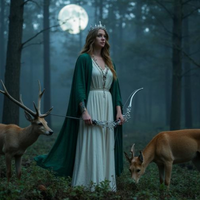 Diana is the Roman goddess of the hunt, the moon, and wild creatures. She is among the most prominent of the Roman deities and one of the oldest, her worship predating Rome's engagement with Greek religious tradition. She was later identified with the Greek Artemis, but Diana has a distinct Roman character — she is a goddess of the Italian woodland, of the Latin league, of the sanctuary at Lake Nemi, and of the particular quality of freedom that the wilderness represents within Roman religious imagination.
She is a virgin goddess — not in the modern sense of inexperience, but in the ancient sense of belonging to herself rather than to a husband or to the domestic sphere. This autonomy is central to her identity. Diana chose, according to tradition, never to marry, asking her father Jupiter as a child to grant her perpetual independence. This makes her, alongside Minerva and Vesta, one of the three virgin goddesses of Rome — deities whose power derives precisely from their self-possession.
Diana occupies a triple role that distinguishes her from a simple hunting deity. She governs the hunt and wild animals, the moon and its cycles, and the protection of women in childbirth and of the vulnerable more broadly. This triple nature — huntress, moon goddess, protector — gives her a breadth of influence that her Greek counterpart Artemis shares, and the two figures have been deeply intertwined since at least the fifth century BCE.
Sacred Qualities of Diana:
• Fierce Independence: Autonomy, self-possession, and the refusal to be owned
• Lunar Wisdom: The moon's cycles, intuition, and reflective intelligence
• Wild Nature: The forest, untamed animals, and the wisdom of wilderness
• Protective Power: Defence of the vulnerable, especially women and children
• Precision: The hunter's focused attention, clear aim, and decisive action
• Sacred Solitude: The power found in time alone, away from social performance
• Boundary: The knowledge of what belongs to you and what you will not permit
Diana energy is particularly relevant for those reclaiming autonomy, establishing boundaries, developing their relationship with the natural world, working with lunar cycles, or finding strength in chosen solitude rather than experiencing it as absence.
Diana in Roman Religion: Lake Nemi and the Sacred Grove
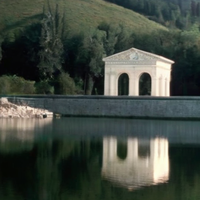
Diana's most important Roman sanctuary was not in Rome itself but at Lake Nemi in the Alban Hills, approximately thirty kilometres south of the city. This sanctuary — the Nemus Dianae, the Grove of Diana — was one of the oldest and most significant religious sites in Latium, predating the foundation of Rome and serving as a place of shared worship for the Latin communities of the region.
The Mirror of Diana:
Lake Nemi was known in antiquity as Speculum Dianae — the Mirror of Diana — because its still, reflective surface was understood as the moon's earthly counterpart. The name captures something essential about Diana's nature: she is associated with reflection, with the indirect light of the moon rather than the direct blaze of the sun, with seeing clearly by means of what is shown rather than what is imposed.
The Rex Nemorensis:
The sanctuary at Nemi was served by a priest known as the Rex Nemorensis — the King of the Wood — who held his position under a singular and violent condition. A runaway slave who could break a branch from a specific sacred tree within the grove won the right to challenge the current Rex to single combat. If he killed the Rex, he became the new King of the Wood and held the position until he himself was killed by the next challenger. This unusual institution, noted by the Roman writer Strabo and later by others, remained unexplained in antiquity and has fascinated scholars since. James George Frazer opened The Golden Bough with it.
The Aventine Temple:
In Rome itself, Diana's major temple stood on the Aventine Hill. This placement was significant: the Aventine was associated with plebeians rather than patricians, and Diana was understood as a goddess accessible to all — slaves, freedmen, the poor, and women all had a particular relationship with her. Her festival, the Nemoralia, was held on 13 August and involved torchlit processions to her sanctuaries.
The Nemoralia:
The Festival of Torches, observed on 13 August, was Diana's primary celebration. Worshippers processed to Nemi and to her other sanctuaries with torches and garlands, and offerings were made — particularly by women seeking her protection in pregnancy and childbirth, and by hunters seeking her favour. The festival honoured both her lunar aspect and her role as protector.
Diana and Artemis: Convergence and Distinction
Diana was formally identified with the Greek Artemis during the process of interpretatio graeca — the practice by which Roman deities were identified with their Greek counterparts. For Diana, this identification was early and thorough, and the two goddesses share mythology, iconography, and most of their symbolic associations. Understanding the relationship between them clarifies both.
Shared Qualities:
Both Diana and Artemis are virgin huntress goddesses associated with the moon, wild animals, forests, and the protection of the young and vulnerable. Both chose perpetual independence. Both are associated with a silver bow and arrows. Both have fierce responses to violations of their sacred space or the innocence of those under their protection.
Diana's Distinctly Roman Character:
Diana's Nemi sanctuary has no Greek equivalent in its specific form. Her role within the Latin League — as a goddess of shared identity for the peoples of Latium — is distinctly Roman. Her association with the Aventine and with the non-patrician classes of Rome gives her a democratic quality that reflects Roman social realities. She is older than Rome's Greek influences.
The Triple Diana:
In Roman tradition, Diana was often conceived as a triple goddess alongside Luna (the moon) and Hecate (the underworld), with Diana herself representing the earthly, wilderness aspect. This triple identification — which does not appear in the same form for Artemis — gives the Roman Diana a somewhat wider scope and connects her explicitly with Hecate's chthonic qualities.
Practical Distinction:
For spiritual practice, the key distinction is one of cultural context and emphasis. Artemis is more embedded in Greek mythological narratives (the myths of Actaeon, Orion, Niobe, Iphigenia). Diana is more embedded in Roman civic and natural religion — the grove, the torch festival, the mirror lake, the relationship with the Latin countryside. Both are valid and both are powerful.
Sacred Symbols and Attributes of Diana
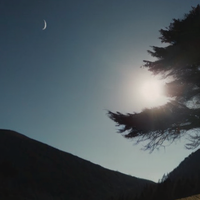
Diana's symbols are drawn from the hunt, the moon, and the wilderness. They are precise, wild, and connected with the quality of focused attention that both archery and lunar observation require.
The Silver Bow and Arrow:
Diana's silver bow represents focused intention, clear aim, and the moment of decisive release. Unlike a weapon of aggression, the bow requires patience, stillness, accuracy, and the right timing. An arrow loosed too early or too late misses. Diana's bow represents the skill of knowing when to act.
The Crescent Moon:
The crescent is Diana's lunar emblem, often worn as a diadem in her hair. It represents the waxing quality of her energy — growth, intention, and the gathering of force before fullness. The crescent also represents the bow itself, associating her two primary symbols with each other.
Deer and Wild Animals:
The deer, sacred to Diana, represents grace in wild conditions, the capacity for swift movement, and the quality of alert, present attention that wild animals embody. Diana's deer are not prey but companions — the wild creatures that recognise her sovereignty over the forest.
Hunting Hounds:
Diana's hounds represent loyalty, tracking ability, and the instinct that follows truth directly rather than by reasoning. In practice they represent the inner quality of following a scent — knowing what you are after and pursuing it with focused, uncomplicated directness.
The Cypress Tree:
The cypress is sacred to Diana and associated with her groves. Evergreen and tall, the cypress represents the enduring quality of what belongs to itself — unchanged by season, reaching toward sky while remaining rooted in earth.
The Torch:
The torch appears in Diana's festival and in her iconography, connecting her to moonlight brought to earth — the illumination that allows the hunt to continue into darkness and the search to persist when direct light fails.
Colors and Elements:
• Silver: Moonlight, precision, the metal of her bow
• White: Purity, the huntress's clarity of purpose
• Forest Green: The woodland, wild growth, the natural world
• Moonlight Blue: Night sky, lunar cycles, reflective wisdom
• Air and Forest: Wild spaces, freedom, the breath of open places
Working with Diana: Practices for Independence and Wild Wisdom

Connecting with Diana is most natural through time in wild or semi-wild spaces, through lunar awareness, and through the deliberate cultivation of the kind of self-possession and clear boundaries that she embodies. Her energy rewards sincerity over ceremony.
Forest or Nature Practice:
Spend time in woodland, park, moorland, or any space that is not entirely domesticated. Walk without a destination. Let attention follow what draws it rather than what the mind has planned. This is Diana's hunting — the quality of open, responsive attention in a living landscape.
Lunar Tracking:
Follow the moon's phases for a full month. Note the crescent, the half, the full, the waning. Notice what in your own energy shifts in correspondence. Diana's lunar aspect is not about prescription but about awareness — the capacity to feel the rhythm of things rather than imposing your own schedule on them.
The Aim Practice:
Choose one clear intention and consider it with the focus of an archer. What exactly is the target? What is in the way? What timing is required? When is the moment to release? Diana's archery is a model for intentional, patient, precise action — not impulsive, not delayed past readiness.
Boundary Setting as Sacred Act:
Identify one boundary that needs to be established or restored. State it plainly, without excessive apology or explanation. Diana does not negotiate her sacred space. She does not soften the boundary to make it easier for others to accept. Name what is yours and hold it.
The Nemoralia Practice:
On 13 August or at any full moon, light a candle and walk to a natural space — a park, a garden, anywhere with living things. Carry the light briefly. Acknowledge what you are protecting and what you are hunting — the thing you are pursuing with focused intention in your life right now.
Diana for Modern Life: Autonomy, Wild Nature and Sacred Solitude
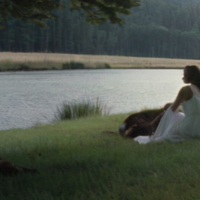
Diana speaks directly to a set of contemporary experiences that have become more visible and more politically charged: the choice to remain single, the choice to be childless, the refusal to organise a life around the expectations of others, and the particular challenge of maintaining a sense of self in a world that constantly pressures women toward conformity with relational and domestic norms.
The Choice to Belong to Yourself:
Diana's perpetual virginity was not a rejection of love or of life — it was the deliberate choice to remain the primary authority over her own existence. In a modern context, this translates to the legitimacy of organising a life around one's own nature, purpose, and desires rather than around the fulfilment of others' expectations.
Wild Nature as Spiritual Practice:
Diana's woodland is not decorative — it is the space in which her essential nature functions. Time in genuinely wild or semi-wild spaces offers a quality of reorientation that urban and domestic environments rarely provide. The forest has its own intelligence; spending time in it tends to clarify what matters and dissolve what does not.
Protective Power:
Diana's protection of the vulnerable — particularly women and children — reflects a quality of fierce, practical care that extends beyond personal autonomy. Her independence is not indifference; it is the foundation from which genuine protection becomes possible. You cannot protect what you cannot hold clearly in mind as worth protecting.
Precision Over Performance:
Diana's archery is a model for purposeful, non-performative action. The arrow either hits the target or it does not; there is no audience to impress. This quality — of acting with precision and clarity rather than for effect — is a practical expression of her energy in everyday life.
The Mirror of Nemi:
The still lake as the moon's mirror offers a practice: sitting with something long enough to see it clearly, without imposing interpretation. Diana's reflective quality is not passive — it is a form of active, patient attention that the hunt itself requires.
Explore More Goddess Archetypes →
Select your intention:
For Independence:
"Diana, I claim the right to belong to myself. I hold my ground with dignity and do not apologise for my nature."
For the Hunt:
"My aim is clear. My intention is honest. I release at the right moment and trust the arrow."
At the Full Moon:
"I walk under your light, Diana. I see clearly tonight. I carry the torch into the places that need illuminating."
What Diana teaches: