Notifications (Click to mark read)
 Divine feminine wisdom appears in every culture across the globe, manifesting through unique goddess traditions that reflect the specific wisdom, environment, and spiritual understanding of each people. These traditions demonstrate both the universal human recognition of divine feminine energy and the beautiful diversity of how this energy is understood and honored.
Exploring goddess traditions worldwide requires deep respect for cultural origins, understanding of historical contexts, and commitment to avoiding appropriation while appreciating the universal themes that connect all humanity. Each tradition offers unique gifts while contributing to our broader understanding of divine feminine wisdom.
This exploration celebrates the rich tapestry of global goddess wisdom while emphasizing the importance of learning from other cultures with humility, respect, and appropriate cultural sensitivity. Understanding these traditions enhances our spiritual practice while honoring the peoples who have preserved these sacred teachings.
Cultural Respect and Ethical Engagement

Approaching goddess traditions from other cultures requires understanding the difference between appreciation and appropriation, while ensuring our spiritual practice honors rather than exploits the wisdom of indigenous and traditional peoples.
Understanding Cultural Context:
Every goddess tradition developed within specific cultural, historical, and geographical contexts that shape its meaning and practice. Learning about these contexts deepens understanding and prevents misinterpretation of sacred teachings.
Recognizing Sacred vs. Secular:
Distinguish between aspects of goddess traditions that were shared publicly versus those reserved for initiated practitioners. Some teachings and practices are meant only for members of specific cultural or spiritual communities.
Supporting Source Communities:
When learning from other cultures' goddess traditions, find ways to support those communities through purchasing from indigenous artisans, donating to cultural preservation efforts, or advocating for indigenous rights.
Avoiding Stereotypes and Romanticization:
Resist tendencies to idealize or simplify complex cultural traditions. Every culture has depth, challenges, and evolution that deserve respectful understanding rather than romantic fantasy.
Learning from Living Traditions:
When possible, learn from practitioners who belong to the culture rather than from secondary sources. This ensures authenticity and supports cultural transmission by appropriate teachers.
Practicing with Humility:
Approach other cultures' goddess traditions as a student rather than an expert. Maintain humility about what you can truly understand from outside the culture and avoid claiming authority over traditions not your own.
Asian Divine Feminine Traditions

Asian cultures have maintained some of the world's most continuous and sophisticated goddess traditions, offering profound wisdom about divine feminine energy in its many manifestations.
Hindu and Buddhist Traditions:
Hindu tradition recognizes Shakti as the active, creative principle of the universe, manifested through goddesses like Durga (protection), Lakshmi (abundance), Saraswati (wisdom), and Kali (transformation). Buddhist traditions honor Tara in her many forms, particularly Green Tara (swift assistance) and White Tara (longevity).
Chinese Goddess Wisdom:
Chinese traditions include Quan Yin (compassion and mercy), Chang'e (moon goddess), and Mazu (sea goddess). These traditions emphasize balance between yin and yang energies and often integrate Taoist, Buddhist, and folk religious elements.
Japanese Divine Feminine:
Japanese Shinto tradition honors Amaterasu as the sun goddess and supreme deity, along with many kami (spirits) that embody feminine divine energy. Buddhist influence brought additional goddess figures like Kannon (Japanese form of Quan Yin).
Southeast Asian Traditions:
Countries like Thailand, Indonesia, and Philippines blend indigenous goddess traditions with Hindu and Buddhist influences, creating unique syncretic traditions that honor local and imported divine feminine wisdom.
Respectful Practice:
When working with Asian goddess traditions, learn about proper pronunciation, cultural contexts, and traditional practices. Many of these traditions are still actively practiced, requiring extra sensitivity to living religious customs.
African and Afro-Diasporic Goddess Traditions
African goddess traditions demonstrate remarkable diversity across the continent while maintaining deep connections to earth wisdom, ancestral knowledge, and community healing practices.
West African Orisha Traditions:
Yoruba tradition honors powerful goddesses like Yemoja (ocean mother), Oshun (river goddess of love), and Oya (wind and transformation). These traditions emphasize the goddess's connection to natural forces and community wellbeing.
Egyptian Goddess Legacy:
Ancient Egyptian goddesses like Isis, Hathor, Sekhmet, and Nut represent some of humanity's oldest recorded goddess traditions. Their wisdom influenced Mediterranean and Middle Eastern cultures and continues to inspire contemporary practitioners.
Afro-Caribbean Syncretic Traditions:
Traditions like Santería, Vodou, and Candomblé preserved African goddess wisdom through syncretism with Catholic saints during slavery. These living traditions maintain African spiritual principles while adapting to diaspora contexts.
Ethiopian and North African Traditions:
Ethiopian Orthodox Christianity preserves unique divine feminine imagery, while North African traditions blend Indigenous Berber, Arab, and African influences in goddess recognition.
Cultural Sensitivity:
African and Afro-diasporic traditions often require initiation and community membership for full participation. Respect closed practices and learn from open teachings while supporting African and Afro-Caribbean communities.
European Goddess Traditions
European goddess traditions were driven largely underground with the arrival of Christianity, but they survived in fragments — folk custom, place names, seasonal festival, and the occasional written source recorded by outsiders or by Christian monks working from older material. What remains is partial, but it is enough to reconstruct meaningful practice.
Celtic Traditions:
The Celtic world honors Brigid (fire, healing, and poetry, later absorbed into the figure of Saint Brigid), the Morrigan (sovereignty, prophecy, and the battlefield), and Danu, the river-mother figure whose name underlies the Danube and from whom the Tuatha Dé Danann — the mythic ancestors of the Irish gods — are said to descend. Celtic goddesses are frequently tied to specific rivers, wells, and hills, reflecting a spirituality deeply rooted in particular places rather than abstract principle.
Norse and Germanic Traditions:
Norse mythology honors Freya, associated with love, fertility, war, and seidr (a form of Norse magic and prophecy), and Frigg, associated with marriage, motherhood, and foresight — she is said to know all fates but speaks them to no one. The Norns, three female figures who weave the fates of gods and mortals alike, represent a further, older layer of feminine cosmic authority beneath the more familiar goddess figures.
Baltic Traditions:
Lithuanian and Latvian folk religion, among the last European pagan traditions to be Christianised (well into the fourteenth century in parts of Lithuania), preserved an unusually rich and well-documented goddess pantheon: Saulė, the sun goddess who is central rather than peripheral to Baltic cosmology, and Žemyna, the earth mother invoked in agricultural rites that persisted in folk custom long after formal conversion.
Slavic Traditions:
Slavic paganism honors Mokosh, goddess of earth, weaving, and women's domestic labour, one of the few deities in the reconstructed Slavic pantheon whose worship is attested directly in early written sources. The complex folkloric figure of Baba Yaga — neither straightforwardly benevolent nor malevolent — is frequently read by scholars as a fragment of an older, more powerful goddess figure, reduced over centuries of retelling into the witch of the fairy tale.
Respectful Practice:
Much of what is known about European pre-Christian goddess worship comes through sources written after conversion, by outsiders, or reconstructed from linguistics and archaeology rather than continuous unbroken practice. Distinguish clearly between well-attested historical material and modern reconstruction or invention, and be honest about which is which.
Middle Eastern Goddess Traditions

The ancient Middle East produced some of the oldest written goddess mythology in existence, predating the Egyptian and Greek material by centuries in some cases. This region's goddess traditions were also among the most thoroughly and deliberately suppressed with the rise of the monotheistic religions that succeeded them.
Mesopotamian Traditions:
Sumerian and Akkadian religion honors Inanna, later known as Ishtar — goddess of love, war, and political power, whose Descent to the Underworld is among the oldest surviving mythological narratives in human history. Her mythology directly shaped, and was shaped by, the goddess traditions that developed later throughout the wider region.
Canaanite and Levantine Traditions:
Canaanite religion, known largely through the Ugaritic texts and through polemical references in the Hebrew Bible, honors Asherah, a mother goddess whose worship appears to have continued in Israelite popular religion for centuries alongside worship of Yahweh, and Astarte, a goddess of love and war closely related to Ishtar and to the later Greek Aphrodite.
Anatolian Traditions:
Phrygian and later Anatolian religion honors Cybele, the Great Mother, whose worship spread throughout the Roman Empire and whose ecstatic, ritually intense cult practices — involving self-flagellation and, for some priests, castration — represent one of the more demanding forms of ancient goddess devotion.
Persian Traditions:
Zoroastrian and pre-Zoroastrian Persian religion honors Anahita, goddess of water, fertility, and wisdom, whose worship was significant enough to be incorporated into the Zoroastrian pantheon despite that tradition's broader monotheistic tendency.
Respectful Practice:
Much Middle Eastern goddess material survives only through the polemical writings of the religious traditions that replaced it, which means the sources are frequently hostile witnesses. Read these figures with awareness of that bias, and where possible, prioritise the goddesses' own surviving hymns, temple records, and iconography over later condemnations of their worship.
Indigenous and Earth-Based Goddess Traditions

Indigenous cultures of the Americas maintain earth-based goddess traditions that emphasize the divine feminine's connection to land, seasons, and natural cycles. These traditions require an especially respectful approach due to histories of cultural suppression and continue, in most cases, as living practice belonging to specific nations and communities.
Native American Divine Feminine:
Many tribes honor Grandmother Spider (creation), Changing Woman (cycles and the passage from girlhood to womanhood), and various earth mothers specific to particular nations and regions. These traditions emphasize reciprocity with nature and often include gender-specific teachings that require cultural membership to access fully.
Andean and Amazonian Traditions:
South American indigenous cultures honor Pachamama, the earth mother central to Andean cosmology and still actively venerated through offerings and ceremony throughout the Andes, alongside various plant and mountain spirits specific to particular Amazonian peoples. These traditions often involve plant medicines and sacred geography specific to their regions, and increasingly intersect with contemporary struggles over land rights and environmental protection.
Ethical Considerations:
Many indigenous goddess traditions of the Americas are closed to outsiders or require specific cultural initiation. Respect these boundaries and focus on learning from publicly shared teachings while supporting indigenous sovereignty and land rights.
Oceanic Goddess Traditions
The goddess traditions of Australia and the Pacific are among the oldest continuously maintained spiritual traditions on earth, and among the most protected — much of what is sacred within them is deliberately not shared outside the communities who hold it.
Australian Aboriginal Traditions:
Aboriginal cultures, representing the world's oldest continuous spiritual tradition at over 60,000 years, maintain sacred women's knowledge (often called Women's Business) and Rainbow Serpent creation stories that vary by nation and region across the continent. Most of this knowledge is protected and not appropriate for non-Aboriginal practice; what is publicly shared represents only a small and deliberately curated portion of a much deeper body of law and story.
Polynesian Traditions:
Hawaiian tradition honors Pele, goddess of volcanoes and fire, whose temperament is understood to be reflected directly in the behaviour of the volcanoes themselves, and Hina, a goddess associated with the moon and with women's traditional craft. Related figures appear with local variation across the wider Polynesian triangle, from Aotearoa to Tahiti.
Māori Traditions:
Māori cosmology honors Papatūānuku, the earth mother whose primordial embrace with the sky father Ranginui, and their eventual separation by their children, forms the foundational creation narrative of Māori tradition — a story that continues to carry active spiritual and legal significance in contemporary Aotearoa New Zealand.
Ethical Considerations:
Oceanic traditions, and Aboriginal Australian tradition in particular, distinguish sharply between knowledge appropriate for outsiders and knowledge restricted to initiated community members, often along gender lines. Approach publicly shared teachings with gratitude and restrict inquiry to what is offered rather than what is asked for.
Ancient Civilizations: Lesser-Known Goddess Traditions
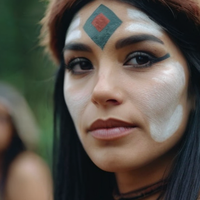
Beyond the well-documented traditions of Egypt, Mesopotamia, and Greece, several ancient civilisations left behind goddess-centred religious material that is less widely known but archaeologically significant, offering a fuller picture of how widespread and varied divine feminine worship was in the ancient world.
Minoan Crete:
Bronze Age Minoan civilisation, centred on Crete and flourishing roughly 3000 to 1100 BCE, left behind extensive goddess iconography — most famously the Snake Goddess figurines, bare-breasted female figures holding snakes in each hand, unearthed at Knossos. Minoan religious life appears to have centred goddess worship far more prominently than the later Greek civilisation that succeeded it in the region, though the absence of deciphered Minoan texts (Linear A remains unread) means much of this tradition's specific theology is inferred from artefacts rather than known directly.
Indus Valley Civilization:
The Indus Valley civilisation, contemporary with early Mesopotamia and Egypt and centred on cities including Mohenjo-daro and Harappa, produced numerous terracotta female figurines interpreted by many archaeologists as evidence of goddess worship, alongside seals depicting a horned female figure some scholars associate with later Hindu goddess traditions. As with Minoan Crete, the undeciphered Indus script means interpretation remains necessarily provisional.
Etruscan Civilization:
Pre-Roman Etruscan religion, which significantly influenced early Roman religious practice, honored goddesses including Uni (a mother-goddess figure later assimilated into the Roman Juno) and Turan (a goddess of love and vitality later associated with Venus). Etruscan tomb art depicts women in positions of social and religious prominence notably greater than in the Roman culture that eventually absorbed Etruscan civilisation.
Respectful Practice:
Where a civilisation's own written language remains undeciphered or absent, as with Minoan Crete and the Indus Valley, all interpretation of goddess worship is necessarily provisional and contested among specialists. Hold these traditions with appropriate intellectual humility — the archaeological evidence for goddess worship in these cultures is real, but its precise meaning is not fully recoverable.
Contemporary Global Goddess Revival

The contemporary goddess revival represents a global spiritual movement that draws inspiration from worldwide traditions while creating new expressions of divine feminine wisdom appropriate for modern contexts.
Cross-Cultural Learning:
Modern practitioners often work with goddess energies from multiple traditions, creating personal practice that honors various cultural wisdom while avoiding appropriation. This requires ongoing education about cultural contexts and respectful boundaries.
Universal Themes:
Despite cultural differences, goddess traditions worldwide share common themes: creative power, protective love, healing wisdom, connection to nature, and transformation through cycles. These universal aspects allow respectful appreciation across cultures.
Academic and Scholarly Contributions:
Modern goddess studies combine anthropology, archaeology, psychology, and religious studies to understand goddess traditions within their cultural contexts while identifying universal patterns in divine feminine recognition.
Feminist and Environmental Connections:
Contemporary goddess spirituality often connects with feminist theology and environmental activism, seeing goddess wisdom as particularly relevant for addressing modern challenges around gender equality and ecological healing.
Online Global Communities:
Internet connectivity enables global sharing of goddess wisdom while also raising questions about cultural boundaries and appropriate sharing of traditional knowledge in digital spaces.
Creating Respectful Practice:
Modern practitioners can honor worldwide goddess traditions by studying cultural contexts, supporting source communities, practicing with humility, and creating personal spiritual practice that appreciates without appropriating other cultures' sacred wisdom.
Return to Divine Feminine Hub →
Select a cultural tradition:
Learn Context:
Study the cultural and historical background of traditions
Support Communities:
Find ways to give back to source communities
Practice Humility:
Approach as student, not expert of other cultures