Notifications (Click to mark read)
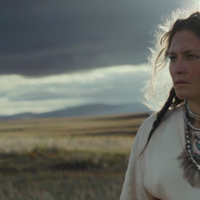 The Wise Woman tradition names a lineage of feminine healing knowledge that predates institutionalised medicine by millennia — a tradition of women who knew the plants that grew nearby, who understood the relationship between body, season, emotion, and health, who attended births and deaths, who held community knowledge about what helped and what harmed. This knowledge was transmitted primarily through relationship: older to younger, practitioner to apprentice, mother to daughter, across generations and without formal credential.
The term "Wise Woman tradition" in its contemporary usage was significantly shaped by herbalist Susun Weed, who articulated it as one of three distinct healing traditions operating in Western culture. Her framework is useful precisely because it distinguishes not just between different healing modalities but between fundamentally different philosophies about what health and healing actually are. Understanding where the Wise Woman way differs from both conventional and alternative medicine clarifies what it specifically offers.
The historical record of women healers is extensive but often obscured — by the medieval persecutions of "cunning women" and accused witches (a significant proportion of whom were village healers and midwives whose knowledge was threatening to both religious and eventually medical authority), by the systematic exclusion of women from formal medical education that persisted until the late 19th century, and by the general undervaluing of domestic, community, and oral knowledge relative to institutional, credentialed, and written knowledge. Recovering and valuing this tradition requires acknowledging both what it genuinely was and the historical forces that suppressed it.
 Susun Weed's framework identifies three distinct healing traditions, each operating from different assumptions about the nature of health, disease, and healing:
The Scientific (Allopathic) Tradition:
This is the dominant Western medical tradition — the tradition of diagnosis, pharmaceutical treatment, and surgical intervention. Its governing metaphor is the body as a machine that can malfunction and be repaired. Its strengths are significant: it excels at acute care, trauma treatment, bacterial infection, and conditions that require precise technical intervention. Its limitations include a tendency to treat symptoms rather than address underlying causes, to view health as the absence of diagnosable disease rather than as active flourishing, and to undervalue patient experience and contextual factors.
The Heroic (Alternative) Tradition:
This encompasses much of what is called "alternative" or "integrative" medicine — naturopathy, many forms of nutritional therapy, aggressive supplement protocols, detoxification regimens. Its governing metaphor is the body as a battlefield against toxins, pathogens, and imbalances that must be overcome. It shares with the allopathic tradition a tendency toward aggressive intervention, albeit with different tools. Its significant risk is the promotion of treatments that lack evidence of efficacy and, in some cases, carry genuine risks.
The Wise Woman Tradition:
The Wise Woman way operates from a different governing metaphor entirely: the body as a dynamic, self-healing organism with its own wisdom, whose symptoms are communications rather than malfunctions. The task of the healer in this tradition is not to overcome disease or attack pathogens but to support the body's own capacity for healing — through nourishment, rest, gentle herbal allies, and the removal of obstacles to natural healing processes. The tradition is inherently conservative in the best sense: it prefers gentle, nourishing approaches over aggressive interventions, it respects the body's own timeline, and it understands that healing is rarely as fast or as linear as patients and practitioners might prefer.
None of these traditions is wholly wrong or right. A person in anaphylactic shock needs the allopathic tradition's tools immediately. A person with chronic fatigue and poor nutrition needs nourishment and lifestyle support, not aggressive pharmaceutical intervention. Wisdom lies in knowing which tradition's tools are appropriate for which situation.
 The Wise Woman relationship to plants is characteristically different from both pharmaceutical medicine and from aggressive supplementation. Plants in this tradition are not primarily delivery systems for specific chemical compounds; they are whole organisms with complex relationships to the human body and to their ecosystems, understood as allies whose particular gifts can support specific needs when approached with knowledge and respect.
Nourishing Herbs:
The Wise Woman tradition places particular emphasis on what Susun Weed calls "nourishing herbs" — plants so rich in vitamins, minerals, and supportive compounds that using them as food-medicine is the gentlest and most sustained form of herbal practice. Nettle (Urtica dioica) is the classic example: rich in iron, calcium, magnesium, and vitamins, drunk as an infusion over time rather than taken as a supplement in capsule form. Oatstraw (Avena sativa), red clover (Trifolium pratense), and red raspberry leaf (Rubus idaeus) are other examples. These herbs work through nourishment rather than through pharmacological action — the distinction matters.
Women's Plant Allies:
Certain plants have been used specifically for women's health across many cultures and traditions — red raspberry leaf for uterine tone and menstrual support, vitex (Vitex agnus-castus) for hormonal balance, lady's mantle (Alchemilla vulgaris) for menstrual irregularity. Working with these plants requires knowledge of their specific actions, appropriate dosing, and contraindications, particularly around pregnancy.
Calming and Nervine Herbs:
The Wise Woman tradition recognises the connection between nervous system state and overall health. Chamomile (Matricaria chamomilla), lemon balm (Melissa officinalis), skullcap (Scutellaria lateriflora), and valerian (Valeriana officinalis) are among the herbs used to support the nervous system — not as sedatives to suppress symptoms but as gentle allies for the body's own capacity to regulate.
Important Caution:
Herbal medicine is medicine. Plants can interact with pharmaceutical medications, be contraindicated in pregnancy, and cause harm when misused. The Wise Woman tradition's emphasis on gentle, nourishing herbs does not mean that all herbal use is without risk. Developing genuine herbal knowledge requires study and, where possible, relationship with experienced practitioners.
 Throughout pre-industrial history, wise women served their communities in roles that were simultaneously practical and sacred — the distinction between medicine and spiritual practice being less sharp in traditional cultures than in modern secular ones. The village healer who knew the herbs, the midwife who attended births and deaths, the elder woman consulted for advice about difficult situations, the keeper of the community's accumulated knowledge — these roles were related, often overlapping, and held by women whose knowledge was hard-won through years of practice, apprenticeship, and patient observation.
The systematic suppression of this knowledge — through the witch trials of the 14th–18th centuries, through the professionalization and masculinisation of medicine, through the devaluation of oral and domestic knowledge — represents a genuine loss to communities that depended on it. Recovering it requires both honesty about what was lost and realistic assessment of what has been preserved, reconstructed, or genuinely continued through unbroken lineages.
The contemporary Wise Woman revival — the renewed interest in herbalism, in traditional midwifery, in women's healing circles, in plant-based medicine — is partly recovery of genuinely old knowledge and partly synthesis of traditional knowledge with modern understanding of nutrition, biochemistry, and health. The synthesis is not dishonest as long as it is clear about what it is.
Integrating Wise Woman Wisdom:
The most accessible entry point for most people is relationship with a few well-known, well-documented plants — learning to make an infusion of nettle or oatstraw, growing chamomile, using elderberries in the autumn. This direct, hands-on relationship with specific plants across seasons is more genuinely Wise Woman than purchasing a herbal supplement online. The tradition lives in practice, in the hands, in the sustained attention to what grows nearby and what it offers.
Explore Goddess Energy in Modern Life →
🏥 Scientific: Diagnose and treat. Body as machine. Excels at acute care and trauma.
⚔️ Heroic: Attack disease. Body as battlefield. Risk of aggressive over-intervention.
🌿 Wise Woman: Nourish and support. Body as self-healing organism. Symptoms as communication, not malfunction.
Framework from Susun Weed's work on healing traditions.
🌿 Nourishing: Nettle, oatstraw, red clover — rich in minerals, used as food-medicine infusions
🌸 Women's herbs: Red raspberry leaf, vitex, lady's mantle
🍵 Nervines: Chamomile, lemon balm, skullcap — nervous system support
🍇 Immune: Elder, echinacea — seasonal support
Herbs can interact with medications. Seek qualified advice for therapeutic use.
The most authentic entry point is not reading but doing: grow one plant, make one infusion, observe one plant across one full season.
Relationship with a few specific plants known well is more genuinely Wise Woman than broad but shallow familiarity with many.
Where possible: find a practitioner or teacher. The tradition lives in relationship, not primarily in books.