Notifications (Click to mark read)
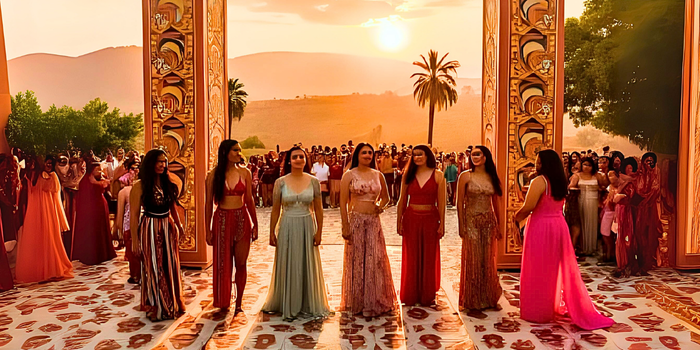
The Divine Feminine is a spiritual concept connected to intuition, compassion, emotional awareness, creativity, healing, nature, and inner wisdom. Across cultures and traditions, these qualities have often been represented through goddesses, sacred stories, lunar symbolism, and feminine archetypes. The concept does not belong to any single religion or tradition — it appears in ancient Greek and Roman religion, in Hindu philosophy through the principle of Shakti, in Celtic mythology, in West African and Yoruba spirituality, in Chinese religious tradition, and in the contemplative streams of Christianity, Judaism, and Islam, where feminine aspects of the divine have long been recognised even when the dominant language remained masculine.
Although the Divine Feminine is most often explored through female imagery and goddess spirituality, it is not limited to women. Many spiritual traditions describe feminine and masculine energies as complementary aspects of human consciousness. The feminine principle — in this broader sense — represents the receptive, cyclical, intuitive, and relational dimensions of awareness that are available to anyone willing to cultivate them. In a culture that overvalues speed, productivity, and external achievement, reconnecting with divine feminine wisdom offers something genuinely countercultural: the legitimacy of rest, of emotional depth, of slow knowing, and of care as a form of power.
Many Divine Feminine archetypes originate in living traditions. The Orisha of the Yoruba spiritual system — Oshun, Yemoja, Oya — are understood not as historical myths but as living forces of nature, emotion, love, and spiritual balance that continue to be venerated by millions of people across West Africa, the Caribbean, and the Americas. This hub approaches all traditions with that understanding: some of what appears here belongs to living religions that deserve respect rather than casual adoption, and we note those distinctions where they matter.
This hub is organised into goddesses, practices, healing approaches, spiritual tools, and learning resources. Whether you are beginning to explore goddess spirituality for the first time or deepening a practice already underway, the pages collected here offer substantive guidance grounded in the actual mythological, historical, and spiritual traditions from which these figures come.
The Divine Feminine expresses itself differently depending on what a person is moving through. Someone in grief needs a different goddess than someone seeking clarity about a decision. Someone healing from trauma needs different practices than someone cultivating abundance or creative power. The selector below points you toward the most relevant pages for your current situation — not as a substitute for reading widely, but as a starting point when you need one.
Each goddess represents a distinct quality of the divine feminine — not interchangeable energies but specific presences with particular mythologies, cultural contexts, symbols, and ways of working. Quan Yin's compassion is not the same as Durga's protection, though both serve. Athena's strategic clarity is not the same as Hecate's crossroads wisdom, though both illuminate. Understanding the distinctions between goddesses is part of what makes goddess spirituality genuinely useful rather than decorative.
The goddesses here are drawn from multiple traditions. Some — like Athena, Artemis, Aphrodite, and Demeter — come from ancient Greek religion, a tradition that no longer has living practitioners in its original form and whose mythology is therefore widely accessible for study and spiritual inspiration. Others — like Oshun and Yemoja — belong to living religious traditions where cultural context and respect matter considerably. Each goddess page on this site addresses its own cultural context directly.
Goddess spirituality is not only studied — it is practised. The practices associated with the divine feminine are grounded in the same principles as the goddesses themselves: they work with cycles rather than against them, they honour the body as a site of wisdom rather than a problem to be managed, and they treat the ordinary activities of daily life — cooking, tending a space, walking in nature, sitting with an emotion — as potentially sacred acts.
The most effective divine feminine practices are simple, consistent, and honestly engaged rather than elaborate, occasional, and performative. A candle lit with genuine intention before a difficult conversation is more powerful than an elaborate ritual done mechanically. A daily five minutes of sitting quietly with the body's sensations is more valuable than a monthly ceremony that bypasses the nervous system. The pages below offer both structured practices and the underlying understanding that makes practice genuinely useful.
Practical rituals, meditations, and daily practices for connecting with goddess energy. Includes morning practices, seasonal observances, and simple ways to bring the sacred into ordinary life.
The moon's phases — new, waxing, full, waning, dark — provide a natural framework for intention-setting, reflection, and release. This page covers how to work with each phase and which goddess energies are most aligned with each stage of the lunar cycle.
An altar is a physical focal point for spiritual practice — a space that holds your intention and makes the invisible visible. This guide covers the fundamentals of altar design, goddess-specific layouts, and how to maintain sacred space with daily care rather than occasional ceremony.
The gathering of women in circle is one of the oldest human practices. Sacred circles provide witnessing, mutual support, and the particular intelligence that emerges when people come together with honest intention. This page covers how to create and participate in healing-focused feminine community.
The divine feminine is inherently cyclical — it moves through phases of expansion and contraction, activity and rest, fullness and release. Learning to work with natural cycles rather than overriding them is one of the most practically transformative aspects of goddess spirituality.
Clear, grounded answers to the most common questions about the divine feminine — covering meaning, biblical references, astrology, archetypes, self-care, and how to begin a practical daily connection with goddess energy.
The divine feminine has always been associated with healing — not only in the sense of curing illness but in the deeper sense of restoring wholeness after fragmentation. Goddess figures like Quan Yin, Isis, Brigid, and Inanna are specifically associated with healing in their traditions, and their mythologies often describe descent into difficulty, the experience of loss or wounding, and eventual return transformed. These are not stories of people who avoided pain; they are stories of people who moved through it.
Goddess-centred healing practices work best as complements to professional mental health care rather than substitutes for it. Spiritual practice can offer framework, meaning, companionship in difficulty, and embodied grounding — all of which support therapeutic work. What it cannot offer is the relational repair and clinical skill that trained therapists provide. The pages below are clear about this distinction throughout.
A comprehensive overview of divine feminine approaches to emotional restoration, trauma recovery, ancestral healing, heart wounds, and the importance of community in genuine healing. Includes crisis resources and clear guidance on when professional support is essential.
Shadow work is the practice of bringing awareness to the parts of ourselves we have rejected, suppressed, or hidden — including aspects of anger, fear, sexuality, grief, and ambition that were once judged unacceptable. Goddess archetypes like Kali, Hecate, and the Cailleach provide frameworks for this kind of honest self-examination.
The elder years often bring a creative renaissance — freed from the demands of reproduction, career-building, and others' approval, many women discover or deepen creative work in the third stage of life. This page explores the specific quality of elder creativity and the goddesses and practices that support it.
Rather than treating menopause as a medical event to be managed, goddess spirituality reframes it as an initiation into the crone phase — a transition that brings the authority, clarity, and freedom from others' expectations that the earlier life stages did not easily permit.
Goddess spirituality is supported by a range of practical tools — not magical shortcuts but concrete practices that make spiritual orientation more tangible. Oracle cards, altars, dream journals, and symbol guides all function as focal points for attention, ways of externalising an inner orientation so that it becomes something you can return to and refine. The tools below are offered in that spirit: as aids to genuine practice rather than decorative additions to a spiritual aesthetic.
The oracle tool on this site offers guidance drawn from goddess archetypes. It is best used as a prompt for reflection rather than a source of literal predictions — a way of bringing a particular quality of attention to a question rather than outsourcing the answer.
Dreams have been understood as a medium of divine communication across virtually every spiritual tradition. This page covers how to approach dreams as a source of guidance, what recurring symbols and goddess imagery in dreams might indicate, and how to develop a consistent dream practice.
Symbols are the language of the sacred — compressed meanings that communicate across time and culture. This guide covers the most significant symbols associated with goddess traditions worldwide: the moon, the serpent, the cauldron, the owl, the lotus, the rose, and many others.
Goddess spirituality is not a modern invention. The veneration of feminine divine figures is one of the oldest documented forms of human religious expression, with archaeological evidence from sites across Europe, the Middle East, Africa, and Asia dating back tens of thousands of years. Understanding this history matters — not to claim that all ancient peoples worshipped a single universal goddess (they did not), but to recognise that the association of the sacred with feminine principles is ancient, cross-cultural, and deeply rooted in human experience.
The academic study of goddess traditions has grown significantly since the mid-twentieth century, and there is now a substantial body of scholarly work on the history of goddess worship in specific cultures, the suppression of feminine divine figures in monotheistic contexts, and the contemporary revival of goddess spirituality in feminist and earth-based spiritual movements. The learning resources below draw on this scholarship while remaining accessible to non-specialist readers.
An archetype is a recurring pattern of consciousness — a recognisable type of energy that appears across cultures in different forms. The Mother, the Maiden, the Crone, the Huntress, the Lover, the Warrior, the Wise Woman — these patterns appear in goddess traditions worldwide. This page explains how archetypes work and how to identify which are most active in your own life.
From the Venus figurines of the Upper Palaeolithic to the great goddess temples of ancient Sumer, Egypt, Greece, and India, through the suppression of feminine divine figures in the medieval period and the modern revival of goddess spirituality — this page traces the long history of the sacred feminine across human cultures.
Goddess traditions appear on every inhabited continent. This page surveys the major goddess-centred spiritual traditions from around the world — Celtic, Greek and Roman, Egyptian, Hindu, Yoruba, Aztec, Japanese, Chinese, Norse, and others — noting what each tradition offers and where cultural boundaries deserve respect.
The eight-spoked wheel of the year — rooted in Celtic agricultural tradition and developed further in modern Pagan practice — provides a seasonal framework for goddess spirituality. This page connects each of the eight seasonal festivals with the goddess energies most naturally associated with that time of year.
If you are new to goddess spirituality, the volume of available material can feel overwhelming. The most useful starting point is not the most elaborate one but the most honest one: what are you actually looking for? If you are seeking comfort in difficulty, begin with a compassion goddess. If you are seeking courage for a challenge, begin with a warrior goddess. If you are seeking clarity about a decision, begin with a wisdom goddess. Let your actual need lead you to the archetype rather than approaching the whole tradition as an intellectual survey.
The five steps below are a practical sequence for someone beginning from scratch. They are ordered deliberately — understanding before practice, practice before tools, tools before community. Each step builds on the one before it, and none of them requires spending money or making a long-term commitment before you know whether this path resonates with you.