Notifications (Click to mark read)
 Badb, often called Badb Catha, the Battle Crow, is one of the most intense and mysterious figures in Irish mythology. She belongs to the world of the Morrígna, the great battle and sovereignty goddesses associated with prophecy, fate, fear, courage, death, protection, and the hard truth that arrives before transformation. Her name is connected with the crow or raven of battle, and her presence often appears at the edge of conflict, crisis, and irreversible change.
Badb is not a gentle goddess in the sentimental sense. She is the shriek before the battle, the crow over the field, the omen that strips away denial, and the prophetic voice that announces what can no longer be avoided. Yet this does not make her merely destructive. In the Irish mythic imagination, battle is also tied to sovereignty, survival, protection of the land, and the restoration of balance after oppression or disorder.
Working with Badb as an archetype means facing what is real. She asks for courage, discernment, and the willingness to stop pretending that a dying pattern is still alive. Her wisdom is especially relevant during endings, difficult decisions, emotional battles, grief, shadow work, boundary-setting, and moments when truth arrives with a sharp beak rather than a soft hand.
Sacred Qualities of Badb:
• Prophecy: Clear seeing, omens, warnings, and truth before change
• Battle Courage: The strength to face conflict without self-deception
• Shadow Wisdom: Meeting fear, rage, grief, and survival instincts consciously
• Sovereignty: Protecting land, selfhood, boundaries, and sacred authority
• Transformation: The death of old patterns and the difficult birth of renewal
• Crow Medicine: Intelligence, observation, liminality, and messages from the threshold
• Fate and Consequence: Understanding that choices create outcomes
Badb energy is powerful for those who need to stop hiding from a truth, leave a harmful pattern, reclaim power after chaos, or prepare for a decisive turning point. She does not flatter. She clarifies. Her gift is the fierce mercy of seeing things as they are.
Badb Catha: The Battle Crow and the Morrígna
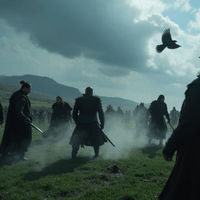
Badb is commonly understood as one of the Morrígna, the group or triad of Irish battle goddesses whose identities overlap across manuscripts and traditions. Depending on the source, the Morrígna may include Badb, Macha, Morrígan, Anand, Nemain, or related names. This fluidity is important. Irish mythology does not always present divine figures as fixed, tidy personalities. They are powers, presences, functions, and ancestral voices that move through different stories.
The Meaning of Badb Catha:
Badb Catha is often translated as Battle Crow. The crow is not decorative here. It is a battlefield bird, a witness to carnage, a messenger of fate, and a creature that stands between the living and the dead. Badb's cry can signal panic, doom, or the breaking point in a conflict.
The Three Morrígna:
In traditions that name Badb with Macha and the Morrígan, the three goddesses form a powerful cluster of war, sovereignty, prophecy, and territorial protection. They are sometimes described as daughters of Ernmas, linking them to an older divine family within the Tuatha Dé Danann.
War and Sovereignty:
Badb's battlefield role should not be reduced to violence for its own sake. In Irish myth, war often concerns the protection of people, land, cattle, kingship, and rightful order. The battle goddess may terrify, but she also reveals whether a society is defended, disordered, or doomed.
Fear as a Force:
Badb is known for creating confusion and fear among warriors. Spiritually, this symbolises the way fear can break false confidence. When illusions collapse, what remains is the truth of a person's courage, preparation, and inner alignment.
The Goddess at the Threshold:
Badb stands where certainty ends: before battle, before death, before major change, before the old life gives way. Her threshold is uncomfortable because it is honest. She appears when denial can no longer protect us.
Badb in Irish Myth: Prophecy, Victory and the End of an Age

Badb appears most strongly through the mythic atmosphere of conflict and prophecy. She is associated with the cries before slaughter, the confusion of battle, the prophetic announcement of outcome, and the voice that speaks after the field has changed forever. Her presence is both omen and aftermath.
Cath Maige Tuired:
In the Second Battle of Mag Tuired, the Tuatha Dé Danann fight the Fomorians. The Morrígan and related battle-goddess powers are involved in the mythic struggle for liberation from oppressive forces. After victory, the tradition preserves a famous prophetic passage in which Badb is connected with the announcing of great deeds and the proclamation of peace, prosperity, and then later decline.
Peace After Battle:
One of Badb's deepest lessons is that battle is not the destination. The purpose of right conflict is the restoration of order. After the battle, the prophetic voice speaks of peace reaching heaven and earth. This shows Badb not only as a figure of death, but as a witness to what comes after necessary struggle.
The Dark Prophecy:
The same mythic material also contains a bleak vision of social collapse: summer without flowers, cattle without milk, people without modesty, judgments without truth. This is Badb as the voice of consequence. She warns what happens when order, kinship, generosity, and truth break down.
The Washer at the Ford:
Badb is closely related to the image of the death-omen woman washing bloody clothing or armour before battle. This figure appears at the liminal place of water and crossing. She does not cause the death so much as reveal that the pattern has already reached its end.
The Cry Before Change:
Badb's shriek is a spiritual image for the alarm that sounds before a life changes. It may arrive as anxiety, intuition, dreams, recurring signs, or the sudden knowledge that something cannot continue. Her cry is frightening because it is true.
Prophecy as Responsibility:
Badb does not offer prophecy as entertainment. Her visions demand action. If collapse is seen, what must be repaired? If conflict is coming, what must be prepared? If a cycle is ending, what must be released before the field is lost?
Sacred Symbols and Attributes of Badb
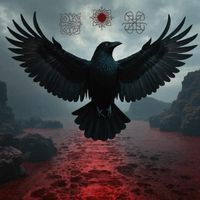
Badb's symbols are stark, powerful, and deeply connected with liminality. They belong to battlefields, thresholds, omens, rivers, night skies, and the unsettling intelligence of carrion birds. These are not comfortable symbols, but they carry profound wisdom for transformation.
Crows and Ravens:
The crow is Badb's central emblem. Crows are intelligent, observant, social, and comfortable at the boundary between life and death. In Badb practice, the crow represents truth, omen, memory, survival, and the ability to see what others ignore.
The Battlefield:
The battlefield symbolises any place where forces clash: inner conflict, family rupture, social disorder, spiritual crisis, or the hard decision that cannot be avoided. Badb teaches that battles should not be romanticised, but neither should they be denied when protection or truth requires action.
Blood and Red Earth:
Blood represents life-force, sacrifice, consequence, kinship, and the cost of conflict. Red earth symbolises embodied reality: the truth written into the ground after all words have failed.
Water and the Ford:
The ford is a crossing place. The washer-at-the-ford image connects Badb with water, fate, and transition. It asks: what must be cleansed, what has already been marked, and what crossing cannot be delayed?
The Cry or Shriek:
Badb's cry is the sound of warning. In modern practice it can represent instinct, alarm, intuition, or the body's refusal to accept a false peace. It is the part of the self that says: pay attention now.
Mist and Confusion:
Battle in Irish myth often includes mist, glamour, fear, and disorientation. Badb's power over confusion reminds us that conflict rarely appears with perfect clarity. Discernment must be practised in the fog.
Colors and Elements:
• Black: Mystery, crows, night, shadow, protection, hidden knowledge
• Blood Red: Life-force, courage, sacrifice, warning, consequence
• Grey: Mist, ambiguity, threshold states, uncertainty before revelation
• Bone White: Mortality, ancestral memory, truth stripped bare
• Air and Storm: Omen, cry, movement, unrest, the message before impact
Working with Badb: Practices for Shadow, Courage and Clear Sight

Badb should be approached with seriousness, respect, and emotional honesty. Her work is not about glamourising violence or seeking drama. It is about discerning where a pattern has become harmful, where fear is clouding judgment, and where courage is needed to protect what is sacred.
Crow Observation Practice:
Spend time watching crows or other corvids without projecting fantasy onto them. Notice their intelligence, caution, communication, and social awareness. Ask: what am I not seeing clearly? What warning have I ignored? What pattern is circling overhead?
Battlefield Journal:
Write the name of the conflict you are facing at the top of a page. Divide the page into three sections: what is true, what I fear, and what action is mine to take. Badb work begins when fear and fact are separated.
Boundary Fire:
Light a candle and name one boundary that must be defended. Speak it plainly: "This is where I stand. This is what I will no longer abandon." Let the flame represent courage rather than anger. Afterwards, take one practical step that supports the boundary.
Listening for the Warning Cry:
Sit quietly and ask where your body has been sounding an alarm. Tight chest, clenched jaw, stomach tension, exhaustion, dread, or repeated irritation may be messages. Do not treat every feeling as prophecy, but do not dismiss the body's wisdom either.
Crossing the Ford Ritual:
Wash your hands or feet slowly in cool water. Name the old pattern you are leaving and the truth you are crossing toward. Dry yourself carefully and make one clean decision. The ritual is not complete until it becomes action.
Ethical Shadow Work:
Badb's rage is not permission to harm. It is an invitation to understand anger as information. Ask: what value is being violated? What needs protection? What would a sovereign response look like instead of a reactive one?
Badb for Modern Life: Conflict, Courage and the End of Denial

Badb's mythology speaks powerfully to modern experiences of burnout, toxic patterns, social conflict, emotional survival, grief, and decisive change. She is not a comfortable archetype, but she is useful when comfort has become avoidance.
When Peace Is False:
Many people are taught to keep the peace even when the peace is built on silence, fear, or self-erasure. Badb asks whether the apparent calm is truly harmony, or whether it is the stillness before collapse.
Leaving Harmful Patterns:
Badb is a guide for endings that require strength: leaving a draining relationship, confronting a lie, changing a destructive habit, or stepping away from a group dynamic that feeds on confusion. She does not make endings easy, but she makes denial harder.
Courage Without Cruelty:
Badb's fierceness must be handled with maturity. The point is not to become vicious. The point is to become clear. Courage without ethics becomes aggression; courage with sovereignty becomes protection.
Reading the Omens:
Modern omens may not be supernatural signs in the sky. They may be repeated patterns, ignored warnings, body signals, financial realities, broken trust, or the same conversation happening for the tenth time. Badb teaches pattern recognition.
After the Battle:
Once a conflict has passed, Badb asks what peace will be built. Victory without repair can become another form of damage. True transformation requires cleansing the field, grieving what was lost, and restoring right order.
The Gift of Stark Truth:
Badb's medicine is severe because it removes illusion. But beneath the severity is liberation. When the truth is finally named, energy returns. The battle may still be hard, but the fog begins to lift.
Badb, the Morrigan and Respectful Modern Practice
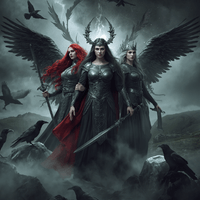
Badb is often approached today through modern Pagan, polytheist, devotional, and archetypal frameworks. Because Irish myth has been filtered through medieval manuscripts, later folklore, scholarship, revival, and contemporary spirituality, it is important to distinguish between inherited tradition, academic interpretation, and modern practice.
Living with Complexity:
Badb is not always neatly separate from the Morrígan, Macha, Nemain, or Anand. The sources preserve overlapping divine names and functions. Rather than forcing a single rigid system, respectful study allows the complexity to remain.
Not Just a War Goddess:
While Badb is strongly associated with battle, she also carries themes of sovereignty, territory, protection, prophecy, and consequence. Her darkness is not evil. It is the darkness of the battlefield, the crow, the omen, and the unromantic truth of mortality.
Respect for Irish Tradition:
When working with Badb, avoid flattening her into a generic dark goddess. Learn her Irish context, her connection to the Morrígna, her textual appearances, and the cultural weight of crow, land, kinship, and battle prophecy in the mythology.
Personal Practice with Humility:
You can honour Badb through study, ethical action, ancestor awareness, careful speech, and courageous boundary work. Avoid claiming certainty where the sources are ambiguous. Let the mystery stay alive.
Badb's Final Question:
Badb asks: what truth is circling above you? What warning have you refused to hear? What must end so that real peace can begin? Her answer is rarely soft, but it is rarely meaningless.
Explore More Goddess Archetypes →
Select the truth you are facing:
Morning Clarity:
"Badb Catha, battle crow of truth, help me see clearly before I act. Let fear become information, not command."
Boundary Prayer:
"Where I have abandoned myself, call me back. Where my peace is false, reveal the truth. Where courage is needed, strengthen my voice."
After Conflict:
"May the field be cleansed. May the lesson be honoured. May what remains be wiser than what fell."
Badb's teachings:
Useful times for Badb reflection:
Best focus: clarity before action, cleansing after conflict, and courage without cruelty.