Notifications (Click to mark read)
 The crone is the most undervalued and least understood of the three faces of the goddess. In a culture that treats ageing as something to be resisted and women past reproductive age as functionally invisible, the elder goddess archetype carries a radical counter-message: that the third stage of life is not a diminishment but an arrival. The qualities that emerge in the elder years — clarity about what actually matters, freedom from the need for others' approval, comfort with difficulty and loss, the long perspective that only accumulated experience can provide — are qualities that the maiden and mother stages cannot yet fully inhabit. They require time to develop, and they are worth the time.
The crone appears across the world's goddess traditions with remarkable consistency. Hecate in ancient Greek religion presides over crossroads, thresholds, and hidden knowledge — the wisdom that comes from having stood at many crossroads and learned to navigate darkness without losing one's way. The Cailleach of Celtic tradition is the ancient hag who shapes mountains with her hammer and brings winter — not a figure of evil but of the raw, undomesticated power of nature in its most demanding aspect. Baba Yaga in Slavic folklore lives in her house on chicken legs at the edge of the forest, between the world of the living and the world of the dead, and she does not offer her wisdom cheaply — she tests those who come seeking it. Grandmother Spider in various Native American traditions weaves the web of existence and teaches through her patient, purposeful making. These figures share a quality of authority that does not need to be validated by anyone else's recognition.
What distinguishes elder goddess wisdom from the wisdom of earlier life stages is not simply the quantity of knowledge but its quality — its integration. The maiden has energy and possibility; the mother has the wisdom of sustaining and nurturing life; the crone has the wisdom that comes from having navigated the full range of human experience and survived it. She has grieved, lost, endured, and found that she is still here. This survival is itself a form of knowledge.
Many traditions recognise menopause as a genuine spiritual threshold rather than simply a biological event. The Lakota tradition speaks of the time when a woman retains her "wise blood" — when the monthly cycle of release ceases and that energy becomes available for other purposes. In European goddess traditions, the transition from mother to crone was marked by ceremony, acknowledging that the woman was crossing into a new phase of spiritual capacity rather than leaving something behind.
Contemporary women navigating menopause frequently report experiences that align with these traditional frameworks — not just the physical symptoms that receive most cultural attention, but shifts in perception, priority, and inner authority. The things that once generated anxiety may lose their grip. Relationships built on performed agreeableness become harder to maintain. There is often a stronger, clearer sense of what one actually thinks and values, as distinct from what one has been trained to think and value. These are not side effects of hormonal change; they are the features of a psychological and spiritual transition that hormonal change makes possible.
The transition is not always comfortable. The elder goddess archetype includes figures like the Cailleach and Baba Yaga precisely because this phase of life demands something genuine. The crone does not flatter or accommodate. She presents the truth of a situation with the directness that comes from no longer caring more about others' comfort than about honesty. Learning to inhabit this directness without harshness — to speak truth with the precision of someone who has learned, over many years, the difference between what is true and what is merely satisfying to say — is one of the central tasks of the elder years.
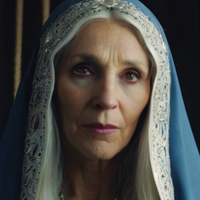 The elder goddess appears in many forms across the world's traditions, each emphasising different aspects of the crone's wisdom and power.
Hecate (Greek): Hecate is perhaps the most psychologically rich of the elder goddess figures. She is associated with the dark of the moon, the crossroads, keys, torches, and the threshold between states. She knows what is hidden and what is liminal — the space between night and day, between life and death, between the known and the unknown. In her threefold form, she faces all directions simultaneously, which is a way of saying that she holds time — past, present, and future — in a single field of awareness. This quality, of being able to hold a situation in its full temporal complexity rather than only seeing the immediate moment, is characteristic of elder wisdom.
The Cailleach (Celtic): The Cailleach Bheur of Scotland and the Cailleach Bhéara of Ireland are figures of enormous antiquity and power. The Cailleach created the mountains by accident — walking with a creel of rocks that occasionally fell — or deliberately, shaping the landscape according to her purposes. She is associated with winter, storms, and the bleaker aspects of the natural world. She is not a comforting figure but a truthful one. In some traditions she alternates with Brigid — the Cailleach presiding over the dark half of the year, Brigid over the light. This alternation speaks to the crone's particular relationship with the endings and the cold that make spring's return meaningful.
Baba Yaga (Slavic): Baba Yaga is the great witch-grandmother of Slavic folklore — terrifying, powerful, morally ambiguous, and ultimately a giver of wisdom to those who prove worthy of it. She lives at the boundary of the forest, which is the boundary of the known world, and she tests those who come to her with tasks before offering guidance. The tests she sets are not arbitrary; they are precisely calibrated to reveal whether the seeker has the quality of attention, patience, and genuine need that learning requires. She gives nothing to those who come with false pretences or without genuine purpose.
Grandmother Spider (Various Native American Traditions): Spider Woman or Grandmother Spider appears in the traditions of the Hopi, Navajo, and other Southwestern peoples as a creator figure who weaves the web of existence and teaches humans the arts of weaving and survival. Her wisdom is both cosmic and practical. She connects the physical and the spiritual through her web, and she does her work with patient, purposeful care rather than dramatic gesture. The spider's web is a useful model for elder wisdom generally: intricate, structural, made of what the maker herself produces, functional rather than decorative.
Quan Yin in Elder Aspect (Chinese/Buddhist): Quan Yin's compassion deepens with time rather than diminishing. In her elder aspect, she represents the quality of wisdom that has been tested by suffering — not innocently compassionate but compassionate through having understood what suffering actually costs. This is a different quality from the compassion of youth, and it is more useful to those who are themselves in difficulty.
The elder years bring specific gifts that are genuinely unavailable at earlier life stages. Understanding these gifts as gifts — rather than as compensations for what has been lost — is itself part of entering crone consciousness.
Liberation from Social Conditioning: The elder woman has typically spent enough time trying to meet others' expectations to have discovered that meeting others' expectations does not produce the satisfaction it promised. This realisation, when genuinely integrated, produces a kind of freedom that younger women often envy without fully understanding. It is not indifference — the crone can care deeply — but she has stopped performing for approval that she has learned to do without.
The Long Perspective: Having lived through multiple cycles of apparent crisis and recovery, the elder knows from direct experience that most things pass — that what feels catastrophic in the moment often looks different with time, and that what feels like an ending sometimes turns out to be a passage. This is not complacency; it is calibration. The crone knows which things genuinely require alarm and which are generating noise without signal, because she has seen both.
Comfort with Endings: The crone has experienced enough loss to have learned that endings are survivable and that they are not simply bad. Things that end make space for what comes next. Relationships that end sometimes free both parties. Work that concludes creates space for new work. The physical deterioration that the elder years bring is real and sometimes painful, but it is also a clarification — it concentrates attention on what is essential when energy can no longer be spread across everything equally.
Discernment: The crone can see through manipulation, flattery, and performance more readily than younger people, not because she is cynical but because she has seen these things before and recognised them at sufficient cost to develop genuine discernment. This capacity to distinguish authentic from performed, genuine from self-serving, makes her a valuable guide for those navigating complex situations.
Truth-Telling Without Cruelty: The elder goddess archetype consistently includes the quality of directness — the willingness to name what is true even when it is uncomfortable. This is not the aggression of someone who has abandoned care for others; it is the precision of someone who has learned that indirect communication often causes more harm than direct honesty, and that genuine care sometimes requires saying difficult things clearly.
Elder goddess wisdom is not automatically conferred by age. It requires genuine reflection, the willingness to learn from experience rather than merely accumulate it, and the courage to live in increasing alignment with one's own deepest values rather than with external expectations. Several practices support this development.
Life Review: The deliberate practice of reviewing one's life — not to produce regret but to extract understanding — is one of the most valuable practices of the elder years. What has been learned? What patterns have repeated? What qualities have developed through difficulty? What remains unresolved and is asking for attention? This is not nostalgia; it is the integration of experience into wisdom.
Dreamwork: The elder years often bring a deepening of dream life, particularly if the dreamer is willing to attend to it. The themes that arise in elder dreams frequently address unresolved material from earlier life stages, as well as deeper questions about meaning, legacy, and the approach of mortality. Keeping a dream journal and working with the material that arises builds a more conscious relationship with the psyche's own wisdom.
Ancestor Connection: Developing a relationship with ancestors — through genealogy research, through reflection on the patterns that have been inherited, through ritual acknowledgement of those who came before — both grounds the elder in a lineage that extends beyond the individual lifetime and makes available the accumulated experience of many generations. The elder is the bridge between those ancestors and the generations that will follow.
Mentorship: The traditional role of the elder as teacher and guide is not an obligation imposed from outside but a natural expression of having accumulated genuine wisdom. Finding ways to share what has been learned — whether through formal mentoring relationships, through writing, through participation in community, or through the quality of attention brought to encounters with younger people — is both a contribution to the community and a practice that deepens the elder's own understanding. Teaching what one knows is one of the most reliable ways of discovering what one actually knows.
Creative Expression: Many women discover or deepen creative work in the elder years, freed from the demands of reproduction, career-building, and the relentless social performance that earlier life stages often require. This creative renaissance is not incidental; it is the natural expression of an inner life that has finally been given adequate space and time. See also our page on Crone Creativity for more on this dimension of elder wisdom.
Elder Women's Circles: The traditional women's circle — gathering in which women share experience, wisdom, and support across the generations — is one of the oldest human community forms. In its elder form, the circle provides the experience of being genuinely heard by others who understand, the opportunity to contribute wisdom rather than only to receive it, and the collective intelligence that emerges when women with different experiences bring their understanding to shared questions.
Traditional cultures that honoured elder women assigned them specific roles that drew on exactly the qualities described above: keeper of the stories and the history, guide for life transitions such as birth, marriage, and death, healer who understood the long patterns of illness and recovery, arbiter of disputes who could see the situation from multiple perspectives without being captured by any single one. These roles were not ceremonial; they were functional. Communities genuinely needed what elder women had to offer.
Contemporary Western culture has largely abandoned this understanding. The devaluation of elder women — the rendering of them socially invisible, the equation of their worth with their continued physical attractiveness, the dismissal of their experience as mere "opinion" rather than knowledge — is both a significant cultural loss and a daily injustice experienced by women in the elder years. Reclaiming the elder goddess archetype is partly a personal spiritual project and partly a cultural one: the recovery of genuine respect for what the third stage of life has to offer.
Practically, this reclamation might take many forms. It might involve deliberately seeking out the wisdom of elder women in one's own community rather than only looking to younger voices that are more culturally amplified. It might involve sharing what one knows rather than waiting to be asked. It might involve participating in or creating community structures that give elder women genuine roles of authority and purpose. It might involve writing down what has been learned — creating a record of experience that can serve those who come after.
The elder goddess does not wait to be recognised. She recognises herself. And in doing so, she models for younger women that the third stage of life is worth moving toward rather than away from — that what awaits on the other side of the sacrifices and surrenders of ageing is not diminishment but a different, and in some ways deeper, form of power.
Explore More Goddess Archetypes →
© 2026 Wisdom of Gaia · About Us · Contact · Privacy Policy · Terms & Conditions · Community Guidelines ·