Notifications (Click to mark read)
 Journey through 4,000 years of spiritual wisdom as we explore the rich history of Yoruba tradition and Ifa divination. From its ancient origins in West Africa to its global recognition by UNESCO, this remarkable spiritual system has survived colonialism, slavery, and persecution to become one of the world's most influential religious traditions.
The Yoruba people have maintained one of Africa's most enduring and sophisticated spiritual traditions, with archaeological evidence suggesting organized religious practices dating back over 4,000 years. Today, an estimated 100+ million people worldwide practice some form of Yoruba spirituality.
Ancient Origins (2000+ BCE)

The roots of Yoruba civilization extend deep into antiquity, with archaeological evidence suggesting sophisticated spiritual practices began over 4,000 years ago in what is now southwestern Nigeria, Benin, and Togo. These early settlements developed complex religious systems, artistic traditions, and philosophical frameworks that would form the foundation of modern Yoruba spirituality.
Ancient Yoruba cosmology taught that Ile-Ife was the birthplace of humanity, where Obatala first molded human beings from clay and Olodumare (the Supreme Being) breathed life into them. This sacred geography became the spiritual center of the Yoruba world, with pilgrims traveling from across West Africa to honor the source of creation.
Classical Civilization (1000-1400 CE)

The classical period marked the height of Yoruba civilization, with the rise of Ile-Ife as both spiritual center and sophisticated city-state. During this era, the complete Ifa divination system was fully developed, incorporating the 256 Odu, thousands of traditional verses (Ese), and the complex philosophical framework that governs the tradition today.
The famous bronze and terracotta sculptures of Ife, created during this period, demonstrate the extraordinary artistic and technical achievements of Yoruba civilization. These masterpieces, now displayed in museums worldwide, reveal a society of remarkable sophistication that rivaled any civilization of its time.
The Oyo Empire began its expansion during this period, eventually becoming one of the most powerful states in West Africa, controlling trade routes from the Sahara to the Atlantic coast.
Golden Age (1400-1600 CE)

The period from 1400-1600 CE represented the golden age of Yoruba civilization. The Oyo Empire reached its zenith, controlling vast territories and trade networks that stretched across West Africa. The capital city of Oyo-Ile became a center of learning, art, and spiritual practice that attracted scholars and spiritual seekers from across the continent.
During this time, the Ifa priesthood (Babalawo) reached full institutional development, with formal training systems, initiation protocols, and standardized practices that ensured the accurate transmission of spiritual knowledge. The complex system of checks and balances in Yoruba government, including the role of the Ogboni society and the spiritual authority of the Ifa priests, created a sophisticated political system that balanced secular and sacred power.
The Forced Diaspora (1600-1850 CE)
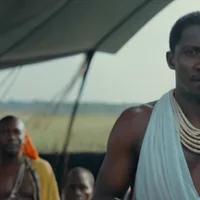
The Atlantic slave trade brought devastating changes to Yorubaland, forcibly dispersing millions of Yoruba people throughout the Americas. Despite the brutal conditions of slavery and systematic attempts to destroy African spiritual practices, Yoruba traditions showed remarkable resilience and adaptability.
In Cuba, Yoruba spirituality merged with Catholicism to become Santería, with Orisha hidden behind the identities of Catholic saints. In Brazil, the tradition evolved into Candomblé, maintaining stronger African elements while incorporating local influences. In Haiti, Yoruba practices influenced the development of Vodun, blending with Fon traditions and European elements.
Throughout this period, enslaved Africans used music, dance, storytelling, and religious syncretism to preserve their spiritual heritage, ensuring that the wisdom of their ancestors would survive for future generations.
Colonial Challenges (1850-1960 CE)
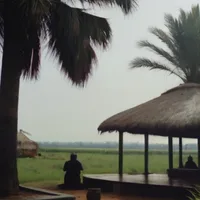
The colonial period brought systematic suppression of traditional religions as European powers sought to impose Christianity and Western values. Missionaries and colonial administrators banned traditional practices, destroyed sacred sites, and attempted to eradicate indigenous spiritual knowledge.
Despite these challenges, Yoruba spiritual traditions adapted and persisted. Many practitioners maintained their beliefs in secret, while others found ways to incorporate traditional elements into Christian worship. The tradition's emphasis on oral transmission proved crucial during this period, as knowledge keepers memorized and preserved vast amounts of spiritual wisdom without written records.
The resilience shown during this period demonstrated the deep spiritual power and cultural significance of Yoruba traditions, setting the stage for the revival that would come with independence.
Modern Revival (1960-Present)

Nigerian independence in 1960 brought religious freedom and sparked a renaissance of traditional spiritual practices. Academic institutions began serious study of African religions, validating the sophistication and value of indigenous spiritual systems.
The civil rights movement in America sparked interest among African Americans in reconnecting with their ancestral heritage. This led to the establishment of authentic Yoruba spiritual communities throughout the diaspora, often led by African priests who traveled to share traditional knowledge.
In 2005, UNESCO recognized the Ifa divination system as a "Masterpiece of Oral and Intangible Heritage of Humanity," providing international validation of what practitioners had always known - that Ifa represents one of humanity's most sophisticated spiritual technologies.
Today, Yoruba spirituality is experiencing global growth, with practitioners on every continent and growing academic recognition of its contributions to psychology, philosophy, and spiritual development.
Sacred Geography
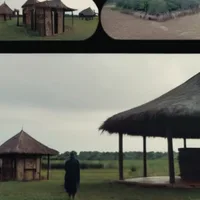
Ile-Ife: The spiritual homeland and birthplace of humanity according to Yoruba cosmology. Archaeological excavations have revealed continuous habitation for over 1,000 years, with sophisticated urban planning and artistic achievement.
Osogbo: Sacred city of Oshun, featuring the UNESCO World Heritage Osun-Osogbo Sacred Grove. The annual Osun festival draws thousands of devotees from around the world.
Oyo: Former capital of the powerful Oyo Empire, center of political and spiritual authority for centuries.
Lagos: Modern center of Yoruba culture and home to contemporary Ifa revival movements, educational institutions, and cultural preservation efforts.
Global Impact & UNESCO Recognition

The 2005 UNESCO recognition of Ifa divination as a "Masterpiece of Oral and Intangible Heritage of Humanity" represents a watershed moment in the history of African traditional religions. This recognition acknowledges:
• Cultural Significance: Ifa's role as one of humanity's oldest wisdom traditions
• Oral Literature: The vast corpus of traditional verses and stories
• Mathematical Sophistication: The complex binary system underlying divination
• Psychological Insight: Advanced understanding of human nature and development
• Global Influence: Impact on world religions and spiritual practices
Today, an estimated 100+ million people worldwide practice some form of Yoruba spirituality, making it one of the most widely practiced traditional African religions.
Explore Yoruba Wisdom Today...