Sacred Magic: Universal Wisdom Across Traditions
Throughout the tapestry of human history, across vastly different cultures, geographical regions, and time periods, threads of common wisdom have emerged in the practice of what we might call "sacred magic." These universal principles transcend cultural boundaries, suggesting a shared understanding of how consciousness interacts with the fabric of reality. At Wisdom of Gaia, we explore these common denominators while honoring the unique expressions of each tradition.
![Sacred Magic Across Traditions]()
The Ancient Roots of Magical Traditions
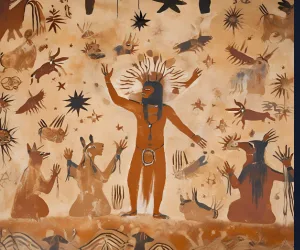
Magic, in its most essential form, represents humanity's earliest attempt to understand and influence the unseen forces that shape our world. Archaeological evidence suggests that magical practices date back to the earliest human societies, with cave paintings depicting shamanic rituals dating back 30,000 years.
The word "magic" itself derives from "mageia," referring to the practices of the Magi, the Zoroastrian priests of ancient Persia, who were renowned for their wisdom, astronomical knowledge, and spiritual practices. However, every ancient civilization developed its own sophisticated systems for working with subtle energies and consciousness:
![Ancient Origins of Magical Traditions]()
In ancient Egypt, the concept of "heka" represented divine power that maintained the cosmos and could be channeled through precise rituals, hieroglyphic inscriptions, and sacred sounds. Egyptian priests were masters of ceremonial magic, understanding that words, gestures, and images carried vibrational power that could influence reality when properly aligned.
Mesopotamian cultures developed elaborate systems of divination, including astrology and hepatoscopy (liver divination), believing these methods revealed the will of the gods and the underlying patterns of existence.
In India, the Vedic traditions gave rise to Tantra, a comprehensive system for working with subtle energies through mantra (sacred sound), yantra (sacred geometry), and ritual practices designed to align the practitioner with cosmic forces.
Chinese magical traditions emerged through Taoism and folk practices, developing sophisticated systems of feng shui, oracle divination through the I Ching, and energy work through qi manipulation.
Indigenous cultures worldwide developed shamanic practices that included journeying to non-ordinary reality, communicating with spirits and ancestors, and healing through energy manipulation and plant medicine.
These diverse traditions, while culturally distinct, reveal striking similarities in their understanding of how consciousness interacts with the fabric of reality. As we examine these common threads, we gain insight into principles that appear to be universal across human experience.
The Mathematical Magic: Sacred Numbers Across Traditions
One of the most fascinating common denominators across magical systems worldwide is the recurring significance of specific numbers and their symbolic importance. These numerical patterns appear with remarkable consistency across traditions that had no historical contact, suggesting they may represent fundamental patterns of consciousness or reality.
![Sacred Numbers in Magic]()
The power of eight and its multiples appears across numerous traditions with particular significance:
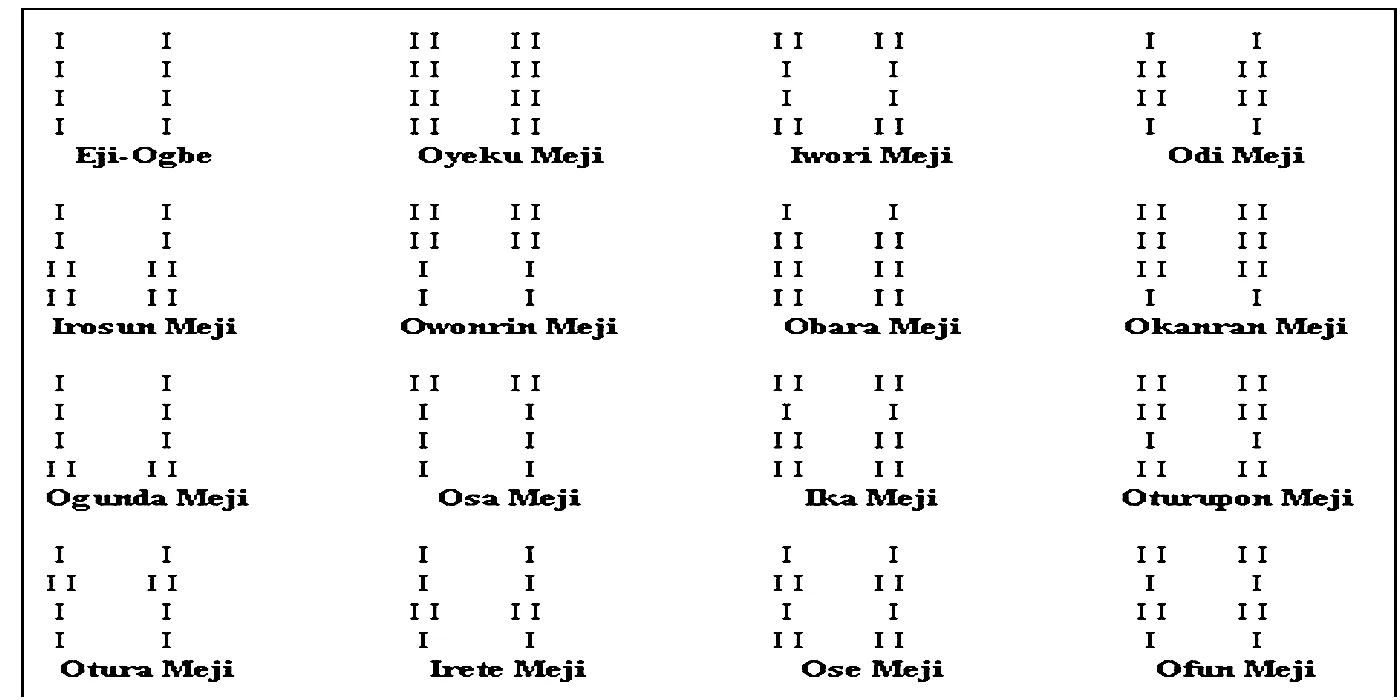
In the Ifá divination system of the Yoruba tradition (West Africa), the oracle operates through a system of 256 odu (patterns) - exactly 2^8. The diviner casts either palm nuts or an opele chain to generate these patterns, with each cast creating a binary mark. Eight casts create one complete divination pattern, generating one of the 256 possible odu that contain wisdom for the seeker.
Similarly, the I Ching (China) operates through 64 hexagrams (2^6), created through a casting process that generates six lines, each either broken or solid. These 64 hexagrams represent all possible situations in human experience and offer guidance for navigating them.
The remarkable mathematical relationship between these two systems – Ifá's 256 odu being exactly 2^8 while I Ching's 64 hexagrams are 2^6 – becomes even more intriguing when we consider that these traditions developed independently on opposite sides of the world.
This pattern extends further:
In Norse tradition, Odin's magical horse Sleipnir had eight legs, symbolizing the ability to travel between worlds.
The Buddha's path is expressed through the Eightfold Path.
In Hindu cosmology, there are eight directions (the cardinal and intermediate directions), each guarded by a specific deity.
The Ogdoad in Egyptian mythology consisted of eight primordial deities who created the world.
Beyond the significance of eight, other numerical patterns appear consistently across magical systems:
The power of three appears in countless traditions – from the Triple Goddess (Maiden, Mother, Crone) in various European traditions, to the Hindu Trimurti (Brahma, Vishnu, Shiva), to the Christian Trinity. This triadic structure often represents the creative process itself: creation, preservation, and transformation.
The number four typically represents stability and foundation – seen in the four elements (earth, air, fire, water), the four directions, the four seasons, and the four phases of the moon. In Native American traditions, the Medicine Wheel embodies this four-fold wisdom, while in Western esoteric traditions, the four elements form the foundation of magical practice.
Seven represents completion in many traditions – seven chakras in Hindu tradition, seven heavens in Islamic cosmology, seven classical planets in Western astrology, and seven days of the week across multiple cultures.
Twelve also appears with remarkable consistency – twelve signs of the zodiac (both Western and Chinese), twelve tribes of Israel, twelve apostles, twelve Olympian gods, and the twelve Adityas in Hinduism.
These numerical correspondences suggest that certain mathematical relationships may reflect patterns inherent in consciousness itself, recognized independently by cultures around the world as they developed systems for understanding and working with reality's subtle dimensions.
Universal Principles in Magical Practice
Beyond numerical correspondences, several operational principles appear consistently across magical traditions worldwide:
The Law of Correspondence: Perhaps best expressed in the Hermetic axiom "As above, so below; as within, so without," this principle recognizes that patterns repeat across different scales of existence. This understanding appears in virtually every magical system, from the Chinese concept that the human body mirrors the cosmos, to the Kabbalistic Tree of Life mapping both divine realms and human psychology, to indigenous traditions recognizing patterns in nature as reflections of spiritual principles.
![Universal Principles in Magic]() The Power of Intention and Consciousness:
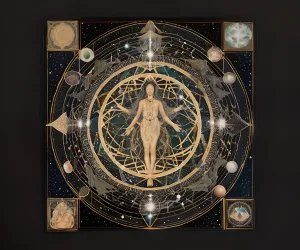
The Power of Intention and Consciousness: All magical systems recognize that focused consciousness creates change in the fabric of reality. Whether through ritual, meditation, prayer, or spell-casting, the practitioner's mental focus and clarity of intention are understood as the primary power behind magical efficacy. This principle appears in everything from Buddhist visualization practices to Western ceremonial magic, from Huna in Hawaii to the vision quests of North American tribes.
Sympathetic and Contagious Magic: First categorized by anthropologist Sir James Frazer, these principles appear across traditions worldwide. Sympathetic magic works through similarity (like affects like), while contagious magic works through previous connection. These principles appear in practices as diverse as Vodou doll work, Traditional Chinese Medicine's understanding of herbs, European folk magic, and shamanic healing methods worldwide.
The Recognition of Subtle Energy: Whether called qi (China), prana (India), mana (Polynesia), ashe (Yoruba), or vital force (Western traditions), the understanding that a subtle energy underlies physical reality appears consistently across magical systems. This energy is understood to be manipulable through consciousness, breath, movement, sound, and ritual.
Cyclic Time and Aligned Timing: Magical traditions worldwide recognize the importance of timing, aligning practices with natural cycles for maximum efficacy. This understanding manifests through moon phase work, seasonal celebrations, astrological timing, and planetary hours across diverse traditions.
The Power of Words and Names: From the Norse concept of galdr (magical chanting) to Hebrew divine names in Kabbalistic practice, from Sanskrit mantras to African incantations, magical traditions universally recognize that sound carries power and that naming something gives a degree of influence over it.
Divination Systems: Windows Into Hidden Reality
Divination—the practice of gaining insight into hidden matters through ritualized techniques—represents one of the most widespread magical practices across cultures. Though using vastly different methods and symbols, these systems share remarkable structural similarities:
Binary Systems: Many divination systems work through binary patterns that combine to create complex readings:
![Divination Systems Across Traditions]()
The I Ching uses broken and solid lines.
Ifá uses single and double marks.
European geomancy uses single and double dots.
Each of these systems uses these simple binary elements to create complex patterns (64 hexagrams, 256 odu, 16 geomantic figures) that correspond to archetypal situations.
Random Generation Mechanisms: Divination systems typically employ a method for generating randomness that is then interpreted as meaningful pattern—a process psychologist Carl Jung called "synchronicity." Whether through casting coins or yarrow stalks (I Ching), throwing palm nuts or chains (Ifá), shuffling cards (Tarot), casting stones or bones (various shamanic traditions), or reading patterns in nature (augury), these systems create momentary alignment between the microcosm of the divination and the macrocosm of the situation being examined.
Layered Interpretation: Most divination systems involve multiple layers of meaning that interact to create a nuanced reading. In Tarot, this appears through card position, card meaning, and card combinations. In astrology, through planet, sign, house, and aspect. In Ifá, through the primary and secondary odu and their combination. This complexity allows for precisely tailored guidance that addresses the unique facets of each situation.
Archetypal Frameworks: All divination systems organize reality through archetypal patterns that represent fundamental aspects of human experience. Whether the 78 cards of Tarot, the 64 hexagrams of I Ching, the 256 odu of Ifá, or the 12 houses and planets of astrology, these systems map the territory of human experience through symbolic language.
Magical Tools and Sacred Objects
Across magical traditions worldwide, practitioners use specialized tools to focus, direct, and amplify energy. While the specific forms vary culturally, the functional categories show remarkable consistency:
Containers and Vessels: From the Western magical tradition's chalice to Tibetan ritual bowls, from African gourds to Native American medicine bags, vessels represent receptivity and holding power in magical systems worldwide.
Pointing and Directing Tools: Tools for directing energy appear universally—the Western wand or staff, the Tibetan dorje, the African scepter, the indigenous pointing stick. These tools extend the practitioner's ability to project and direct energy with precision.
Boundary-Creating Objects: Tools that define sacred space appear across traditions—from the ceremonial knife (athame) in Western traditions to Tibetan phurbas, from salt circles to medicine wheels. These tools separate sacred from mundane space, creating containers for magical work.
Symbolic Representations: Objects that represent specific energies, deities, or forces appear in all systems—statues, paintings, talismans, fetishes, and idols. These objects serve as focal points for specific qualities or energies the practitioner wishes to work with.
Scrying Tools: Divination tools that use reflective surfaces for gaining insight appear worldwide—crystal balls, mirrors, bowls of water or ink, polished stones. These tools provide focal points for accessing altered states of consciousness conducive to receiving intuitive information.
Sonic Tools: Instruments that create sound for magical purposes—drums, rattles, bells, singing bowls, didgeridoos—appear across shamanic and ceremonial traditions, recognizing sound's power to shift consciousness and energy.
Altered States of Consciousness
![Altered States in Magical Practice]()
Perhaps the most fundamental commonality across magical traditions is the recognition that altered states of consciousness facilitate magical work. These states allow practitioners to perceive and interact with subtle energies and dimensions not ordinarily accessible. Methods for achieving these states show remarkable cross-cultural consistency:
Rhythmic Stimulation: The use of drumming, chanting, and rhythmic movement to induce trance states appears in shamanic traditions worldwide, from Siberian shamanism to African trance dances, from Native American ceremonial drumming to Sufi whirling.
Breath Control: Specialized breathing techniques alter consciousness across traditions—pranayama in Hindu practices, holotropic breathwork in modern contexts, circular breathing in Australian Aboriginal traditions, and the controlled breathing of ceremonial magic.
Sensory Management: Magical traditions utilize both sensory deprivation (isolation, darkness, silence, fasting) and sensory stimulation (chanting, incense, psychoactive substances, visual stimuli) to shift consciousness into magical states.
Sacred Setting: The creation of specialized environments for magical work appears universally—whether through temporary sacred circles, permanent temple spaces, natural power spots, or astrologically timed rituals.
Dream Work: Many traditions recognize dreams as gateways to magical consciousness, developing sophisticated practices for lucid dreaming, dream incubation, and dream interpretation.
Through these varied techniques, practitioners across cultures access similar states of consciousness that facilitate magical perception and action, suggesting that these states may represent inherent human capacities rather than culturally constructed experiences.
The Influence of Persian Philosophy on Magical Traditions
The Persian contribution to the development of magical traditions cannot be overstated. Ancient Persia (modern Iran) served as a crucial crossroads of knowledge, synthesizing and transmitting magical and spiritual wisdom that profoundly influenced both Eastern and Western esoteric practices.
![Persian Influence on Magic]()
Zoroastrianism, founded by the prophet Zoroaster (Zarathustra) around 1500-1000 BCE, introduced revolutionary concepts that would later influence magical understanding worldwide:
Cosmic Dualism: Zoroastrian teachings about the cosmic struggle between the forces of light (Ahura Mazda) and darkness (Angra Mainyu) established a framework for understanding opposing magical forces that later appeared in many Western magical traditions.
Angelology: The elaborate Zoroastrian hierarchy of spiritual beings (yazatas and fravashis) provided a template for the angelic hierarchies that would later appear in Jewish, Christian, and Islamic magical systems.
Astrology: Persian magi were renowned astronomers and astrologers whose knowledge significantly advanced astrological practice. Their synthesis of Babylonian and Egyptian astrological knowledge created systems that would spread both eastward and westward.
As the Persian Empire expanded, it created unprecedented exchange between Eastern and Western thought. Later, during the Islamic Golden Age (8th-14th centuries), Persian scholars preserved and expanded upon Greek, Egyptian, Indian, and Chinese knowledge, creating comprehensive magical systems that integrated multiple traditions:
Alchemy: Persian alchemists like Jabir ibn Hayyan (Geber) developed sophisticated understanding of material transformation that influenced both practical chemistry and spiritual transformation practices.
Sufism: The mystical dimension of Islam, particularly strong in Persian culture, developed elaborate systems for working with divine names, breath, movement, and contemplative practices to access higher states of consciousness.
Illuminationist Philosophy: Developed by Suhrawardi in the 12th century, this Persian philosophical school integrated Zoroastrian angelology with Neoplatonic thought and Islamic wisdom, creating a comprehensive system for understanding the relationship between light, consciousness, and manifestation.
Persian magical wisdom reached Europe through multiple channels—through the Moorish presence in Spain, through the Crusades, and through trade routes. This transmission profoundly influenced Western esoteric traditions, particularly Hermeticism, Kabbalah, and ceremonial magic. The Persian concept of the Magi—wise practitioners of natural and spiritual arts—gave us our very word "magic."
Sufism and Spiritual Magic
Within Islamic culture, Sufism represents one of the most sophisticated systems of spiritual practice, developing methods that modern terminology might classify as "magical" while remaining firmly rooted in monotheistic understanding. Sufism's approach demonstrates how spiritual magic can flourish within traditional religious frameworks.
![Sufism and Spiritual Magic]()
Sufi practices include numerous techniques for altering consciousness and accessing spiritual realities:
Dhikr: The rhythmic remembrance of divine names, often accompanied by breath control and movement, creates altered states that Sufis recognize as gateways to divine presence.
Sama: Ritualized movement and music (embodied most famously in the whirling dervishes of the Mevlevi order) induce ecstatic states that dissolve ordinary boundaries of consciousness.
Dream Work: Sufis developed sophisticated practices for accessing guidance through dreams, recognizing them as channels for divine communication.
Breath Practices: Controlled breathing techniques alter consciousness and energy flow, much like pranayama in Hindu traditions.
Contemplation of Sacred Geometry and Calligraphy: Visual focus on geometric patterns and divine names written in calligraphy serves as a form of visual mantra, shifting consciousness toward divine realities.
Sufism's contribution to magical understanding includes the recognition that love itself is a magical force—perhaps the most powerful one available to humans. Many Sufi practices aim at opening the heart to divine love, which then becomes the primary agent of transformation.
The Sufi emphasis on direct experience rather than doctrine—epitomized in the saying "Taste, don't speak" (dhawq, la kalam)—aligns with the experimental nature of magical practice across traditions. This experiential approach bridges the apparent gap between mysticism and magic, recognizing both as pathways to direct engagement with non-ordinary reality.
Common Ethical Frameworks Across Magical Traditions
Despite their diversity, magical traditions worldwide tend to develop similar ethical frameworks that guide the appropriate use of magical knowledge and power:
The Law of Return: The understanding that magical actions return to their sender appears across traditions—whether expressed as karma in Eastern traditions, the Threefold Law in Wiccan practice, or similar concepts in African and indigenous systems. This principle recognizes that consciousness creates ripples that eventually return to their source.
Respect for Free Will: Most developed magical systems emphasize the importance of respecting others' autonomy and free choice, limiting practices that would manipulate or control others against their will.
Balance and Harmony: The recognition that magical work should maintain or restore natural balance appears consistently—whether through the Taoist concept of balancing yin and yang, the Western magical emphasis on balancing elements, or indigenous practices aimed at maintaining harmony with natural forces.
Service to Community: Traditional magical practitioners typically serve community needs rather than pursuing power for personal gain. From village shamans to cunning folk, from medicine people to traditional healers, magical practitioners across cultures have primarily functioned as community resources.
Proper Relationship with Spiritual Forces: All traditions emphasize the importance of maintaining respectful relationships with the spirits, deities, or forces invoked through magical practice, recognizing that these relationships require reciprocity and proper protocol.
These ethical commonalities suggest that as humans develop the capacity to work with subtle energies and consciousness, similar wisdom about the responsible use of these abilities naturally emerges.
Modern Integration of Ancient Magical Wisdom
![Modern Integration of Ancient Magic]()
Today, we stand at a unique point in history where the magical wisdom of diverse traditions has become broadly accessible, allowing for unprecedented integration and synthesis. This process has both benefits and challenges:
Scientific Validation: Modern scientific fields like quantum physics, consciousness studies, and psychoneuroimmunology have begun to provide frameworks for understanding phenomena that magical traditions have recognized for millennia. The observer effect in quantum physics, for instance, offers a scientific paradigm for understanding how consciousness influences reality—a fundamental principle in magical practice.
Psychological Understanding: Depth psychology, particularly Jungian approaches, has recognized the power of symbols, archetypes, and ritual in accessing and transforming the unconscious mind. This psychological framework validates many magical practices while offering new language for understanding their efficacy.
Cross-Cultural Exchange: The globalization of spiritual knowledge has allowed practitioners to recognize the common threads across traditions while appreciating their unique cultural expressions. This recognition strengthens our understanding of magical principles that appear to be universal rather than culturally constructed.
Technological Enhancement: Modern technology offers new tools for traditional practices—biofeedback devices that facilitate reaching specific brain states, apps that track astrological timing, and digital platforms that connect practitioners across distances.
Ethical Challenges: This unprecedented access to diverse magical knowledge also presents challenges regarding cultural appropriation, commercialization of sacred knowledge, and decontextualization of practices from their traditional ethical frameworks. Modern practitioners must navigate these issues with awareness and respect.
Conclusion: The Universal Wisdom of Sacred Magic
As we survey the landscape of magical traditions across human cultures, the common threads become unmistakable. From the precise mathematical correlations between divination systems like Ifá and I Ching, to the universal recognition of consciousness as a creative force, to the consistent methods for accessing altered awareness, these commonalities suggest that magical understanding may represent the human discovery of actual principles that govern the relationship between consciousness and reality.
The remarkable similarities between traditions that developed independently—whether in numerical systems, operational principles, or ethical frameworks—challenge the notion that magic represents merely culturally constructed superstition. Instead, these commonalities suggest that diverse cultures have discovered the same underlying principles through their explorations of consciousness and subtle energy, much as different cultures independently discovered mathematical principles that reflect objective reality.
At Wisdom of Gaia, we honor both the universal principles that appear across traditions and the unique cultural expressions through which these principles have been applied and understood. We recognize that each cultural tradition offers specific wisdom developed through generations of practice and refinement. At the same time, we celebrate the emerging recognition that beneath these diverse expressions lie common understandings about how consciousness interacts with the fabric of reality.
As modern practitioners, we have the opportunity to learn from this universal wisdom while respecting its cultural origins and contexts. By recognizing both the common threads and the unique contributions of each tradition, we can develop approaches to sacred magical practice that honor ancient wisdom while meeting contemporary needs.
The convergence of scientific understanding, psychological insight, and traditional magical wisdom offers unprecedented possibilities for human development and planetary healing. As we integrate these streams of knowledge, we participate in an emerging paradigm that recognizes consciousness as fundamental to reality—a understanding that traditional magical systems have maintained throughout human history.
"The old division of the world into animistic, magical and scientific phases is misleading. Rather there is a continuous spectrum of magical thinking and magical ritualistic behavior which extends from the word magic of the most primitive culture to the mathematical equations of Eddington and Einstein... The same intellectual powers are being used; the material is different, the degree of abstraction is different; the purpose is different, but the mental processes are similar, and the assumptions are not entirely dissimilar." — Bronisław Malinowski



 In ancient Egypt, the concept of "heka" represented divine power that maintained the cosmos and could be channeled through precise rituals, hieroglyphic inscriptions, and sacred sounds. Egyptian priests were masters of ceremonial magic, understanding that words, gestures, and images carried vibrational power that could influence reality when properly aligned.
 The power of eight and its multiples appears across numerous traditions with particular significance:
 The Power of Intention and Consciousness: All magical systems recognize that focused consciousness creates change in the fabric of reality. Whether through ritual, meditation, prayer, or spell-casting, the practitioner's mental focus and clarity of intention are understood as the primary power behind magical efficacy. This principle appears in everything from Buddhist visualization practices to Western ceremonial magic, from Huna in Hawaii to the vision quests of North American tribes.
 The I Ching uses broken and solid lines.
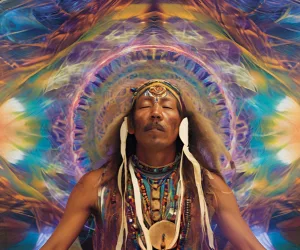 Perhaps the most fundamental commonality across magical traditions is the recognition that altered states of consciousness facilitate magical work. These states allow practitioners to perceive and interact with subtle energies and dimensions not ordinarily accessible. Methods for achieving these states show remarkable cross-cultural consistency:
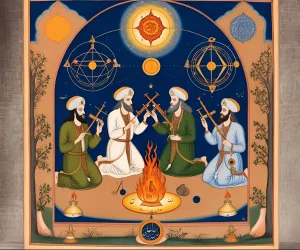 Zoroastrianism, founded by the prophet Zoroaster (Zarathustra) around 1500-1000 BCE, introduced revolutionary concepts that would later influence magical understanding worldwide:
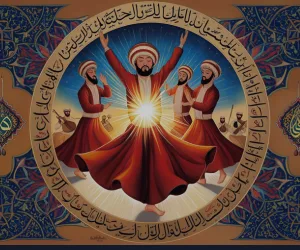 Sufi practices include numerous techniques for altering consciousness and accessing spiritual realities:
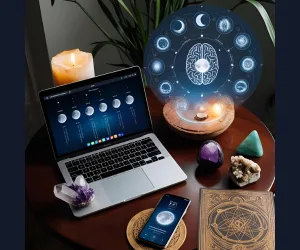 Today, we stand at a unique point in history where the magical wisdom of diverse traditions has become broadly accessible, allowing for unprecedented integration and synthesis. This process has both benefits and challenges: