Notifications (Click to mark read)
Muladhara — Where Everything Begins
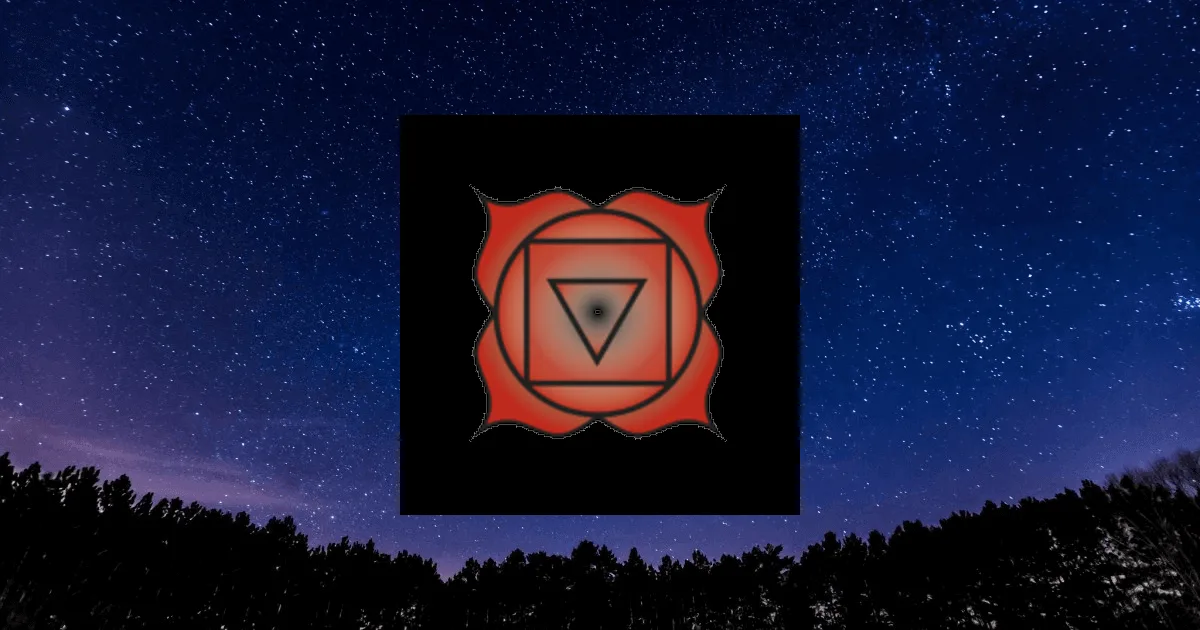
Muladhara comes from two Sanskrit roots: mula, meaning root or foundation, and adhara, meaning support or base. Together they describe precisely what this first chakra does — it is the ground on which everything else is built. Before you can open your heart, develop your will, speak your truth, or reach toward spiritual understanding, you need a foundation stable enough to stand on. Muladhara is that foundation.
Located at the base of the spine, at the perineum, the root chakra is the lowest point of the chakra system and in many ways the most fundamental. It governs your most primal relationship with existence itself: the simple fact of being here, in a body, on the earth, requiring safety, sustenance, and shelter to survive. This is not glamorous territory. The root chakra does not deal in transcendence or inspiration — it deals in the basic conditions that make everything else possible.
The Earth Element and the Body
The root chakra's element is Earth — dense, solid, slow-moving, and enduring. This correspondence runs through every aspect of its function. Earth is the element of form, of physical reality, of things that can be held and measured and stood upon. The root chakra is where your consciousness meets the physical world at its most fundamental level: through the body, through the ground beneath your feet, through the daily rhythms of eating, sleeping, and moving that sustain biological life.
The body parts associated with Muladhara reflect this grounding quality — legs, feet, and bones are all structures of support and locomotion, the means by which we stand upright and move through the physical world. The adrenal glands, which govern the fight-or-flight response, also fall under the root chakra's domain. When you feel threatened, the adrenals fire and the body prepares to survive. This is ancient, deep, involuntary intelligence — the oldest layer of the nervous system expressing itself through the first chakra.
Smell is the root chakra's associated sense, and this too is precise. Of all five senses, smell is the most directly connected to the limbic system — the brain's emotional and survival centre — and the most capable of triggering immediate, visceral responses. A smell can recall a memory or trigger an alarm before conscious thought has had time to form. This is root chakra territory: pre-rational, immediate, grounded in the body's own knowing.
What Muladhara Actually Governs
The root chakra governs your most fundamental sense of safety and belonging — not as abstract concepts, but as felt experiences in the body. When Muladhara is healthy and open, you feel at home in your own skin and on the earth. There is a basic trust in life — not naïve optimism, but a deep-seated sense that you have the right to exist, that your needs can be met, and that the ground will hold you.
This trust is not primarily a product of circumstance, though circumstances obviously shape it. It is an energetic quality, rooted in the chakra itself and influenced by the history of how safe it has or has not been to inhabit your body and your life. Early experiences of instability — physical, emotional, financial, or relational — leave their marks in the root chakra, and those marks can persist long after the original circumstances have changed.
The will to survive is Muladhara's most primal function. This is not aggression or ambition — it is the simple, profound drive to continue existing that underlies all other motivation. Without a functioning root chakra, higher spiritual development is extremely difficult to sustain, because there is no stable base from which to reach upward. The chakra system is a ladder, and Muladhara is the ground it stands on.
Signs of Imbalance
A blocked or underactive root chakra tends to manifest as chronic anxiety, a pervasive sense of not belonging anywhere, financial instability as a recurring pattern, difficulty feeling safe even in objectively safe circumstances, and a disconnection from the body — living primarily in the head, losing touch with physical needs, finding it hard to be fully present in ordinary life. There may be a free-floating fearfulness that attaches to different objects but never fully resolves, because its origin is not in any specific threat but in the chakra's unsteady foundation.
An overactive root chakra presents as its own kind of problem: excessive materialism, hoarding, rigidity, territoriality, and a resistance to change that goes beyond preference into something closer to panic. The survival instinct, stuck in overdrive, reads ordinary uncertainty as existential threat. Anger, aggression, and an obsessive focus on physical security at the expense of everything else can all signal a root chakra that is overfiring.
Physical indicators associated with root imbalance include lower back pain, problems with the legs and feet, fatigue at the adrenal level (the exhaustion of sustained low-grade threat response), and issues with the bones and immune system.
Working with the Root Chakra
Because Muladhara is an Earth element chakra, the most direct ways of working with it tend to involve physical contact with the earth and the body. Walking barefoot on natural ground — grass, soil, sand — is one of the simplest and most effective root chakra practices available. It is not metaphorical. The physical contact between the soles of your feet and the earth directly engages the chakra's energetic territory.
Physical exercise that involves the legs and feet — walking, running, yoga poses that emphasise grounding such as Mountain Pose, Warrior, and Tree — brings energy down from an overactive mind into the lower body where the root chakra can process it. The root chakra responds to being used, to being reminded through direct physical experience that the body is present and capable.
Stability in daily routine is also root chakra medicine. The chakra is soothed by rhythm and predictability — regular mealtimes, consistent sleep, the reassuring repetition of practices that signal to the nervous system that the environment is safe. This is not exciting advice, but the root chakra is not an exciting chakra. It is a reliable one, and reliability is what it needs and what it offers in return.
For deeply rooted imbalances — particularly those originating in early childhood experiences of instability or threat — bodywork, somatic therapy, or trauma-informed practices can reach places that more cognitive approaches cannot. The root chakra stores its history in the body, and the body is where the healing needs to happen.
Crystals for the Root Chakra
Red Jasper is perhaps the most directly aligned crystal for Muladhara. Its dense, earthy red resonates with the chakra's colour and its energy is stabilising and sustaining — it supports endurance, courage, and the quiet determination to remain present when circumstances are difficult. It is a stone of slow, reliable strength rather than sudden intensity.
Black Tourmaline works primarily as a protector and cleanser. It absorbs and deflects negative energy, creates a sense of energetic boundary, and has a strongly grounding effect — drawing scattered or anxious energy back down into the body and into the earth. For a root chakra destabilised by external pressure or by an environment that feels unsafe, Black Tourmaline is a first-line stone.
Smoky Quartz bridges the gap between the root and the higher chakras. It grounds spiritual energy into physical reality — useful for anyone whose spiritual practice has become a way of escaping the body rather than inhabiting it more fully. It is also one of the best stones for transmuting heavy or stuck energy, dissolving what has accumulated and returning the root chakra to a cleaner baseline.
Hematite is iron-rich and heavy in the hand, and its energy reflects this. It is the most physically grounding of the four — it pulls energy down, anchors the aura to the body, and has a steadying effect on a mind that has been running too fast for too long. Athletes and people doing demanding physical work often find Hematite particularly supportive.
Place any of these at the base of the spine during lying meditation, carry them in a left pocket to keep grounding energy close to the body throughout the day, or hold them during moments of anxiety or disconnection.