Let Go - Stress Release
Release what weighs you down through interactive stress management tools. Using evidence-based techniques from mindfulness and cognitive behavioral therapy, Let Go helps you identify stressors, release physical tension, and create healthy boundaries between work and rest.
Digital Worry Release
Write your worries and watch them float away in bubbles
Current Stress Level
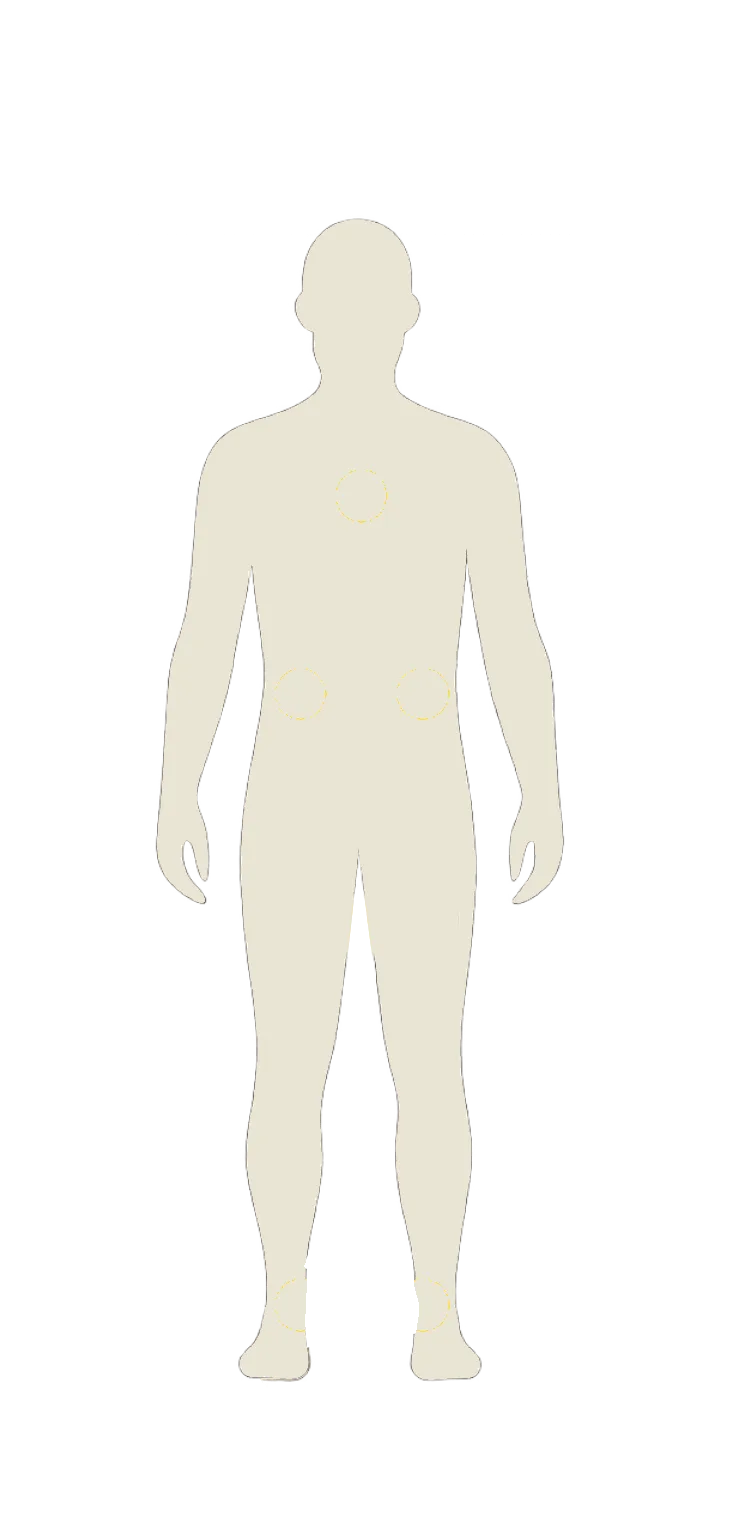
Body Tension Release
Click on tense areas to release them
Let Go Breathing
Time Boundaries
Plan your day with healthy work-life balance
📊 Today's Release
⏰ Set Stress Check
Let Go — Stress Release & Management
Release What You Cannot Change

Stress accumulates not because life is difficult — it always has been — but because we carry things we were never meant to carry indefinitely. The worry from yesterday sits alongside the worry from this morning and the anticipated worry of tomorrow, and the combined weight is not the weight of any single problem but of all of them pressed together in a space too small to hold them.
Letting go is not the same as giving up. It is the recognition that some things are genuinely beyond your control, and that continuing to hold them does not change them — it only keeps both hands occupied with something you cannot put down. When you release what you cannot change, those hands become available for what you actually can.
This is easier to understand than it is to practise. The mind does not naturally distinguish between productive problem-solving and unproductive rumination. Both feel like doing something. The difference is that one leads somewhere and the other simply circles. Learning to notice the difference, and to redirect the circling energy toward release rather than continued grip, is the central skill of stress management.
The Worry Release Practice
Writing a worry down and then symbolically releasing it — watching it float away, burning it, crossing it out — is not a trivial exercise. It engages two distinct mechanisms that are genuinely effective.
The first is externalisation. A worry that lives only in the mind tends to feel larger than it is, because the mind is also the thing doing the worrying. Moving the worry outside — onto paper, into words, into a form that can be seen and examined — reduces it to its actual size. You are no longer inside the worry looking out; you are outside it looking at it. The perspective changes, and with it the intensity.
The second is the act of release itself. The physical or symbolic act of letting something go — even digitally — primes the nervous system for the psychological movement it represents. The body and mind are not as separate as we tend to assume. When you enact release, something in you follows. This is not magical thinking; it is the basic principle behind every physical ritual that humans have used throughout history to mark transitions. The action creates the state it represents.
Tension in the Body
Stress does not stay in the mind. It moves into the body — held in the jaw, the shoulders, the chest, the stomach — and once there it tends to stay until it is deliberately addressed. This is not metaphorical. Chronic muscle tension is one of the most consistent physical markers of psychological stress, and the relationship runs in both directions: releasing physical tension reduces psychological stress, just as releasing psychological stress reduces physical tension.
Progressive muscle relaxation and body scanning are among the most evidence-supported techniques available for stress management. The principle is simple: bring deliberate attention to each area of the body in turn, notice where tension is being held, and consciously release it. The noticing is as important as the releasing — most people carrying significant physical tension are not aware of it until they pay attention.
The shoulders and jaw are the most common sites of habitual tension, and they are worth checking regularly throughout the day. A simple practice: pause, notice whether your jaw is clenched, let it soften. Notice whether your shoulders have crept upward, let them drop. These small releases, practised consistently, shift the body's baseline over time.
Breathing as Release
The breath is the most direct available intervention in the stress response. Unlike heart rate or blood pressure, which are not under voluntary control, the breath can be consciously regulated — and because breathing is directly connected to the autonomic nervous system, consciously slowing and deepening the breath activates the parasympathetic response that counteracts stress.
The exhale is the more important phase. A slow, complete exhalation triggers a greater parasympathetic response than even a slow inhalation, because it is the out-breath that activates the vagus nerve most directly. Breathing patterns that emphasise the exhale — making it longer than the inhale — are among the most physiologically grounded stress management techniques available.
The balloon breathing exercise here uses the visual metaphor of inflation and deflation to support this rhythm. The balloons inhale as you breathe in and deflate as you breathe out, providing a visual anchor that helps regulate the pace and prevents the most common error — rushing the exhale before it has fully released.
Boundaries and Time
One of the most pervasive and least-named sources of chronic stress is the absence of clear boundaries between different domains of life — between work and rest, between being available and being off, between time that belongs to obligations and time that belongs to recovery.
This is not primarily a productivity problem, though it affects productivity. It is a nervous system problem. The nervous system requires genuine rest — periods of complete disengagement from demands — in order to recover from stress. If rest is always contaminated by the possibility of demands, the recovery does not complete. The stress accumulates rather than clearing.
The time boundary builder is a practical tool for making this visible — mapping the day and seeing, in concrete terms, where work ends and where rest genuinely begins. For many people, doing this exercise reveals that rest is far more marginal than they had assumed, squeezed to the edges of a day dominated by obligations. Making the pattern visible is the first step toward changing it.
The Art of Letting Go
Stress accumulates when we hold onto worries, tensions, and responsibilities that are beyond our immediate control.
The practice of "letting go" doesn't mean giving up—it means releasing our grip on what we cannot change while
focusing our energy on what we can influence.
Through mindful awareness of our stress patterns, physical tension, and breathing, we can learn to recognize
when we're holding on too tightly and practice the gentle art of release.
Evidence-Based Stress Management

Research shows that chronic stress can be effectively managed through a combination of cognitive techniques
(releasing worried thoughts), somatic practices (releasing physical tension), and behavioral changes (creating healthy boundaries).
The interactive exercises in Let Go are based on proven techniques from mindfulness-based stress reduction (MBSR),
cognitive behavioral therapy, and progressive muscle relaxation. Regular practice helps retrain your nervous
system to respond to stress with resilience rather than reactivity.