Notifications (Click to mark read)
The Building Blocks of Everything
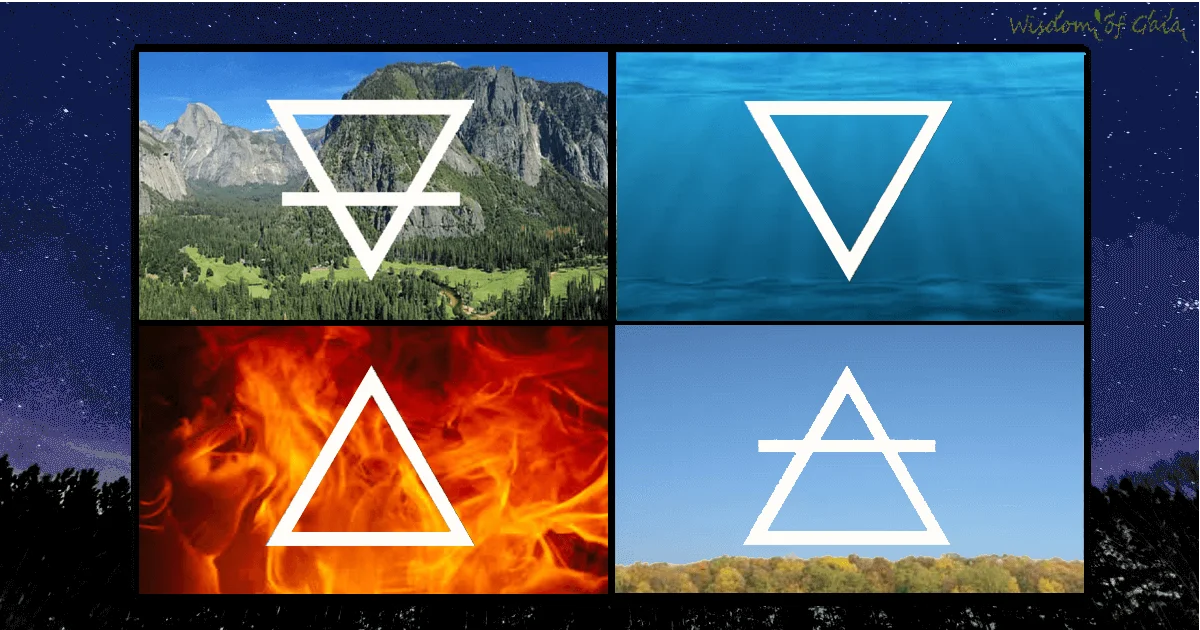
Long before modern science reduced the physical world to atomic structure and periodic tables, human beings were already mapping reality through a different kind of precision — one concerned not with what things are made of, but with how they behave and what they mean. The doctrine of the four classical elements — Earth, Water, Fire, and Air — emerged independently across multiple ancient traditions, from the pre-Socratic philosophers of Greece to the elemental frameworks of Chinese, Indian, and Celtic cosmology. Each arrived at something similar not because they were copying each other, but because they were observing the same world and recognising the same patterns within it.
These four elements are not simply descriptions of physical substances. Earth is not only soil. Water is not only the sea. Fire is not only flame, and Air is not only atmosphere. Each is a principle — a quality of energy that manifests in the physical world as those substances but extends through every layer of experience, from the structure of a human personality to the resonant frequency of a crystal. Understanding the elements is understanding that the world has character, and that character is not random.
At Wisdom of Gaia, we work with the elements as a living framework — a way of understanding ourselves, identifying imbalances, and choosing the tools that speak most directly to what needs attention. Each element has its corresponding crystals, its characteristic strengths and shadows, and its particular relationship with the others. Balance rarely means having equal amounts of everything. It means understanding which elements are dominant in your nature, which are underdeveloped, and how they interact.

Earth is the element of form — of the tangible, the physical, the enduring. It is the ground beneath your feet and the structure within your body: bone and tissue, the architecture that holds everything else upright. In the elemental framework, Earth governs the parts of life that require solidity — security, identity, home, heritage, and the slow accumulation of things built to last.
An Earth-dominant personality tends toward practicality and reliability. These are people who finish what they start, who show up when they say they will, who take the long view and distrust shortcuts. They are grounded in a way that others often find deeply stabilising — the kind of person you want present in a crisis, because they do not panic and they do not scatter. Their sense of self is rooted in concrete things: place, history, craft, the physical reality of a well-made life.
The shadow of Earth is rigidity. What provides stability can also resist necessary change. An excess of Earth energy can manifest as stubbornness, an over-attachment to the familiar, or a difficulty with anything that cannot be measured, held, or accounted for. The Earth person who has not been challenged may mistake their comfort zone for wisdom and their habits for identity.
Earth is also the element most directly concerned with the body, and any disconnection from physical wellbeing — chronic illness, neglect, poor relationship with one's own physical self — often signals an Earth imbalance worth examining. The body is not a vehicle for the spirit; in the elemental view, it is a direct expression of it.
Crystals for the Earth Centre: Green Aventurine, Hematite, Black Tourmaline, Jasper, Smoky Quartz, and Amber.
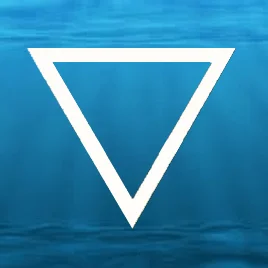
Water is the element of feeling — of the interior life, the emotional currents that run beneath the surface of everything we do. It is traditionally associated with the Moon, and the connection is apt: as the Moon pulls the tides, the emotional body moves in rhythms that follow their own logic, rising and falling in ways that are not always visible from the outside and not always comprehensible even from within.
Water governs intuition, imagination, empathy, and the realm of the unconscious. A Water-dominant personality tends to experience the world through feeling before thought — they sense the emotional temperature of a room the moment they enter it, pick up on what is not being said, and often know things without being able to explain how they know them. They are frequently gifted listeners, capable of holding space for others' pain in a way that does not require it to be fixed or resolved, simply witnessed.
The qualities most characteristic of the Water personality include truthfulness, adaptability, and a careful attentiveness to others. Water finds a way around obstacles rather than through them — it is patient and persistent in a way that does not announce itself. It is also frank: Water people tend toward honesty not as a moral position but as a natural disposition. They are often more comfortable with difficult emotional truths than other types.
The shadow of Water is absorption. Boundaries are hard to maintain when you feel everything; the capacity for empathy can become the inability to distinguish your own emotional state from someone else's. Water can also become stagnant — when the flow stops, feeling deepens into brooding, and intuition curdles into anxiety. The challenge for a Water-dominant person is to keep moving: to feel fully without being submerged.
Crystals for the Water Centre: Rose Quartz and Green Chalcedony.
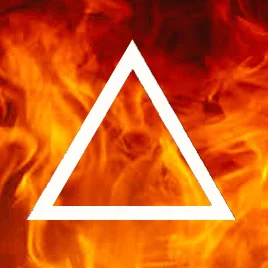
Fire is the element of energy and will — the force that drives, initiates, and illuminates. Where Earth builds steadily over time, Fire moves fast and burns bright. It is the element most directly associated with the life force itself: the spark that distinguishes the living from the non-living, the enthusiasm that turns a possibility into an action, the passion that makes a person genuinely magnetic to others.
A Fire-dominant personality tends to be warm, expressive, and naturally engaging. They draw people in not through calculation but through genuine animation — they are interested in things, excited by possibilities, willing to charm and be charmed. Spontaneity is their strength: they act on inspiration before doubt can organise itself into an argument against movement. At their best, Fire people ignite the same quality in those around them, creating momentum where there was inertia.
Fire governs courage, creativity, and the kinds of leadership that come from genuine conviction rather than institutional position. It is also the element of transformation — of the forge, the hearth, the cremation fire. Things that pass through Fire do not return unchanged.
Of all four elements, Fire is the hardest to hold in balance. The same quality that makes it generative makes it volatile. A Fire imbalance can manifest in two opposite directions: either the fire goes cold — producing apathy, disillusionment, the hollow exhaustion of someone who burned too hard too long — or it blazes out of control, becoming excess in word, action, and appetite, consuming more than it creates. The Fire person needs to learn the art of the tended flame: enough air to burn well, enough containment to burn long.
Crystals for the Fire Centre: Clear Quartz, Malachite, Tiger Eye, Carnelian, and Yellow Aventurine.

Air is the element of mind — of thought, language, perception, and the invisible connections between things. It is the most subtle of the four elements, without fixed form, present everywhere and belonging nowhere in particular. Air moves between things rather than occupying them; it carries, connects, and disperses. It is the medium through which ideas travel.
An Air-dominant personality lives primarily in the realm of thought. These are the questioners, the conceptualisers, the people who find genuine pleasure in abstraction and are energised by ideas in a way that Earth and Water personalities often find difficult to understand. They adapt readily to new information, are comfortable with complexity and ambiguity, and tend to see possibilities where others see limitations. The phrase "thinking outside the box" describes an Air orientation so naturally that it might have been coined by one.
Air governs communication, analysis, and the pursuit of understanding. At its best, it produces great clarity — the ability to see through confusion to the essential structure of a thing, to articulate what others can only feel, to build bridges between different ways of knowing. Air people are often excellent teachers, writers, and strategists precisely because they can hold multiple perspectives simultaneously without being destabilised by the contradiction.
The shadow of Air is its opposition to Earth — the lack of grounding that comes from spending too much time in the realm of the possible and not enough in the realm of the actual. An excess of Air energy can produce a mind that generates endless ideas without the capacity to land on one and build it into something real. Thought without embodiment becomes restlessness; analysis without feeling becomes cold. The Air person's central challenge is to develop the Earth quality of follow-through: to let the thought touch ground.
Crystals for the Air Centre: Amethyst, Blue Kyanite, Citrine, Selenite, Fluorite, Sodalite, and Lapis Lazuli.
Most people are not purely one element. We carry a dominant pattern, usually one or two elements that feel most natural, and underdeveloped areas where the corresponding qualities are harder to access. The goal is not to erase what is dominant but to understand it clearly enough to compensate for its blind spots.
Earth without Water becomes rigid and emotionally unavailable. Water without Earth becomes formless and overwhelmed. Fire without Air burns without direction. Air without Fire thinks without acting. These are not failings — they are simply the nature of imbalance, and imbalance is the natural state of anything alive. Balance is not a destination; it is a practice.
The crystals associated with each element offer one path toward that practice. When you find yourself stuck in an Earth pattern that has become stubbornness, a Water crystal may help soften the edges. When Fire is burning low, a Fire-associated stone may remind the body of its own warmth. This is not magic in the sense of something operating outside natural law — it is attunement, the deliberate use of resonance to shift the quality of energy available to you.
Understanding the elements is, in the end, understanding yourself — not as a fixed thing but as a pattern of tendencies, strengths, and possibilities that can be worked with consciously. That is the beginning of any real practice.