Notifications (Click to mark read)
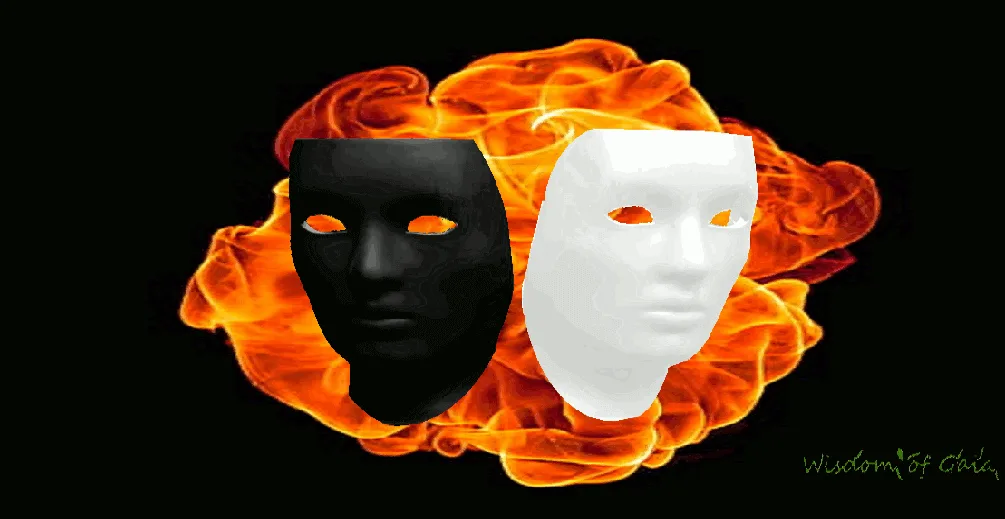
The Divided Soul
It seems that man loves absolutes such as good and bad. Like a switch everything is or it isn't, rarely do we find the middle ground. We even apply it to ourselves — "I'm in
a bad mood", "Don't get on the wrong side of them", we gauge ourselves with happy or sad and even "I'm okay" suggests the negative.
We even use these absolutes to explain our behaviour like Jekyll and Hyde, pleading powerless as an excuse for our actions. "I wasn't thinking" or "I woke up on the wrong side
of the bed" — these excuses can be all too familiar.
Our ego instils in us a need to find blame, often in others but also in the negative aspects of ourselves. We live under tremendous pressure to achieve — through our parents and
peers, through advertisements that indoctrinate us to be the perfect person via what we do, where we go and even what we wear. Many a teenage tear has been shed over owning
the wrong jeans.
This is a defect of character that can doom us to unhappiness or a life of grey toleration if we do not find some measure of peace within ourselves. Our ego is our sense of
worth in the eyes of others — it seems a ridiculous notion, and yet it can easily rule our lives.
Ways of shedding egotism can be found through meditation and prayer, though this can lead to suppressing rather than addressing it as a part of ourselves. Serenity lies in
accepting ourselves for who and what we are rather than trying to squash the ego. We must learn to feed it in a positive way.
An answer lies in examining who we are trying to impress — usually our loved ones, peers, and society as a whole. Our most vehement critic is ourselves. We deny our urges until
we create a wall of denial: on one side is the person we think we ought to be, on the other is who we want to be. Reconciling this divide is no easy journey but is achievable
for those who truly want it. Honesty, thought, and action are needed — through meditation, prayer, and our spiritual connection.
Seek your connection to the Universe and be the best you that you can be today. Aim to impress the Divine and you will feel the difference.
The binary habit of mind — good or bad, light or dark, strong or weak — is not simply a linguistic convenience. It shapes how we experience ourselves from the inside. When we label a feeling or an impulse as bad, we do not make it disappear. We push it somewhere less visible, where it tends to accumulate pressure. The shadow, as Jung described it, is not the evil part of us. It is the unexamined part — the qualities we have decided do not belong in the version of ourselves we present to the world.
The trouble with splitting ourselves this way is that the rejected half does not simply accept its exile. It finds expression through the cracks — in irritability, in projection onto others, in the sudden outburst that surprises even us. When we say "I don't know what came over me," what came over us was usually something we had been refusing to look at for quite some time.
This is not a counsel of despair. It is, if anything, a relief. If the shadow is not evil but simply unexamined, then the work is not a war against our own nature but an act of honest looking. The parts of ourselves we are most ashamed of are often the parts that, integrated and understood, become sources of genuine strength — the anger that becomes healthy boundary-setting, the selfishness that becomes appropriate self-care, the doubt that becomes discernment.
The ego is often spoken of as the enemy in spiritual teaching, and there is something to that — but it is rarely the whole picture. The ego is not a malfunction. It is the self's attempt to navigate a world that judges, compares, and ranks. The problem arises when we allow that external gaze to become our primary measure of value.
From childhood we absorb signals about what earns approval and what invites rejection. Those signals accumulate into an internal critic — a voice that is often far harsher than anything anyone has actually said to us. It rehearses our failures, anticipates our humiliations, and measures us against standards that shift just often enough to remain permanently out of reach.
What meditation and prayer offer, in this context, is not the silencing of that voice but a shift in perspective. When we orient ourselves toward something larger — a sense of the divine, of purpose, of genuine connection — the ego's anxious scorekeeping becomes less urgent. Not gone, but less central. We begin to feed our sense of worth from a source that is not dependent on others' approval, and that changes everything.
The goal is not to become a person without shadow, without ego, without the full complexity of human feeling. That is not enlightenment — it is suppression wearing a spiritual mask. The goal is integration: to know ourselves well enough that we are no longer surprised by what we contain, and to have a relationship with our own nature that is honest rather than defensive.
Three things make this possible: honesty about what is actually there, thought about where it comes from and what it needs, and action that expresses our values rather than merely our reactions. None of this happens quickly. But each small act of self-awareness — each moment of noticing rather than just doing — builds the capacity for the next one.
The two sides of self are not enemies. They are two aspects of the same person, each with something the other needs. The light needs the depth and honesty that only comes from contact with the shadow. The shadow needs the direction and warmth that only the light can provide. When we stop treating the divide as a problem to be solved and start treating it as a tension to be lived with awareness, we begin to find the peace that no amount of self-improvement has ever quite managed to deliver.