Notifications (Click to mark read)
The Light Maker
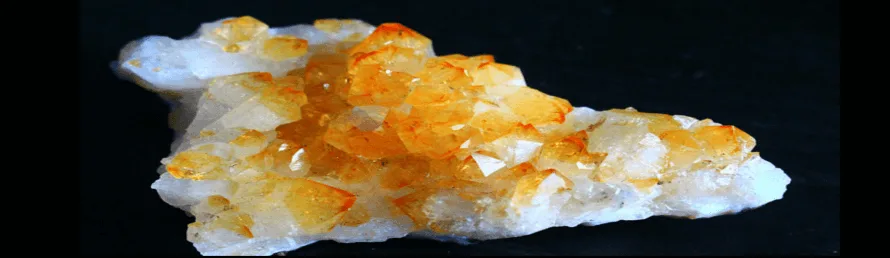
Citrine earns its name from the French word for lemon — and the colour tells you something about what it does. Where many crystals work through absorption or protection, Citrine works through illumination. It is one of the few stones consistently associated not with drawing energy inward but with radiating it outward, brightening the field around it rather than filtering what comes in. Among the amplifying stones, Citrine has a quality that is distinctly solar: warm, direct, and generous.
It is also one of the few stones that is said never to accumulate negative energy and therefore never to need cleansing — a property it shares with Kyanite and Azeztulite, and one that makes it particularly low-maintenance for those who work regularly with crystals. Whether or not you accept that claim at face value, the practical point is that Citrine tends to hold a consistent, uplifting quality of energy regardless of how it has been used or for how long.
Natural and Heated Citrine
Here is something worth knowing before you buy: most Citrine on the market is not natural Citrine. It is Amethyst that has been heated to a high temperature — typically around 470–750°C — which converts the purple iron compounds in the Amethyst into the yellow and orange hues associated with Citrine. The result is visually convincing but structurally and energetically different from the stone that forms that colour naturally in the earth.
Natural Citrine is relatively rare and tends to be pale yellow, often with a smoky quality, and found primarily in Brazil and Madagascar. Heat-treated Citrine is typically a deeper amber or burnt orange, and very uniform in colour — a uniformity that natural stones rarely exhibit. If the colour is vivid and consistent throughout the crystal, it has almost certainly been heated.
This does not mean heated Citrine is worthless — many practitioners work successfully with it. But it is worth understanding what you have, both for the sake of honesty and because natural and treated stones may work differently. If natural Citrine matters to you, look for pale, slightly smoky yellow stones from reputable sources and be prepared to pay more for them.
The Solar Plexus Connection
Citrine is primarily associated with the solar plexus chakra — the energy centre located in the upper abdomen, between the navel and the sternum, that governs personal power, will, self-confidence, and the ability to act on one's own intentions. A healthy solar plexus chakra means being able to pursue what you want without being derailed by self-doubt, to assert appropriate boundaries without aggression, and to feel a genuine sense of agency in your own life.
When this centre is underactive, the effects are recognisable: difficulty making decisions, a tendency to defer to others at the expense of your own judgement, problems with motivation, and a general sense of powerlessness. When it is overactive, the opposite: excessive control, rigidity, the need to dominate situations. Citrine is associated with bringing this centre into balance — activating it when it is dim, and moderating it when it is too dominant.
The stone's association with the will is specific and worth taking seriously. Citrine is not simply about feeling good — it is about aligning what you want with what you actually do. The affirmation that accompanies it says this directly: creative imagination and personal will, aligned with Divine will, working together to manifest something real. This is a different orientation from passive hope or wishful thinking. It asks for active engagement.
Emotional and Mental Properties
Citrine's most immediately useful quality for most people is its effect on the quality of thought. It helps to lighten dark thoughts — not by suppressing them or pretending they are not there, but by genuinely shifting the field in which they arise. The metaphor is apt: a lit room and a dark room contain the same furniture, but only in one of them can you see clearly enough to navigate.
It brings optimism, playfulness, and happiness into the energy system — qualities that are easy to undervalue when you are functioning adequately but do not realise how much lighter things could be. People who work with Citrine regularly often notice not that dramatic experiences change, but that their default relationship to daily experience becomes less heavy. Small frustrations lose their grip more quickly. The mind finds its way back to interest and engagement more naturally.
It also assists in learning. The combination of mental stimulation and will activation makes it useful for any kind of study or focused creative work — it supports the state of engaged, alert attention that allows new material to be absorbed rather than processed and immediately forgotten.
For emotional boundaries, Citrine helps with both the setting and the maintaining. Many people who struggle with boundaries do not lack the understanding that they need them — they lack the will to hold them when tested. Citrine's solar plexus activation supports that second part: the quiet, consistent firmness that keeps a boundary in place without drama.
Physical Associations
In crystal healing tradition, Citrine is associated with the digestive system — specifically helpful for digestive difficulties and sluggish metabolism. This follows the solar plexus connection: the third chakra governs not only psychological personal power but the literal digestion and assimilation of what we take in, at every level. Where digestive function is compromised, Citrine placed on or near the solar plexus is understood to support the restoration of that process.
It is also associated with energy levels during physical exercise, where its amplifying and activating qualities translate into greater vitality and endurance. This is not a substitute for physical training or adequate nutrition, but as a supportive presence in an active wellness practice, Citrine's energising quality is well-suited to the context.
Prosperity and the Cashbox Tradition
Citrine has a long association with abundance and financial prosperity — specifically with attracting and holding wealth rather than simply hoping for it. The practice of placing Citrine in a cashbox or wallet, or in the prosperity corner of the home (the back left corner according to feng shui principles), is one of the most widely maintained crystal traditions.
The logic behind it connects to Citrine's core properties: abundance requires not just wanting something but being willing to act, to assert, to move toward it. It requires the solar plexus qualities of confidence and will. Citrine supports those qualities, which in turn support the conditions under which financial flow becomes more possible. It is not magic — but neither is it arbitrary. The stone's alignment with action, confidence, and the removal of mental heaviness addresses several of the most common practical obstacles to financial wellbeing.
Working with Citrine
The most direct use is simply to wear it or carry it consistently. As a bracelet on the dominant wrist or as a pendant at the solar plexus, Citrine's qualities work continuously in the background — not as a dramatic intervention but as a sustained, gentle orientation toward light, will, and confidence.
Placed in a workspace, it supports the mental clarity and motivation needed for sustained creative or intellectual work. Placed in the home, particularly in communal areas, it tends to lift the general quality of atmosphere — making spaces feel more open and less heavy.
Paired with Carnelian, it intensifies the creative dimension: Carnelian governs passion and creative drive, and Citrine amplifies and clarifies that energy, giving creative impulses both the power and the direction to become something real. Paired with Amethyst, the combination bridges the personal and the spiritual — grounding higher insight in the will and practical capability of the solar plexus.