Notifications (Click to mark read)
The Ceylonese Magnet
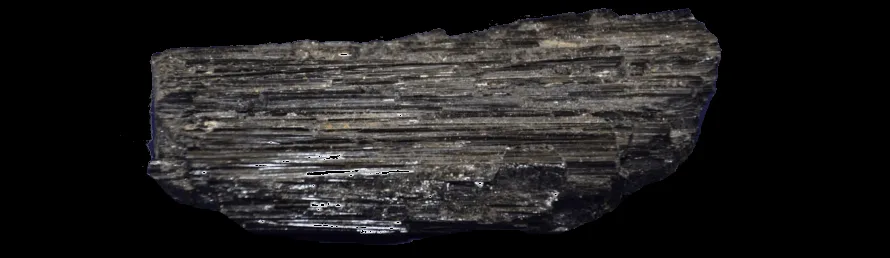
Black Tourmaline is the pre-eminent stone of protection in the crystal tradition — not the only one, but the one most consistently and widely used for this purpose across the widest range of practitioners and traditions. Its nickname, the Ceylonese Magnet, refers to its piezoelectric and pyroelectric properties: it generates an electrical charge when heated or put under pressure, and was historically used to draw ash from pipes. This capacity to attract and draw — to pull things toward itself — is the physical expression of its primary energetic function.
Where other protective stones work by deflection or shielding, Black Tourmaline works by absorption. It draws in negative, discordant, and dense energies from its environment and from the aura of the person working with it, and transmutes them — not merely containing what it absorbs but converting it into something neutral or usable. This distinction matters in practice: a stone that merely deflects negative energy sends it somewhere else; a stone that absorbs and transmutes removes it from circulation entirely.
Physical Appearance and Structure
Black Tourmaline — mineralogically known as schorl — forms in striated prismatic columns with a characteristic triangular cross-section. The striations running lengthwise along the crystal reflect its electrical properties and its directional energetic quality: it moves energy along its length, making the natural columnar form particularly effective for directional placement. It is the most common variety of tourmaline and occurs worldwide, though the finest specimens for crystal work tend to come from Brazil and Sri Lanka.
It is often found in combination with quartz — as black tourmaline rods embedded in white or clear quartz matrix — and this combination is considered especially powerful. The quartz amplifies the tourmaline's absorbing and transmuting properties while adding its own clarifying quality, creating a stone that both draws in and purifies with unusual intensity. Natural specimens in quartz are among the most prized pieces in protective crystal work.
The Root Chakra and Grounding
Black Tourmaline is rooted firmly in the earth element and governs the root chakra — the energetic centre at the base of the spine associated with physical safety, material stability, and the body's fundamental connection to the earth. When the root chakra is clear and the connection to earth is strong, there is a quality of baseline security that does not depend on circumstances: a settled, physical confidence in one's right to be here and one's capacity to manage what arises.
Black Tourmaline provides a grounding path for light to enter the earth plane — a phrase that points to a specific function. Grounding is not merely about becoming more physically present or less anxious, though it reliably produces both. It is about establishing the foundational energetic connection that allows higher-frequency work — meditation, channelling, healing — to be stable rather than unmoored. Without adequate grounding, spiritual opening tends to produce dissociation rather than expansion. Black Tourmaline ensures that the channel stays connected at both ends.
Used with Hematite, which shares the earth element and the root chakra association, the grounding effect is amplified and deepened — particularly useful for those who are naturally inclined toward the upper chakras and find grounding difficult. Used with Citrine, the combination brings the grounding quality into the realm of material abundance and practical manifestation, anchoring the expansive solar energy of Citrine in physical reality rather than allowing it to remain merely aspirational.
Emotional Properties
At the emotional level, Black Tourmaline is most effective for two related patterns: obsessive and compulsive behaviour, and chronic worry and anxiety. Both involve the mind's tendency to circle — to return repeatedly to the same thought, fear, or compulsion regardless of the person's intention to stop. The mechanism is different in each case, but the energetic quality is similar: a kind of stuck rotation, energy that cannot complete its cycle and move on.
Black Tourmaline interrupts this rotation by absorbing the energetic charge that keeps the cycle running. It is not a psychological intervention and does not address the underlying beliefs or trauma that sustain compulsive patterns — that is deeper work requiring other approaches. But it reduces the intensity of the pull, creating enough space for the person to make different choices in the moments that matter. Used consistently, it shifts the baseline: the thoughts still arise, but with less force, and they pass more easily.
For negative thought patterns specifically — the internal critic, the patterns of anger turned inward, the habitual sense of unworthiness — Black Tourmaline is one of the most direct tools available. It does not reframe or challenge these thoughts; it absorbs the energetic charge that makes them sticky and hard to release, reducing their grip without requiring the person to argue themselves out of them.
Psychic Protection and Environmental Use
For anyone who works or lives in environments with a high density of challenging energy — hospitals, busy public spaces, workplaces with significant interpersonal conflict — Black Tourmaline carried in the pocket provides a continuous field of protection that prevents the absorption of others' energetic material. This is not a metaphor for emotional resilience, though it supports that too. It is a specific function: maintaining the integrity of the auric field against intrusion and accumulation.
Placed between oneself and a specific source of negativity — a difficult relationship, a piece of electronic equipment, a part of the home that carries heavy energy — it acts as a barrier and absorber, drawing the disruptive energy toward itself rather than allowing it to penetrate the aura. Placed at the four corners of a room or home, it creates a comprehensive protective boundary for the entire space.
Meditating with Black Tourmaline keeps the auric field clear throughout the practice — particularly important during deep or open meditative states when the usual psychic defences are relaxed. It allows the depth of meditation without the vulnerability, maintaining protection precisely when the field is most receptive.
Physical Healing Associations
In crystal healing tradition, Black Tourmaline is associated with purification of the physical body — drawing out toxins, supporting the clearance of heavy metals, and assisting the body's own detoxification processes. The same absorbing and transmuting quality that operates at the energetic level is understood to have a physical parallel: the stone draws dense material toward itself and converts it into something the body can release.
It is also associated with the nervous system, particularly the reduction of the physiological stress response — the sustained activation that accompanies chronic anxiety and produces the physical symptoms of worry: muscle tension, disrupted sleep, digestive disturbance. The grounding quality of the stone, established through its root chakra connection, acts directly on this activation, signalling safety to a nervous system running a threat response.
Working with Black Tourmaline
The most immediate use is to carry it. A piece of Black Tourmaline in the trouser pocket — close to the root chakra and in contact with the lower body — provides continuous grounding and protection throughout the day. This is a low-maintenance practice with consistent effects, and the stone's absorbing quality means it will need periodic cleansing — monthly under running water or in the earth overnight is a common approach.
Placed next to the bed, it protects the field during sleep, when the conscious defences are down and the aura is naturally more permeable. For those who experience disturbing dreams, night-time anxiety, or the sense of being energetically depleted on waking, Black Tourmaline by the bed is one of the first interventions worth trying.
Because it absorbs rather than simply deflects, it requires more regular cleansing than stones that work through amplification or facilitation. A stone that is working hard — carried daily in challenging environments, placed in a high-traffic area of the home — will need more frequent attention than one used occasionally. A simple test: if the stone begins to feel heavier, duller, or less present, it is time to cleanse it.