Notifications (Click to mark read)
There is a particular kind of seeker who will not accept a spiritual idea simply because it sounds beautiful or because someone they respect has endorsed it. They want to know how it works. They want to test it against their own experience, compare it to what they already understand, and find the places where it either holds or fails. They are not sceptics in the dismissive sense — they are not trying to disprove. They are trying to genuinely understand, which is a more demanding and more honest undertaking.
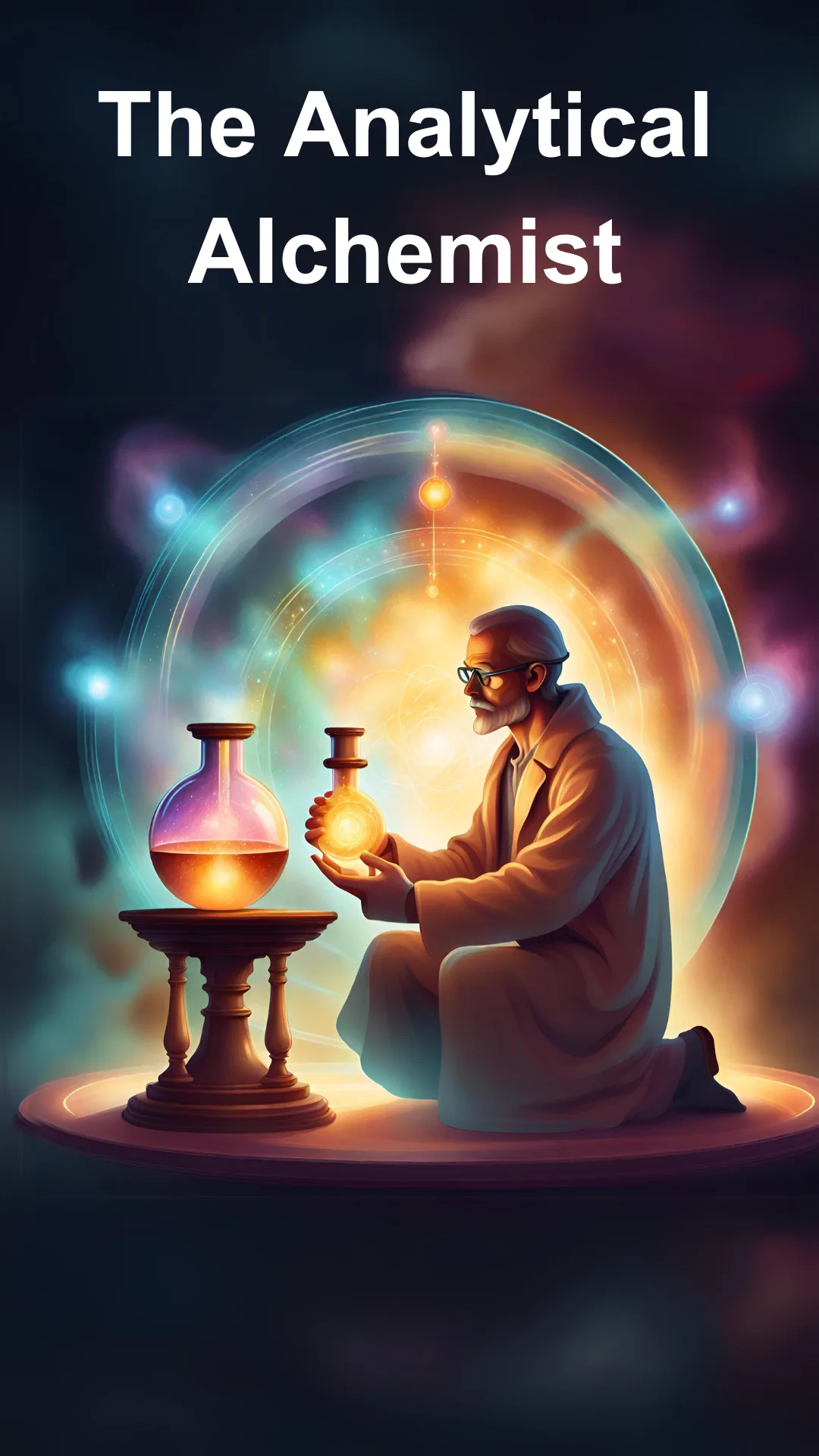
This is the Analytical Alchemist. The name holds a deliberate tension: analysis suggests precision, method, the careful separation of things into their components. Alchemy suggests transformation, mystery, the working of change through processes that are not entirely explicable. The Analytical Alchemist does not choose between these — they hold both, using the rigour of one to keep the other honest, and the openness of the other to keep the first from calcifying into mere cleverness.
The Gifts of This Nature
The Analytical Alchemist brings something rare to spiritual inquiry: intellectual honesty. Where others may accept a teaching because it is ancient or because it is popular, the Analytical Alchemist asks what evidence there is for it, what experience supports it, what happens when it is actually practised rather than simply believed. This is not a rejection of mystery — it is a refusal to accept comfortable substitutes for it.
They are natural synthesisers. Where other seekers work within a single tradition, the Analytical Alchemist tends to range widely, drawing connections between contemplative practices and cognitive science, between ancient cosmologies and modern psychology, between what the mystics described and what the neuroscientists are beginning to map. This cross-referencing is not eclecticism for its own sake — it is the natural expression of a mind that trusts pattern recognition over authority.
They are also exceptionally good at communicating difficult ideas clearly. The ability to take a complex or abstract teaching and translate it into language that is both precise and accessible is uncommon, and the Analytical Alchemist often has it. This makes them natural teachers, writers, and guides — when they have something genuinely to say.
The Shadow of the Analytical Nature
The same qualities that make the Analytical Alchemist a formidable inquirer can also become obstacles. The most common one is this: the map becomes more interesting than the territory. The Analytical Alchemist, who began by using conceptual frameworks to approach experience, can gradually shift into using experience to illustrate conceptual frameworks — which reverses the relationship entirely. The practice becomes a source of material for thinking rather than a direct encounter with something real.
There is also a risk of confusing understanding with integration. The Analytical Alchemist can understand a teaching thoroughly — can explain it, defend it, connect it to other ideas — without having absorbed it in the body, without having let it change how they actually live. This is not hypocrisy, exactly. It is more like a gap between the cognitive and the somatic, the known and the embodied. The gap can close, but closing it requires a different kind of work than analysis offers.
The Analytical Alchemist can also struggle with direct mystical experience — with the moments that resist analysis altogether, that cannot be categorised or fitted into any framework. The instinct is to process these experiences immediately, to find language for them, to locate them within an existing map. But some experiences are dissolved rather than integrated by this move. They require sitting with rather than thinking through, and the Analytical Alchemist may find that harder than it sounds.
The Owl and the Dark
The spirit animal of the Analytical Alchemist is the Owl — the creature whose eyes are adapted to see what others cannot in conditions others find impenetrable. The Owl does not wait for better light. It navigates what is actually present, in the dark as it is, without requiring it to be otherwise.
This is the quality the Analytical Alchemist is asked to develop: the ability to see clearly not just in the well-lit territory of concepts and frameworks, but in the unstructured dark where genuine experience often lives. The Owl is also silent in its flight, which is worth noting. There is a form of knowing that arrives in stillness rather than through analysis, and the Owl embodies it. Wisdom is not only what can be explained. Some of it can only be lived.
The Work
The path for the Analytical Alchemist is not to abandon the analytical mind — that would be both impossible and a genuine loss. It is to develop the capacity to set it aside deliberately and temporarily, to create genuine periods of not-knowing within the structure of a life otherwise dedicated to understanding.
Practices that work through the body rather than the mind — yoga, dance, walking in natural environments, breathwork — are not supplements to the Analytical Alchemist's real practice. They are its necessary counterpart. They develop the part of the self that the analytical mind cannot reach, and they provide the grounding in lived experience without which all the understanding floats free of anything real.
The Analytical Alchemist also benefits from patience with the pace of genuine integration. Insight and integration are not the same event. The insight may arrive in a moment; the integration unfolds over months or years of patient living. Resisting the temptation to declare understanding before the understanding has actually changed anything is one of the more demanding disciplines on this path — and one of the most important.
Wisdom earned through careful observation, honest testing, and genuine practice is not inferior to received wisdom. In many ways it is more reliable, because you know exactly how it was made and what it cost. That is the alchemy at the heart of this nature: the slow, patient transformation of information into something that actually lives.
The first step on the road to self-discovery is finding out about yourself. Take our personality quiz and find your true nature here.